
The chest and back are two of the most dominant muscle groups in the upper body, and when trained together, they create a balanced, powerful, and athletic physique.
Combining pushing and pulling movements not only maximizes muscle activation but also enhances posture, strength, and coordination.
It’s the ultimate upper-body pairing — strength meets symmetry.
Coach Kozak, known for his functional and results-driven training approach, has designed chest and back workouts that go beyond traditional bodybuilding routines.
His methods focus on form, control, and balanced progression — helping you build strength without sacrificing flexibility or endurance.
Whether your goal is to increase muscle mass, improve performance, or tone your upper body, these workouts are structured to deliver consistent results.
In this guide, you’ll explore ten effective chest and back workouts inspired by Coach Kozak’s training philosophy.
Each routine targets specific muscle fibers using a blend of compound and isolation exercises.
You’ll learn how to execute each movement with proper technique, what equipment
you’ll need, and how to structure your sessions for progressive results — all while keeping the workouts accessible for both home and gym environments.
By the end, you’ll understand not only how to perform these exercises but also why they work.
This isn’t just about lifting weight — it’s about training smarter, building balance, and developing strength that lasts.
1. Understanding the Chest and Back Muscle Connection

The chest and back are opposing yet complementary muscle groups that work together to stabilize and power nearly every upper-body movement.
Understanding how they interact helps you train more effectively and prevent muscular imbalances that can affect strength and posture.
The chest, primarily the pectoralis major and minor, is responsible for pushing movements — pressing, extending, and bringing the arms across the body.
These muscles are heavily activated during exercises like push-ups, bench presses, and dips.
A strong chest not only enhances appearance but also contributes to better upper-body stability and pushing strength.
The back, on the other hand, is a complex network of muscles that includes the latissimus dorsi, trapezius, rhomboids, and rear deltoids.
These muscles control pulling movements — rows, pull-ups, and deadlifts — and play a critical role in posture and shoulder alignment.
A strong back supports the spine, improves core engagement, and creates the foundation for powerful upper-body performance.
When trained together, the chest and back work as opposing forces that balance each other out.
As one muscle group contracts, the other stretches and stabilizes, promoting joint health and muscular symmetry.
This push-pull relationship also boosts overall training efficiency, allowing you to work more muscles in less time while maintaining strength harmony across the upper body.
By understanding this connection, you can structure workouts that target both muscle
groups effectively — leading to improved posture, balanced strength, and a physique that’s as functional as it is aesthetic.
2. How to Structure a Chest and Back Workout

A well-structured chest and back workout combines pushing and pulling movements to maximize muscle activation while maintaining balance.
The goal is to hit each major muscle group effectively without overtraining, ensuring strength gains and symmetry.
How to Structure Your Session:
- Warm-Up: Begin with 5–10 minutes of dynamic stretches, arm swings, and light cardio to activate your chest, shoulders, and back.
- Compound Exercises First: Start with multi-joint movements like bench presses or pull-ups. These exercises recruit multiple muscles and allow you to lift heavier weight safely.
- Isolation Exercises: Follow up with targeted movements, such as dumbbell flyes for the chest or face pulls for the back. Isolation exercises enhance definition and address weak points.
- Push-Pull Pairing: Alternate push and pull exercises in supersets or circuits to maintain intensity, save time, and improve endurance.
- Cool-Down and Stretching: Finish with static stretches to improve flexibility, reduce soreness, and support recovery.
What You’ll Need:
- Dumbbells, barbells, or resistance bands
- Bench or stable elevated surface
- Pull-up bar or alternative pulling setup
- Timer or workout log
3. Essential Chest Exercises
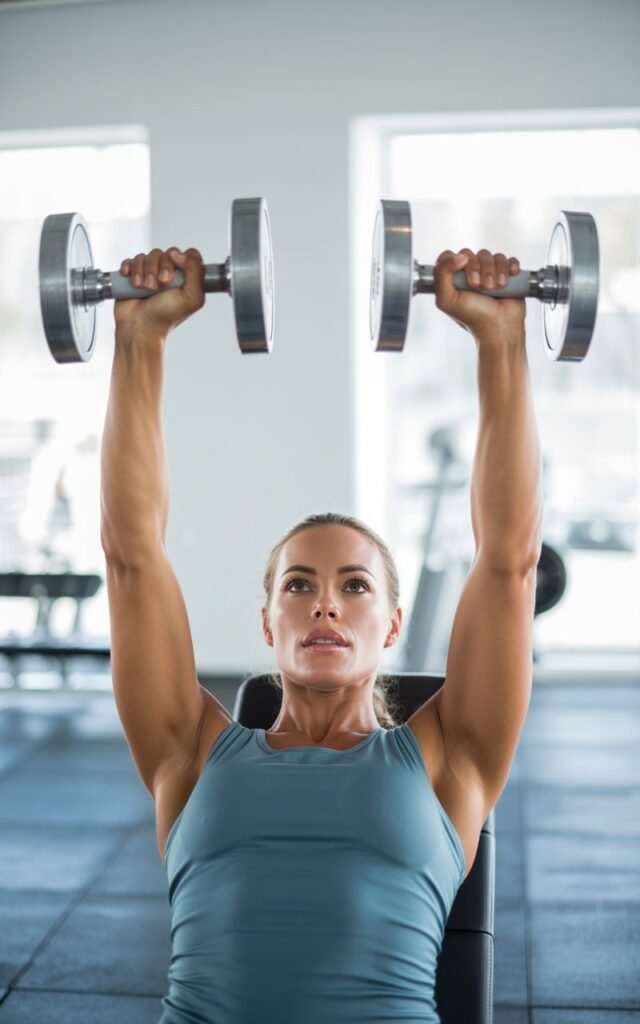
The chest forms the foundation of upper-body strength and aesthetics. Focusing on proper technique ensures maximal activation while reducing the risk of shoulder strain.
How To Train Your Chest:
- Bench Press: Lie on a bench, keep your feet flat, and press the weight upward while controlling the descent.
- Incline Dumbbell Press: Targets the upper chest for a fuller appearance. Adjust the bench to 30–45 degrees.
- Push-Ups: A versatile bodyweight exercise that can be scaled by elevating your hands or adding weight.
- Dumbbell Flyes: Open and close your arms with a slight bend in the elbows to stretch and contract the chest fully.
What You’ll Need:
- Dumbbells or barbell
- Bench (flat or incline)
- Mat for floor exercises like push-ups
4. Essential Back Exercises

A strong back improves posture, stability, and overall upper-body performance. Incorporate a mix of vertical and horizontal pulling movements to target all areas.
How To Train Your Back:
- Pull-Ups or Assisted Pull-Ups: Focus on full range of motion to engage the lats and upper back.
- Bent-Over Rows: Keep your back flat and pull weights toward your torso to strengthen mid-back and traps.
- Face Pulls: Use resistance bands or cables to target rear deltoids and prevent shoulder imbalances.
- Deadlifts: Full-body compound movement emphasizing lower back, traps, and hamstrings while building overall strength.
What You’ll Need:
- Pull-up bar or resistance bands
- Dumbbells or barbell for rows and deadlifts
- Optional: Cable machine for face pulls
5. Combining Chest and Back in a Single Workout

Pairing chest and back exercises in the same session ensures balanced development and efficient training.
Alternating push and pull movements maintains intensity and prevents fatigue from limiting performance.
How To Combine Exercises:
- Use supersets: Pair a push exercise (like bench press) with a pull exercise (like bent-over rows) with minimal rest.
- Structure the workout from large to small muscle groups. Start with compound lifts and end with isolation movements.
- Include 3–4 sets per exercise with 8–15 reps depending on your goal (strength vs. hypertrophy).
- Rest 60–90 seconds between sets to allow sufficient recovery while keeping the heart rate elevated.
What You’ll Need:
- Dumbbells, barbells, or resistance bands
- Bench and pull-up setup
- Workout timer or log to track sets and reps
6. Advanced Techniques to Maximize Chest and Back Gains

Once you’ve mastered basic exercises, incorporating advanced techniques can help break plateaus and build more strength and definition.
These methods emphasize muscle engagement, intensity, and controlled progression.
How To Apply Advanced Techniques:
- Supersets: Pair a chest exercise with a back exercise (e.g., bench press + bent-over rows) to increase training intensity and save time.
- Drop Sets: Reduce weight after reaching failure to extend a set and recruit additional muscle fibers.
- Tempo Training: Slow down the eccentric (lowering) phase of each rep to increase tension and improve muscle growth.
- Pause Reps: Hold at the bottom of a lift, such as a bench press or row, for 1–2 seconds before lifting, enhancing control and strength.
- Partial Reps for Burnout: Finish a set with partial-range reps to fully fatigue the muscle without compromising form.
What You’ll Need:
- Dumbbells or barbells
- Bench for chest exercises
- Resistance bands for additional intensity
- Timer to control tempo and rest intervals
7. Recovery Strategies for Chest and Back Training

Recovery is essential for growth, strength, and preventing injury. Your chest and back muscles undergo significant stress during training, so proper recovery strategies ensure progress continues efficiently.
How To Recover Effectively:
- Rest Between Workouts: Schedule at least 48 hours between heavy chest or back sessions.
- Stretching: Incorporate static stretches for the chest, lats, and shoulders after training to improve flexibility.
- Foam Rolling or Massage: Relieves tension in the back, shoulders, and pecs to enhance blood flow and reduce soreness.
- Nutrition: Consume protein and complex carbs within an hour post-workout to aid muscle repair.
- Sleep: Aim for 7–9 hours of quality sleep per night to support hormone regulation and recovery.
What You’ll Need:
- Foam roller or massage ball
- Comfortable space for stretching
- Protein-rich meals or shakes
- Consistent sleep schedule
8. Sample Chest and Back Workout Routine

Here’s a structured routine that balances chest and back training, suitable for both home and gym environments.
It combines compound lifts, isolation exercises, and functional movements to maximize results.
Example Routine:
- Bench Press – 4 sets of 8–12 reps
- Pull-Ups (Assisted if Needed) – 3 sets of 6–10 reps
- Incline Dumbbell Press – 3 sets of 10–12 reps
- Bent-Over Rows – 4 sets of 8–12 reps
- Dumbbell Flyes – 3 sets of 12–15 reps
- Face Pulls – 3 sets of 12–15 reps
- Push-Ups Burnout Set – 2 sets to failure
How To Perform This Routine:
- Warm up for 5–10 minutes before starting.
- Maintain proper form and controlled tempo on all exercises.
- Rest 60–90 seconds between sets; 2 minutes between supersets if performing push-pull pairings.
- Finish with static stretches and light mobility work.
What You’ll Need:
- Dumbbells, barbell, or resistance bands
- Bench (flat or adjustable)
- Pull-up bar or equivalent setup
- Timer or workout log
9. Modifying Workouts for Different Fitness Levels
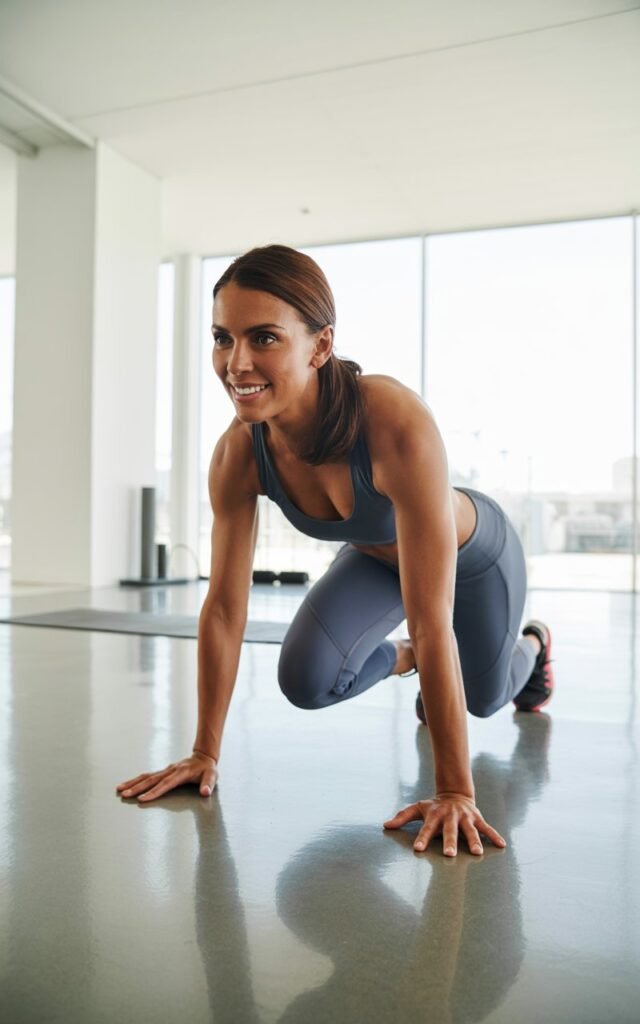
The chest and back routines can be adapted for beginners, intermediates, and advanced trainees to ensure safety, effectiveness, and progressive results.
Beginners:
- Focus on bodyweight exercises like push-ups and inverted rows before adding weight.
- Limit sessions to 2–3 times per week.
- Keep reps in the 10–15 range with lighter resistance to master form.
Intermediate:
- Incorporate dumbbells, barbells, and pull-up variations to increase challenge.
- Train 3–4 times per week, alternating push-pull combinations.
- Use progressive overload by gradually increasing weight or reps.
Advanced:
- Include supersets, drop sets, tempo training, and pause reps to maximize intensity.
- Train 4–6 days per week while allowing adequate recovery for each muscle group.
- Focus on weak-point training and deload weeks every 4–6 weeks to avoid overtraining.
What You’ll Need:
- Adjustable weights or resistance bands
- Bench or stable surface
- Pull-up setup or alternatives
- Workout log to track progression
10. Common Mistakes to Avoid

Even the most effective chest and back workouts can be hindered by poor form, improper programming, or neglecting recovery. Avoid these mistakes to achieve better results safely:
- Skipping Warm-Ups: Cold muscles are more prone to injury and reduce exercise efficiency.
- Overtraining: Excessive sessions without recovery can lead to fatigue and stalled progress.
- Poor Form: Compromised technique reduces results and increases injury risk.
- Neglecting Opposing Muscles: Overworking the chest without balancing the back can lead to postural issues.
- Ignoring Recovery and Nutrition: Strength gains rely on proper sleep, hydration, and fueling.
How To Avoid Mistakes:
- Warm up before each session with dynamic movements.
- Maintain proper form and controlled tempo.
- Alternate push and pull exercises to maintain balance.
- Track progress and listen to your body.
- Prioritize sleep, stretching, and nutrition.
Final Thoughts
Training your chest and back together is one of the most efficient ways to build upper-body strength, symmetry, and overall functionality.
By following structured workouts, incorporating proper technique, and balancing training with recovery, you can achieve a strong, well-defined, and resilient upper body.
These ten exercises inspired by Coach Kozak’s methods provide the foundation for long-term results, whether you train at home or in the gym.
Focus on consistent effort, progressive overload, and mindful recovery to transform not just your physique, but your strength and confidence as well.
Frequently Asked Questions
1. How often should I train chest and back?
2–4 times per week, depending on your fitness level and recovery capacity.
2. Can I do this routine at home without a gym?
Yes. You can use dumbbells, resistance bands, or bodyweight variations like push-ups and inverted rows.
3. How do I know if I’m progressing?
Track reps, weights, and sets. Look for improvements in strength, endurance, and muscle definition over time.
4. Should I do cardio on chest and back days?
Light cardio is fine as a warm-up or on recovery days. Avoid intense sessions immediately before strength training to maintain performance.
5. How long should each session last?
Typically 45–60 minutes, including warm-up, main exercises, and cool-down.