I Thought Squats Alone Would Be Enough
When I first started working on my glutes, I kept things simple.
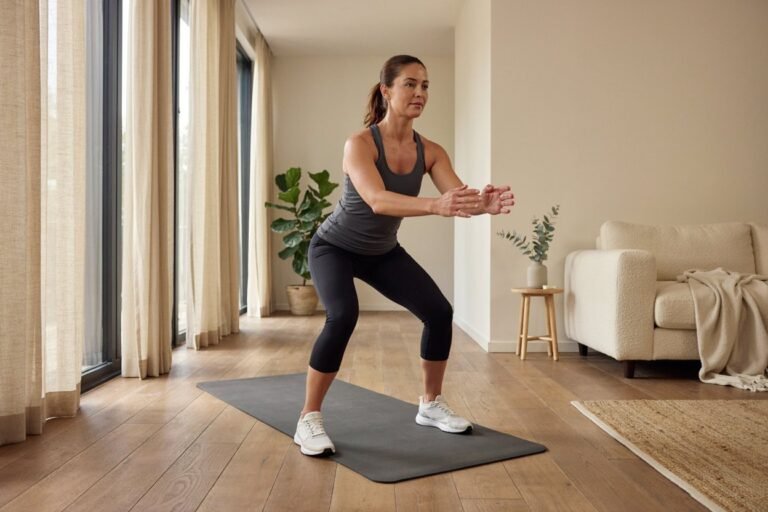
I did squats.
Every workout.
I assumed that was all I needed.
But after weeks of effort, I wasn’t seeing much change.
I felt stronger, sure.
But visually? Not much difference.
That’s when I realized something important:
Growing your glutes takes more than just one exercise.
You need the right combination.
What Actually Makes Your Glutes Grow
Before jumping into exercises, it helps to understand what really works.
Glute growth comes down to:
- targeting the muscles properly
- using enough resistance
- staying consistent over time
It’s not about doing random workouts.
It’s about doing the right ones.
The 3 Glute Muscles You Need to Target
To build a fuller, rounder shape, you need to hit all parts of your glutes:
- Glute Max → size and shape
- Glute Med → side fullness
- Glute Min → stability and balance
The exercises below are chosen to target all three.
Amazon Gear for Bigger-Butt Workouts I Recommend
Want to Build a Bigger, Stronger, More Sculpted Butt?
The right glute-focused tools help activate, isolate, and grow your glute muscles faster — without wasting time on ineffective exercises.
Below are my top Amazon picks to maximize every booty workout at home.
| Product | Why You’ll Love It | Shop Now |
|---|---|---|
| Booty Resistance Bands (Non-Slip) | Activates glutes instantly, adds resistance to squats, lunges & bridges, and prevents knees from caving in. | Check Price on Amazon |
| Adjustable Dumbbells | Perfect for weighted hip thrusts, Bulgarian splits, RDLs, and other glute-building exercises. | View on Amazon |
| Glute Bench / Step-Up Box | Ideal height for hip thrusts, step-ups, and glute bridges for maximal muscle activation. | Shop Now |
| Ankle Weights (Adjustable) | Adds controlled resistance for leg lifts, kickbacks, and glute isolation movements. | Buy on Amazon |
| Barbell Pad (Hip Thrust Cushion) | Makes heavy hip thrusts comfortable so you can lift more and grow your glutes faster. | See Details |
These essential pieces of gear make glute workouts more effective, safer, and more comfortable — helping you build a rounder, stronger, and more lifted butt.
1. The Supported Bridge Lift
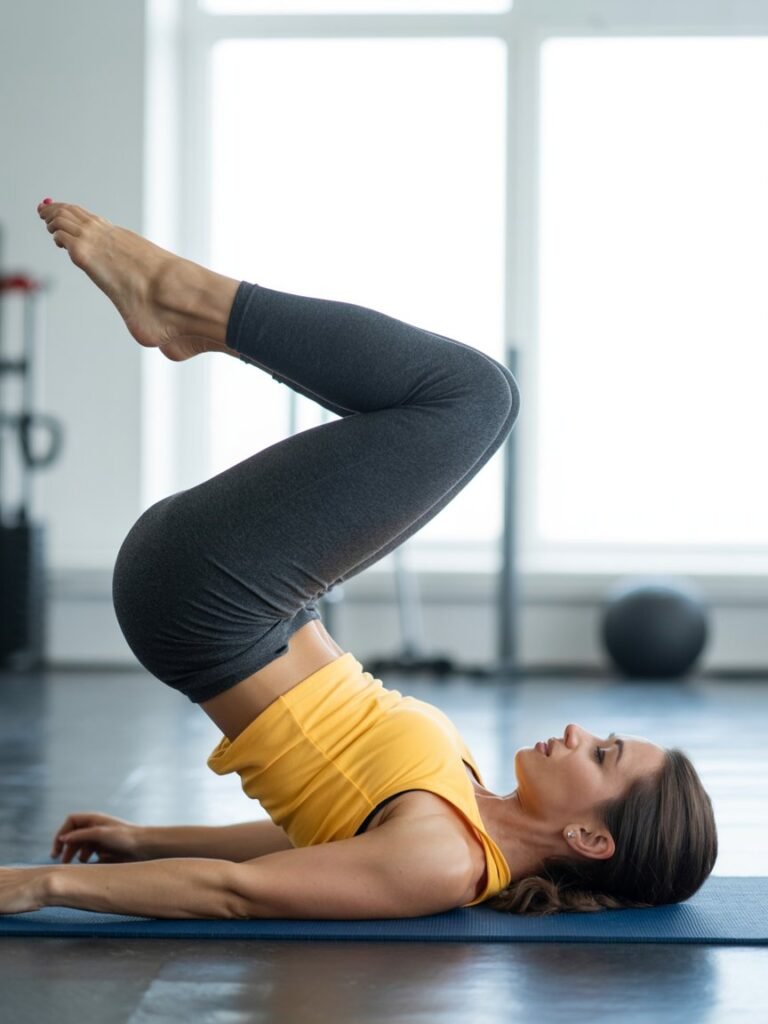
When I first started, the regular glute bridge felt too intense on my lower back and hamstrings. So, I modified it.
Instead of pressing up quickly, I used a soft pillow under my hips and lifted slowly, squeezing at the top for a full three seconds.
This gentle version isolated my glutes better than the standard move — no strain, no tension.
How to do it:
Lie flat on your back, knees bent, feet flat on the floor. Slide a small pillow or rolled towel under your hips for extra support.
Slowly lift your hips while pressing through your heels. Hold for three seconds, then lower down slowly.
Pro tip: Focus on control — not height. The slower you move, the more your glutes engage. This also helps reduce fatigue for anyone managing chronic pain.
2. The Standing Glute Pulse
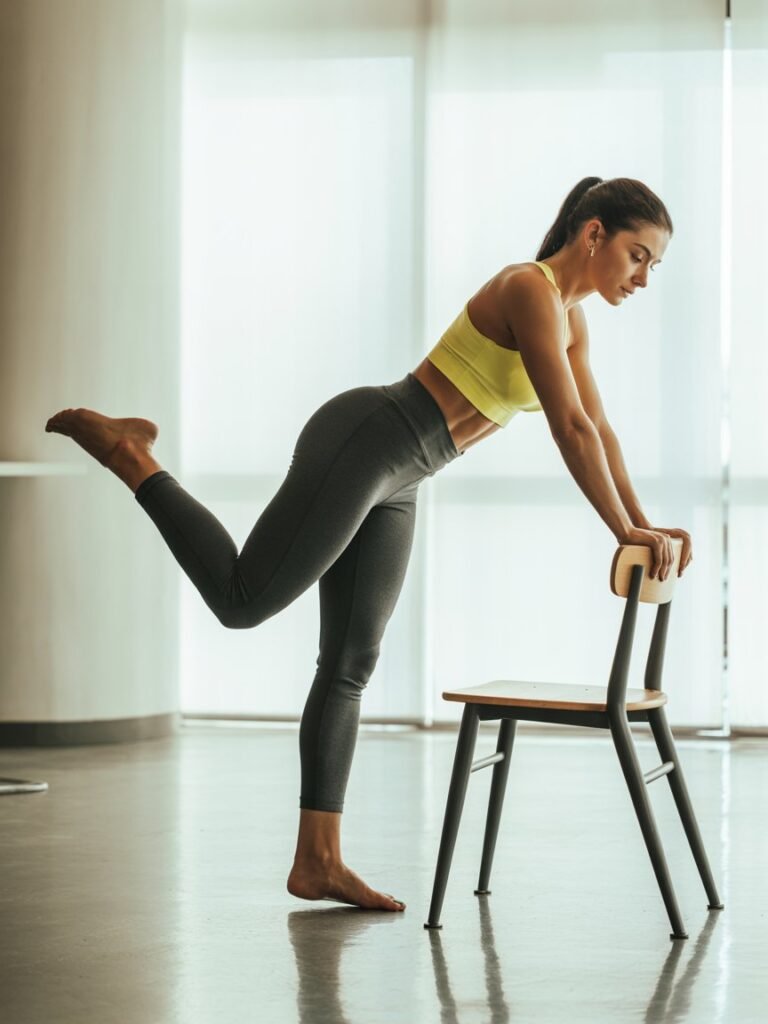
This became one of my favorite moves because it can be done anywhere — while cooking, brushing my teeth, or waiting for my coffee to brew.
It’s a small, subtle movement, but it wakes up the glutes quickly. Over time, I started noticing better definition without the soreness that usually came with traditional squats.
How to do it:
Stand tall with one hand resting on a chair for balance. Lift one leg slightly behind you, keeping your core tight and spine neutral.
Pulse your leg upward about two inches, then lower slightly — that’s one rep. Do this for 20–25 pulses on each side.
How to make it more effective: Add a resistance band around your thighs for extra tension, but keep the movement slow and steady.
3. The Wall Sit with Glute Squeeze
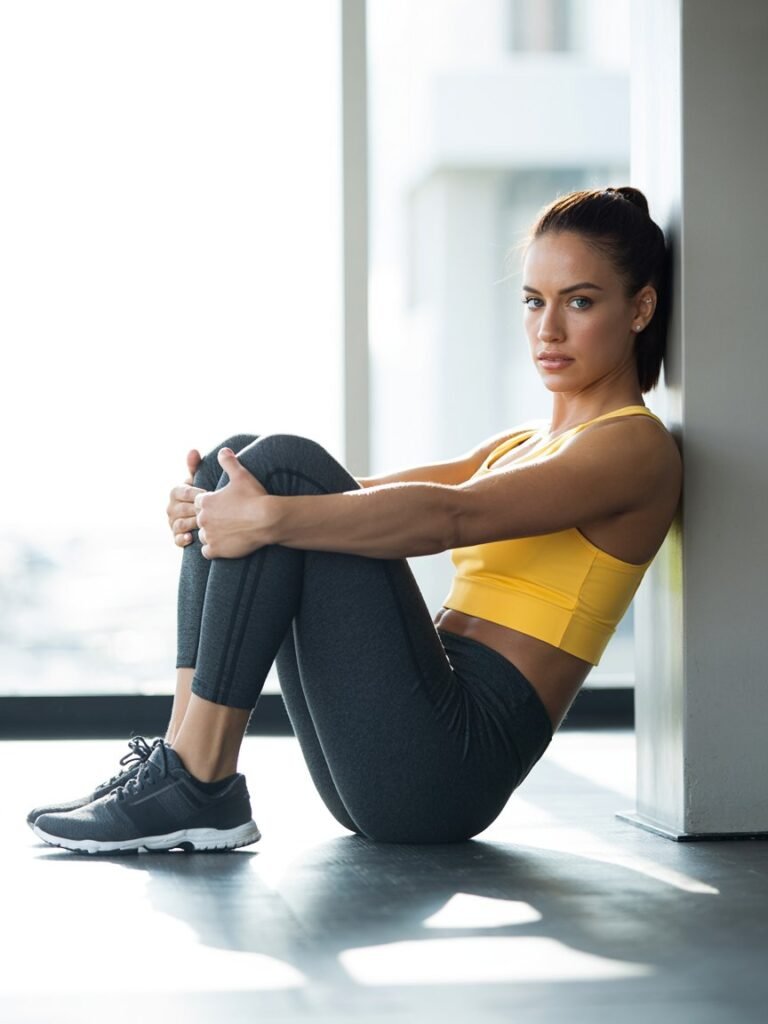
There’s something humbling about a wall sit — especially when your thighs start to shake halfway through. But here’s the twist: I added a mini glute squeeze to turn it into a double-duty exercise.
Not only does it build endurance, but it targets the outer glutes and hips for that lifted, rounder shape.
How to do it:
Stand with your back against the wall and slide down until your thighs are parallel to the floor. Hold this position, then press your knees slightly outward as if trying to “open” your hips. Hold for 10 seconds, then release.
Pro tip: Don’t push through pain — start with shorter holds (20 seconds) and build up gradually. It’s the consistency that makes the magic happen, not the duration.
4. Seated Leg Lifts (For Gentle Activation Days)
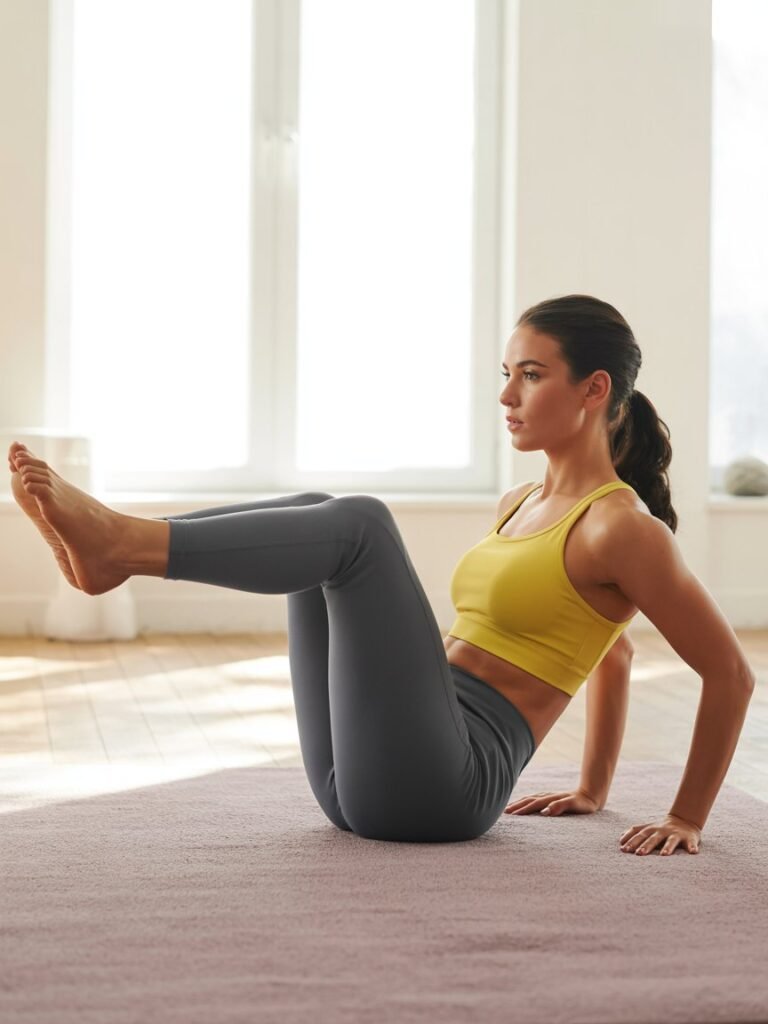
There were mornings when my joints ached before I even got out of bed. On those days, seated leg lifts became my saving grace.
They kept my glutes active without forcing my body to endure weight-bearing pain.
How to do it:
Sit tall in a sturdy chair with your feet flat on the ground. Place your hands on the sides of the chair for support.
Extend one leg straight in front of you and lift slightly, just enough to feel your thigh and glute engage. Hold for three seconds, then lower slowly.
Repeat on each side for 12 to 15 reps.
Pro tip: If your energy allows, loop a resistance band around your thighs for a gentle burn. It’s low effort but surprisingly effective when done consistently.
5. The Floor Donkey Kick (Controlled and Slow)
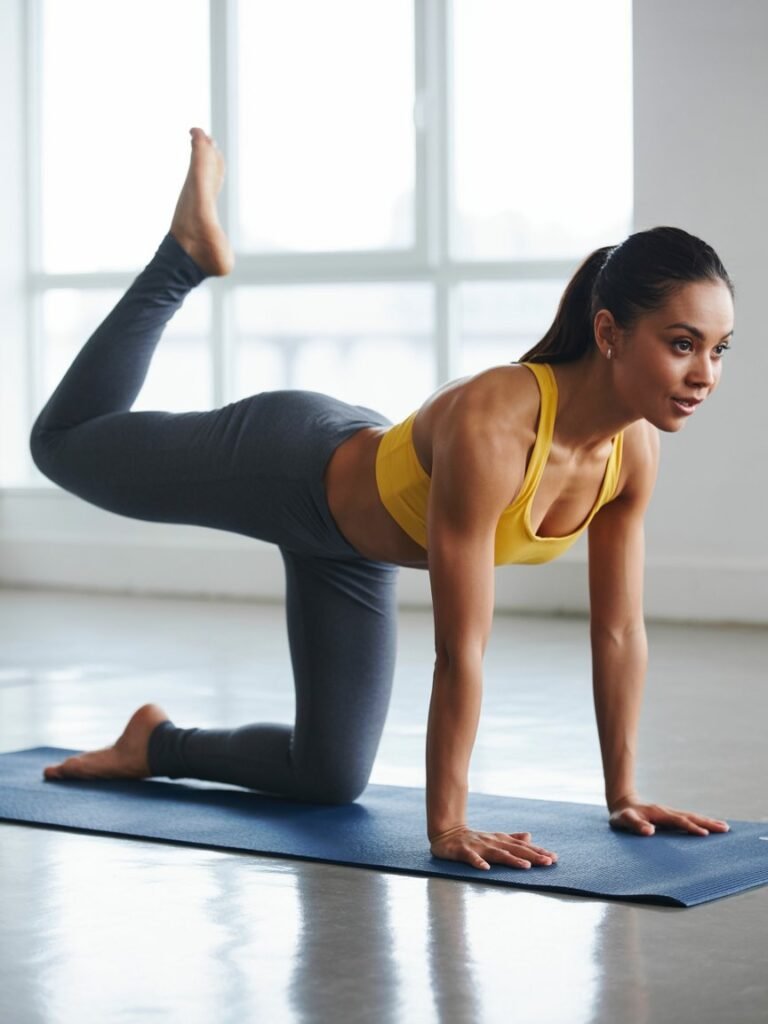
Donkey kicks are everywhere, but most people rush them — missing out on the glute activation entirely. I learned that going slow made a world of difference.
How to do it:
Start on all fours, wrists under shoulders, knees under hips. Lift one leg behind you, keeping your knee bent at 90 degrees.
Flex your foot and push your heel upward toward the ceiling, pausing at the top. Lower slowly without touching the floor.
How I made it fibro-friendly: I placed a folded towel under my knees and moved with intention — three seconds up, two seconds down. That pace helped me stay mindful while protecting my joints.
6. The Standing Kickback (Kitchen Counter Move)
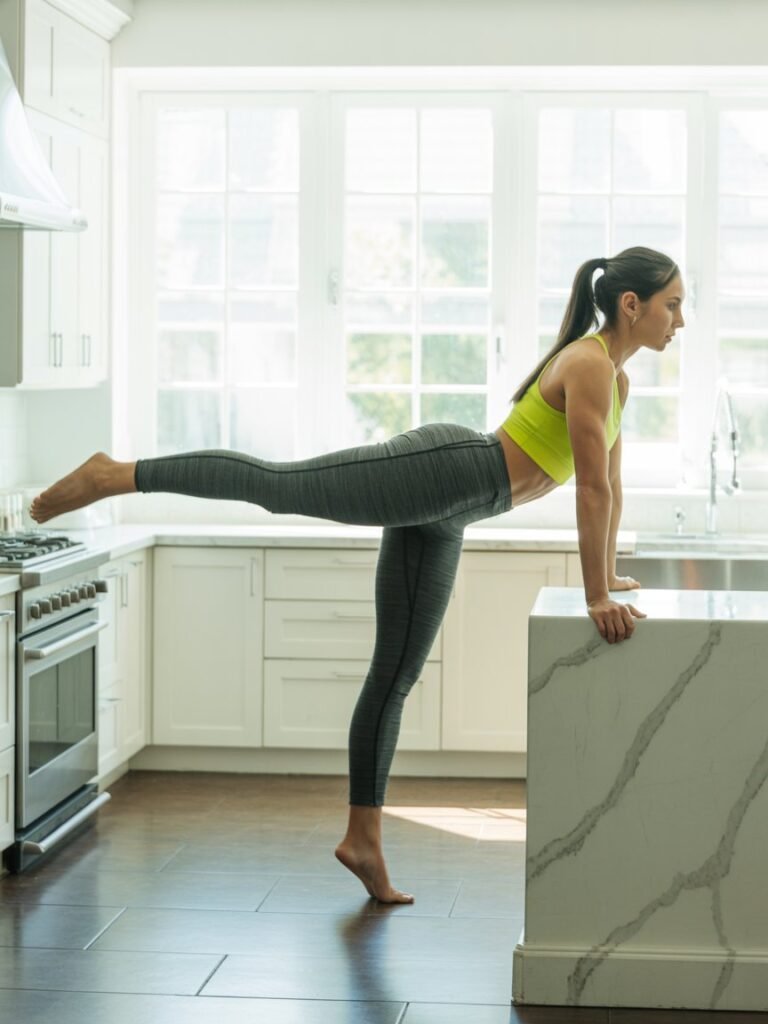
This became my go-to when I wanted a quick energy boost during the day. I’d do it while waiting for the kettle to boil — no mat, no weights, no stress.
How to do it:
Stand tall, holding onto a counter or chair. Engage your core and slowly lift one leg behind you, keeping it straight. Lift only as high as your comfort allows, then lower it back down. Do 15 to 20 reps per leg.
Pro tip: Focus on keeping your hips level — that’s the secret to really activating your glutes without straining your back.
Over time, I started noticing how simple movements done often made more difference than rare, intense workouts.
7. Modified Side-Lying Leg Lifts
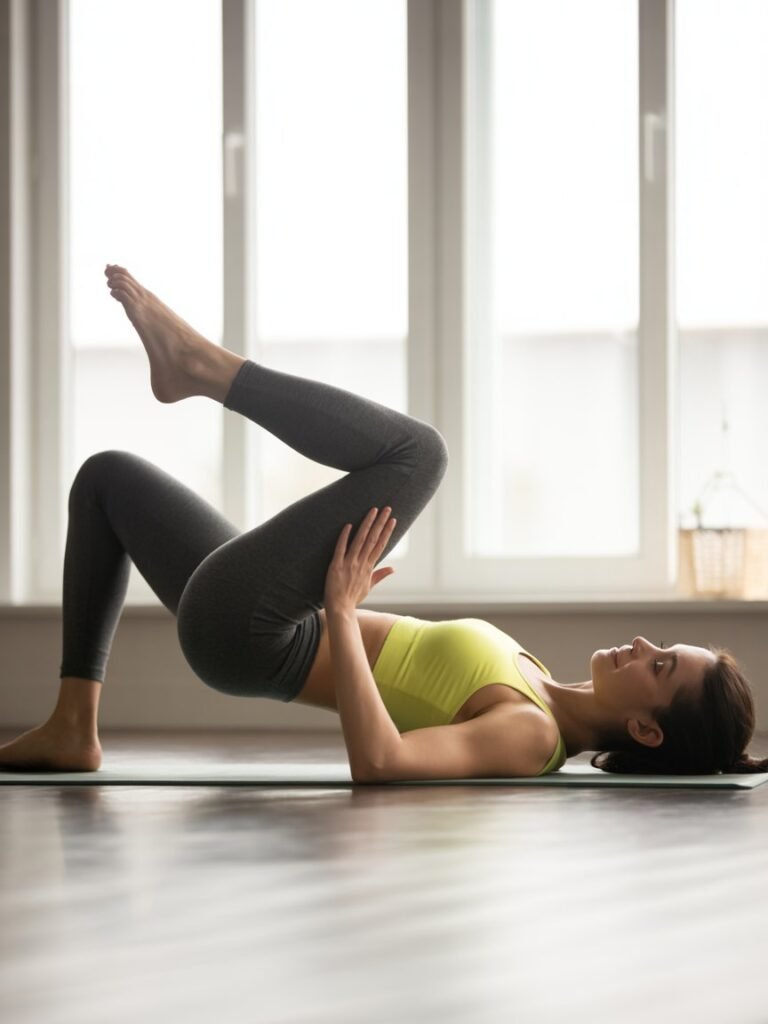
Some days, I didn’t want to stand or kneel at all. Side-lying leg lifts became my gentle alternative that worked wonders for my outer glutes and hips.
How to do it:
Lie on one side with your legs stacked. Rest your head on your arm and place your top hand in front for support.
Lift your top leg slowly until you feel your outer hip and glute engage. Lower it back down with control.
How to make it soothing and strong: Add a small pillow between your knees for comfort, or a light ankle weight for resistance once you’re ready.
What I loved most about this move was its flexibility — I could do it in bed, on a rug, even during flare-up days when my energy was low.
8. The Elevated Step Press
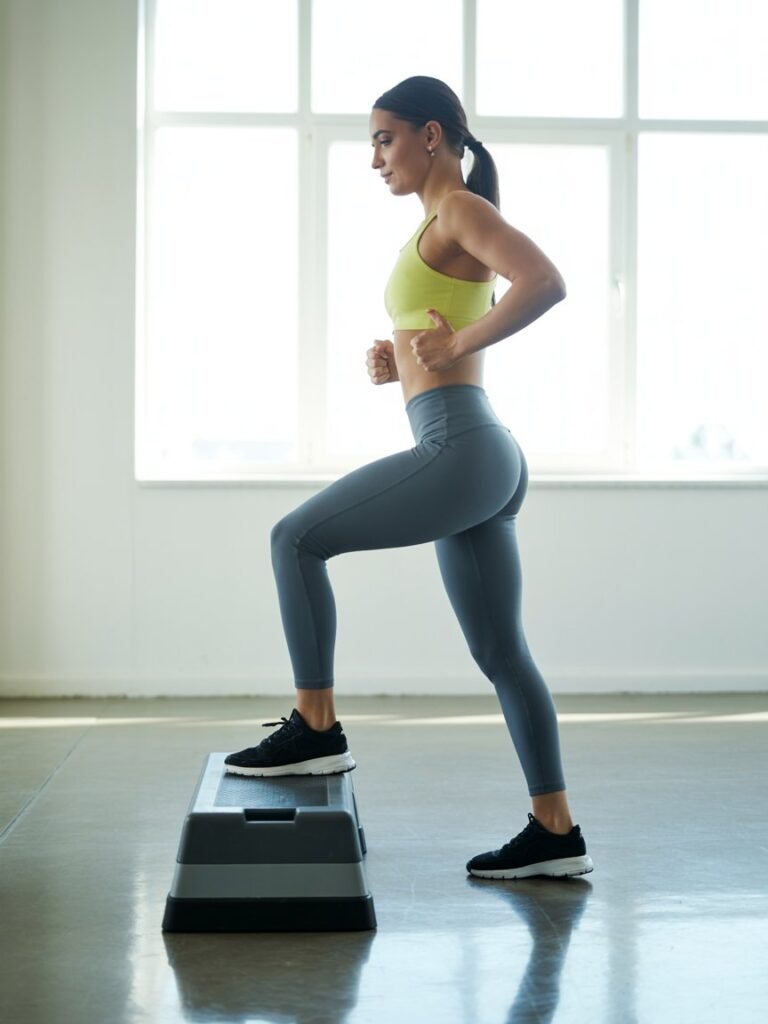
I discovered this one by accident while stepping onto a low stool to reach a cabinet. The next day, I felt an incredible burn in my glutes — so it became part of my rotation.
How to do it:
Stand in front of a low, sturdy step or platform. Step up with one foot, pressing through your heel to lift your body. Bring the other foot up, pause, then slowly step back down.
Pro tip: Focus on pressing your weight through your heel rather than your toes — this shifts the effort into your glutes instead of your quads.
It’s a simple, everyday movement that builds power where it counts most.
9. The Bridge March (for Core and Glute Synergy)
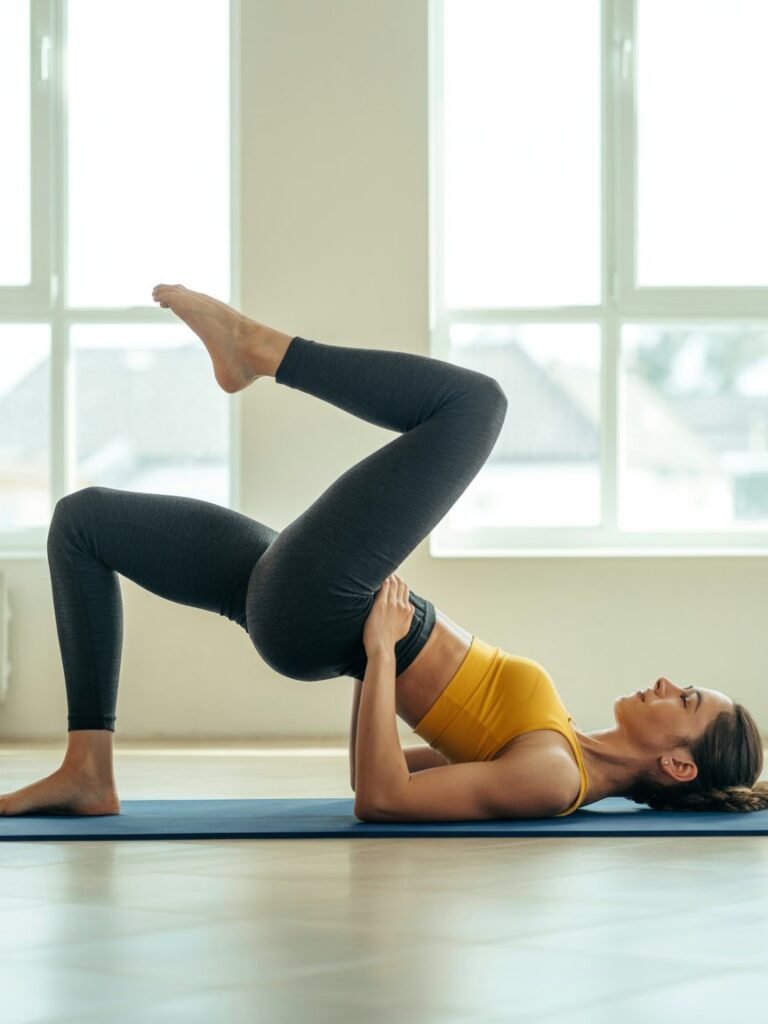
Once I got stronger, I started experimenting with the bridge march — a variation that blends stability and control.
How to do it:
Start in a regular bridge position with your hips lifted. Keeping your hips steady, lift one foot a few inches off the ground, then place it back and switch sides. Move slowly and keep your hips level the entire time.
This move taught me to engage my core while building glute strength — a powerful combination for anyone managing fatigue or pain.
Why it matters: The more stable your core becomes, the less strain your lower back endures during glute training.
10. The Slow Reverse Lunge (for the Final Challenge)
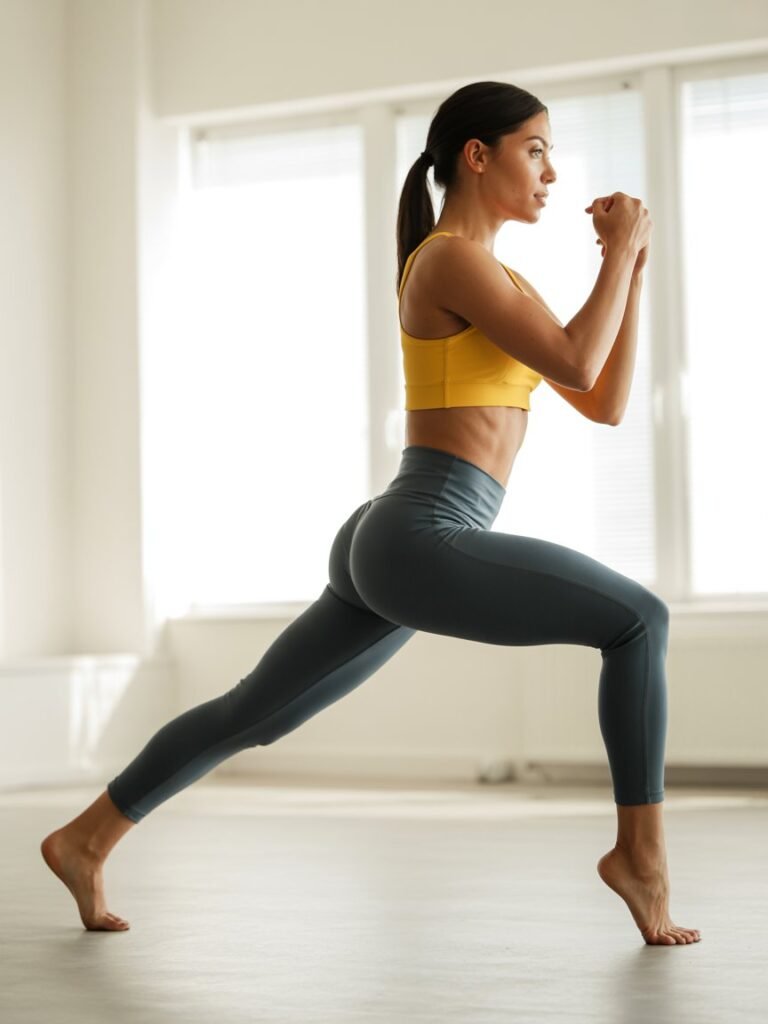
This was my milestone move — the one I couldn’t do at first but worked up to. When performed slowly, reverse lunges build serious strength while being gentler on the knees than forward lunges.
How to do it:
Stand tall with your feet hip-width apart. Step one foot back and lower into a lunge, keeping your front knee behind your toes. Press through your front heel to return to standing.
Pro tip: Hold onto a wall or counter for balance until you’re confident. Even five slow, perfect reps per leg are enough to sculpt and lift.
Every time I completed a set, I felt like I’d conquered something — not just physically, but mentally.
It became less about “growing a bigger butt” and more about rebuilding my relationship with movement.
Mistakes to Avoid When Training Your Glutes (Especially with Chronic Pain)
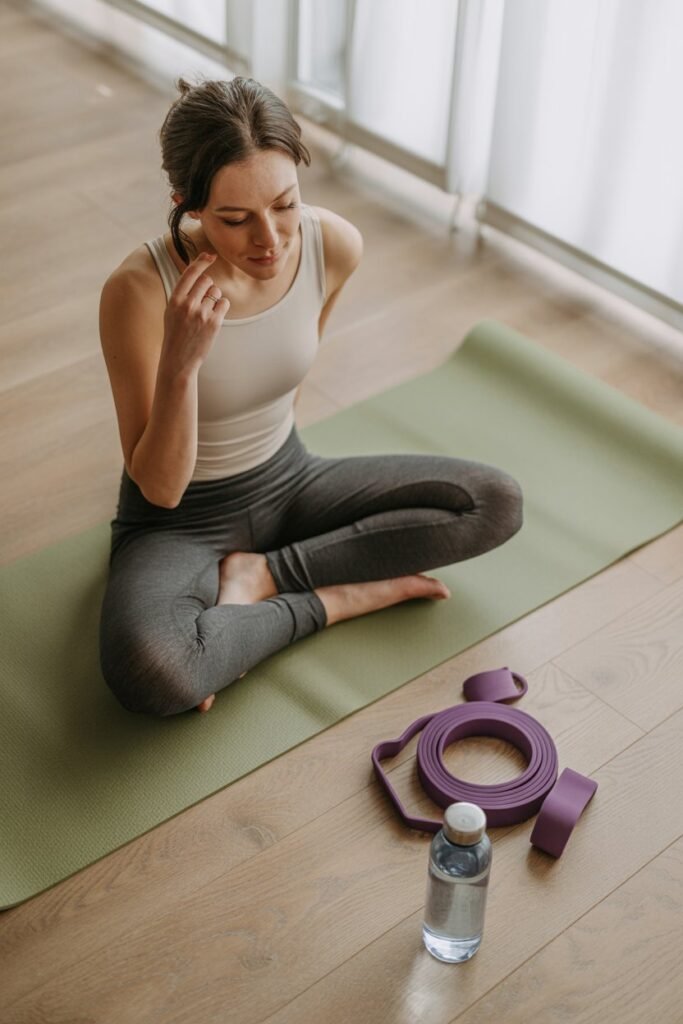
When I first started trying to grow my glutes, I made a lot of mistakes without even realizing it. And honestly, some of them slowed my progress more than I expected.
If you’re dealing with pain, fatigue, or flare-ups, avoiding these can make a huge difference in how your body feels and how fast you see results.
1. Doing Too Much Too Soon
It’s tempting to go all in, especially when you’re motivated. I’ve done it.
But pushing your body too hard too quickly can lead to flare-ups, soreness that lingers for days, and even injury.
What helped me was starting small and building gradually. Even short, gentle sessions done consistently work better than intense workouts you can’t recover from.
2. Ignoring Pain Signals
There’s a difference between muscle activation and actual pain.
If something feels sharp, uncomfortable, or just “off,” your body is trying to tell you something.
I used to push through everything thinking it meant progress, but it usually just set me back.
Listen to your body. Adjust, pause, or swap the movement if needed.
3. Rushing Through Exercises
Glute workouts are not about speed.
When I slowed down my movements, I started feeling my glutes working so much more. That is when I began to see real changes.
Focus on controlled, steady movements instead of rushing through reps.
4. Not Activating Your Glutes Properly
This is a big one.
If your glutes are not properly engaged, other muscles like your lower back or thighs will take over.
I noticed this especially with bridges and leg lifts. Once I focused on squeezing my glutes and moving with intention, everything felt different.
5. Skipping Rest and Recovery
Rest is not a setback. It is part of the process.
With fibro or chronic pain, your body needs more recovery time than most. Ignoring that can lead to burnout or flare-ups.
Some days, rest is the most productive thing you can do.
6. Expecting Fast Results
I get it, you want to see changes quickly.
But glute growth takes time, especially when you are training gently and mindfully.
For me, progress was slow at first, but it became more noticeable once I stayed consistent.
7. Comparing Yourself to Others
This one is easy to fall into.
But your journey is not the same as someone doing intense gym workouts every day.
Your focus is building strength in a way that feels safe and sustainable for your body.
And that is something to be proud of.
Frequently Asked Questions (FAQ)
How long does it take to grow your glutes?
Most people start noticing changes in 4–8 weeks with consistent training.
Can I grow my glutes at home?
Yes. Bodyweight exercises and resistance bands are enough to start.
Do I need weights for better results?
Weights help speed up progress, but they are not required for beginners.
How many times a week should I train glutes?
2–3 times per week is enough for growth and recovery.
Why am I not feeling my glutes working?
This is usually due to poor form or rushing through exercises.
Should I train glutes every day?
No. Muscles need rest to grow.
What should I eat to grow glutes?
Focus on protein, balanced meals, and enough overall calories.
Are squats enough to grow glutes?
No. You need a variety of exercises to target all areas.
Can walking help grow glutes?
Walking helps overall fitness but is not enough for significant growth.
What is the best exercise for glutes?
Hip thrusts are one of the most effective exercises.
Final Thoughts
When I first began this journey, I wasn’t chasing perfection — I was chasing strength I could live with. Living with fibromyalgia taught me that fitness doesn’t have to hurt to be effective.
These glute-focused exercises gave me a way to feel capable again, one slow, intentional movement at a time.
I discovered that progress looks different for everyone. For some, it’s a heavier lift. For others, like me, it’s getting through a set without pain.
What matters most is showing up — even when your energy is low, even when you modify every move.
Building a bigger, stronger butt wasn’t about vanity. It was about stability, balance, and reclaiming confidence in my own skin. Every rep reminded me that healing and strength can exist together.
If you take anything from my story, let it be this: consistency will always beat intensity. And your body — no matter its limits — is still capable of beautiful transformation when treated with care.