I used to think yoga was something only young, flexible people did.
The kind of people who could bend like rubber bands and hold poses for minutes without shaking.
So for a long time, I didn’t even consider it.
Especially as I got older, I assumed exercise had to be intense to “count.”
But then something changed.
I started noticing small things in my daily life:

My body felt stiffer in the mornings
My balance wasn’t as steady as before
Simple movements like bending or reaching felt harder
And I got tired faster than I used to
At first, I ignored it.
But eventually, I realized something important:
I didn’t need harder workouts.
I needed gentler, smarter movement.
That’s when yoga entered my life — slowly, carefully, and honestly… a little awkwardly at first.
But it helped more than I expected.
And if you’re here reading this, maybe you’ve felt something similar too.
Maybe you’re not looking for extreme fitness.
Maybe you just want to move better, feel looser, and stay independent in your daily life.
If that’s you, this guide is for you.
Why Yoga Is Perfect for Seniors
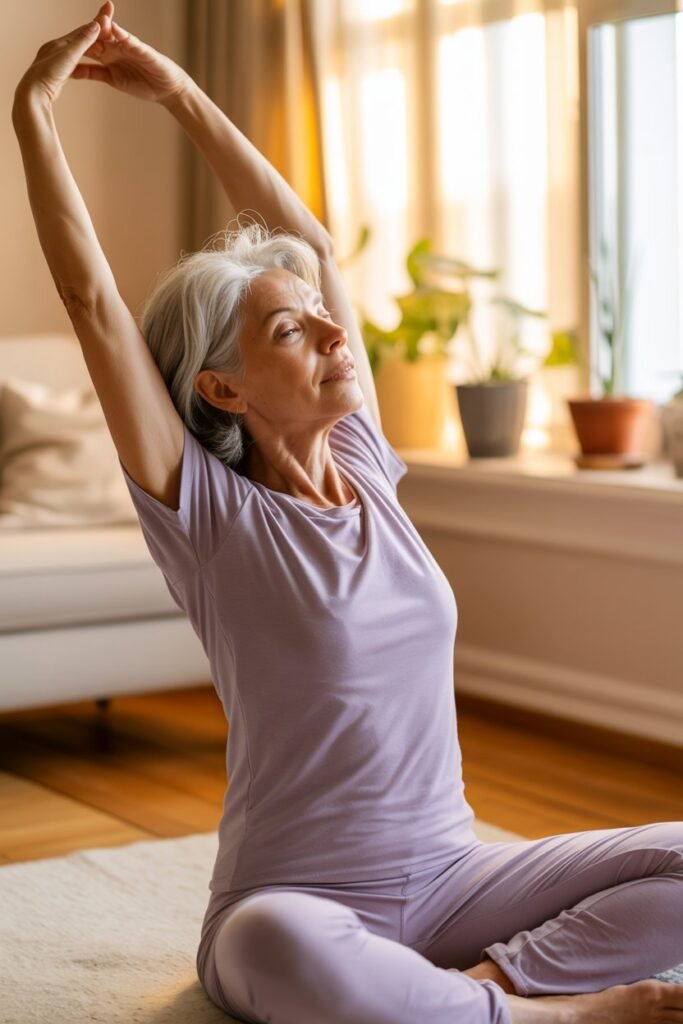
One of the biggest myths I believed for years is that exercise has an age limit.
That’s simply not true.
Your body doesn’t stop benefiting from movement just because you’re older.
In fact, gentle movement becomes even more important.
Yoga is especially powerful for seniors because it is:
Low impact
Joint friendly
Easy to modify
Slow and controlled
Focused on breathing and balance
You are never forced to move faster than your body allows.
And that changes everything.
I remember my first time trying a simple stretch at home.
I expected it to feel difficult.
Instead, it felt… calming.
Like my body was finally being listened to instead of pushed.
That feeling is what keeps many seniors coming back to yoga.
What Yoga Can Help Improve as You Age
When done consistently, yoga can support your body in very practical ways.
Not magic.
Not instant transformation.
But real, noticeable improvements over time.
You may notice:
Better balance when walking or standing
Less stiffness in joints and muscles
Improved posture
Easier breathing
More flexibility in hips, back, and shoulders
Better sleep quality
Lower stress levels
And something I didn’t expect at all:
A stronger sense of confidence in your body again.
That alone is powerful.
Is Yoga Safe for Seniors?
This is one of the most common questions people ask.
And the honest answer is:
Yes — when done gently and correctly.
The key is not intensity.
It’s awareness.
You don’t need to push yourself into difficult poses.
You don’t need to stretch beyond comfort.
And you definitely don’t need to compare yourself to anyone else.
Most yoga for seniors focuses on:
Seated poses
Chair yoga
Gentle stretching
Slow breathing exercises
Balance support movements
You are always in control of your pace.
I personally started very slowly — sometimes just 10 minutes a day.
And that was enough.
What You Need to Start Yoga at Home
One of the best things about yoga is how little equipment you actually need.
You don’t need a gym membership.
You don’t need expensive gear.
You just need a small space where you feel comfortable.
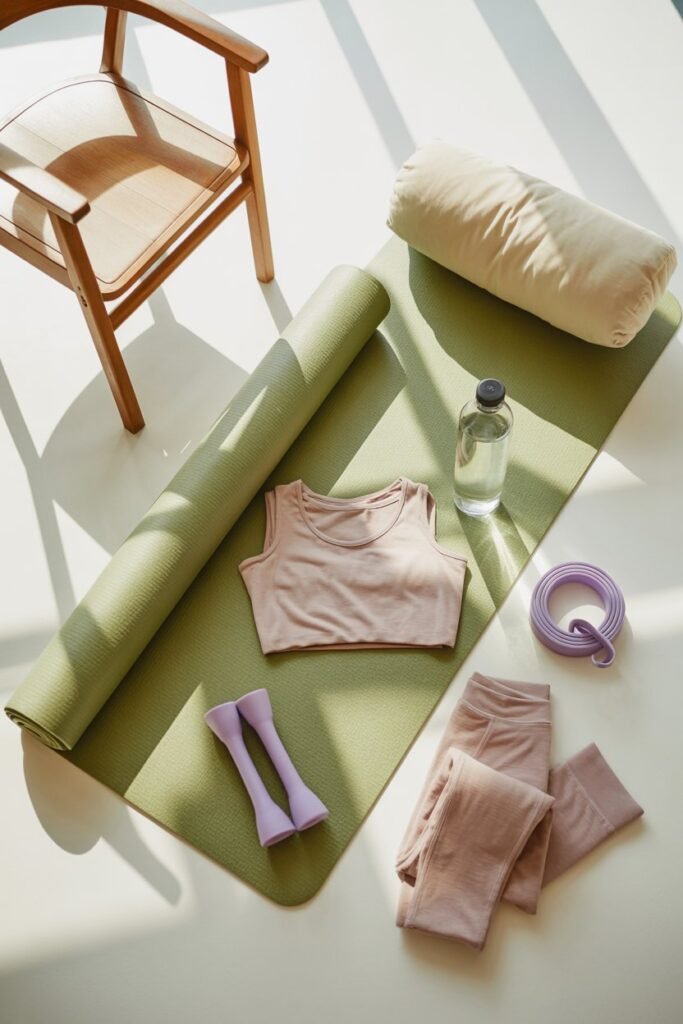
Here are some helpful basics:
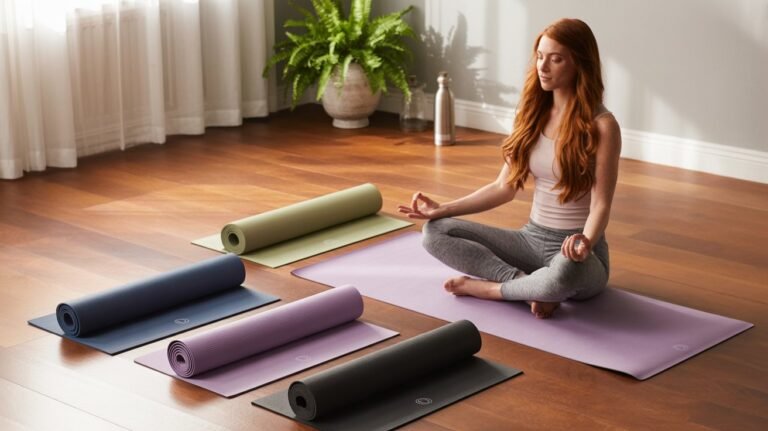
Yoga mat
Sturdy chair (very important for beginners)
Comfortable clothing
Water bottle
Small pillow for support
Wall space for balance support
That’s it.
Simple is better.
1. Seated Breathing Exercise
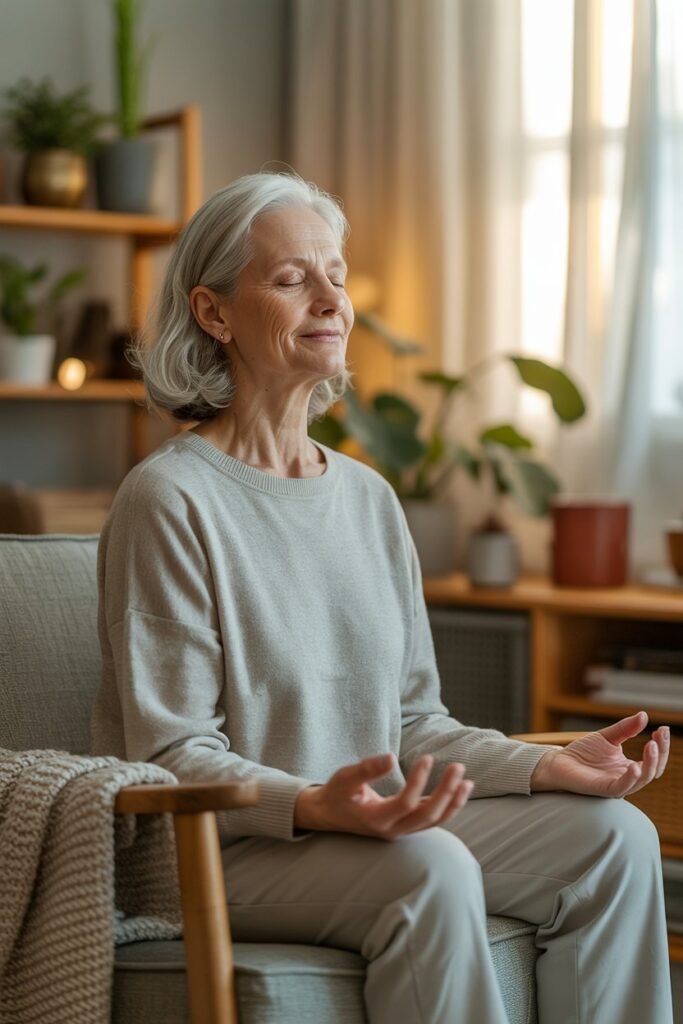
This is where I always recommend starting.
It looks simple — because it is.
But it helps calm your nervous system immediately.
How To Do It
Sit comfortably in a chair.
Place your hands on your lap.
Close your eyes if you feel safe.
Breathe in slowly through your nose.
Exhale gently through your mouth.
Repeat for 1–3 minutes.
Why It Helps
- Reduces stress
- Improves focus
- Helps relaxation
- Supports heart health
2. Chair Neck Stretch
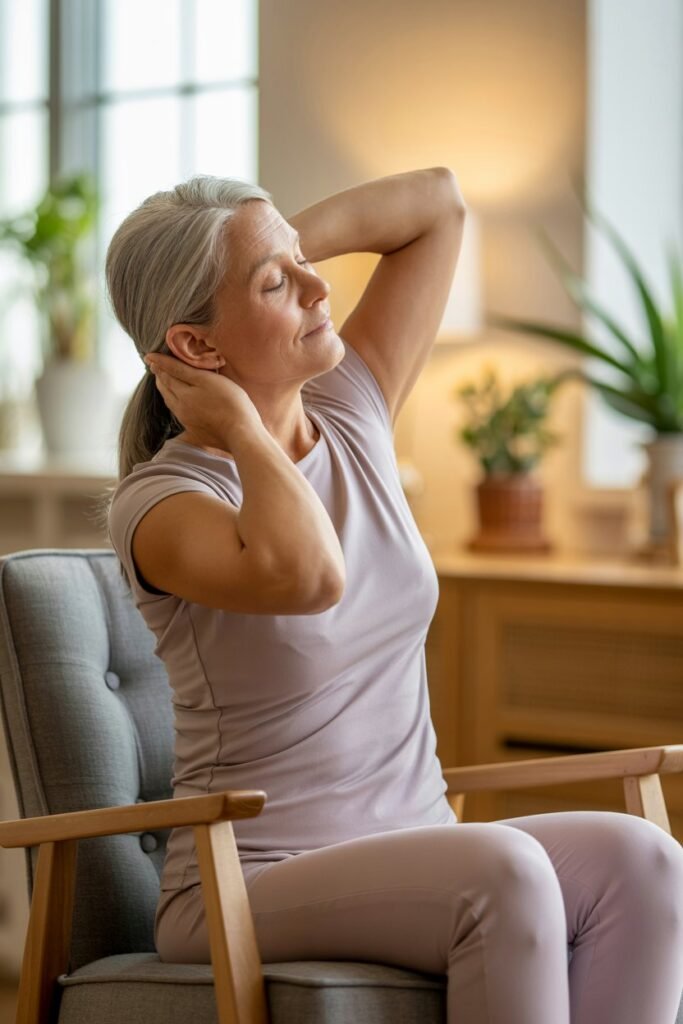
I didn’t realize how much tension I carried in my neck until I tried this.
It felt like a release I didn’t know I needed.
How To Do It
Sit tall in a chair.
Slowly tilt your head to one side.
Hold for a few seconds.
Switch sides gently.
Benefits
- Reduces neck stiffness
- Improves mobility
- Relieves tension headaches
- Easy for beginners
3. Seated Marching
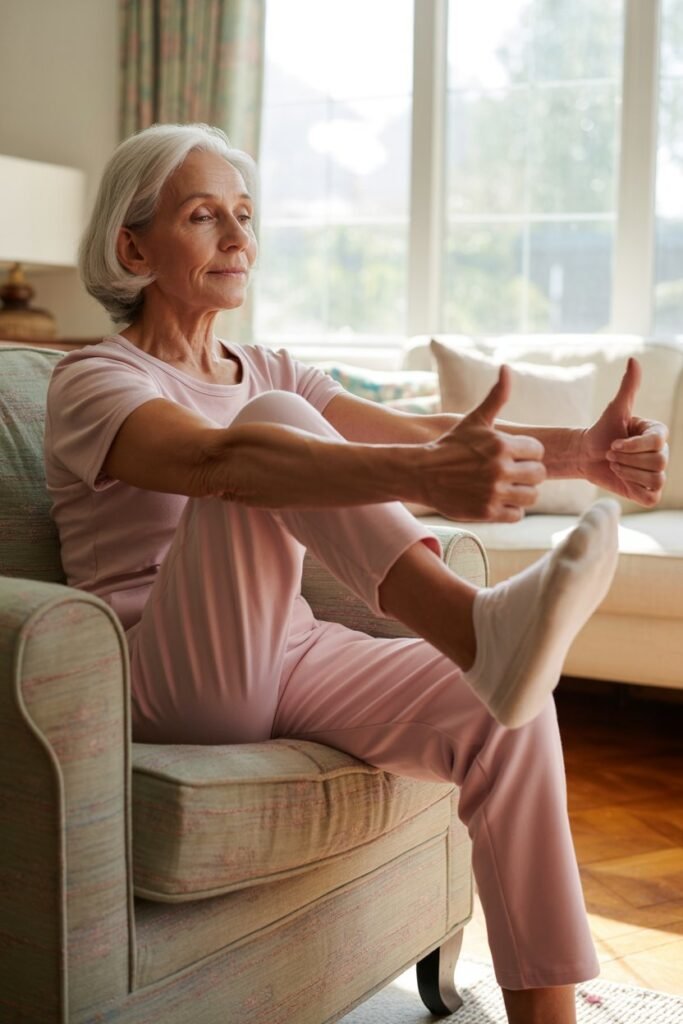
This is one of the simplest ways to start building gentle strength.
And you can do it while sitting.
How To Do It
Sit upright in a chair.
Slowly lift one knee up.
Lower it back down.
Repeat on both sides.
Move slowly and comfortably.
Why It’s Good
- Improves circulation
- Strengthens legs
- Supports mobility
- Great for beginners
4. Chair Forward Bend
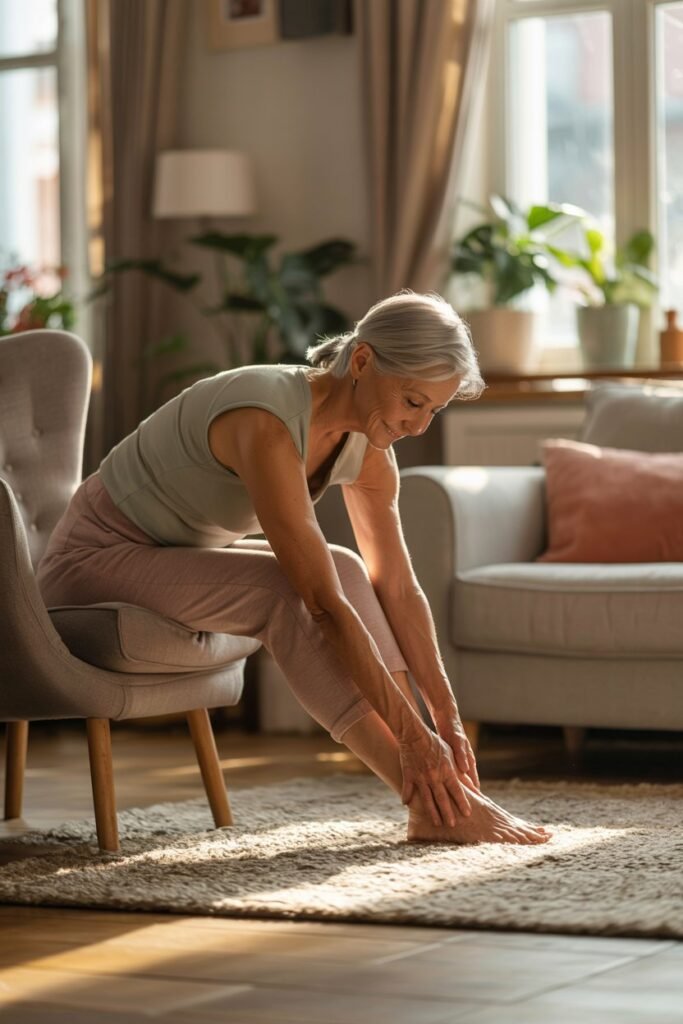
This one surprised me.
It feels gentle but very effective.
How To Do It
Sit on a chair.
Slowly bend forward from your hips.
Let your arms relax downward.
Hold for a few seconds.
Return slowly to sitting.
Benefits
- Stretches back
- Relieves tension
- Improves flexibility
- Encourages relaxation
5. Wall Support Standing Pose
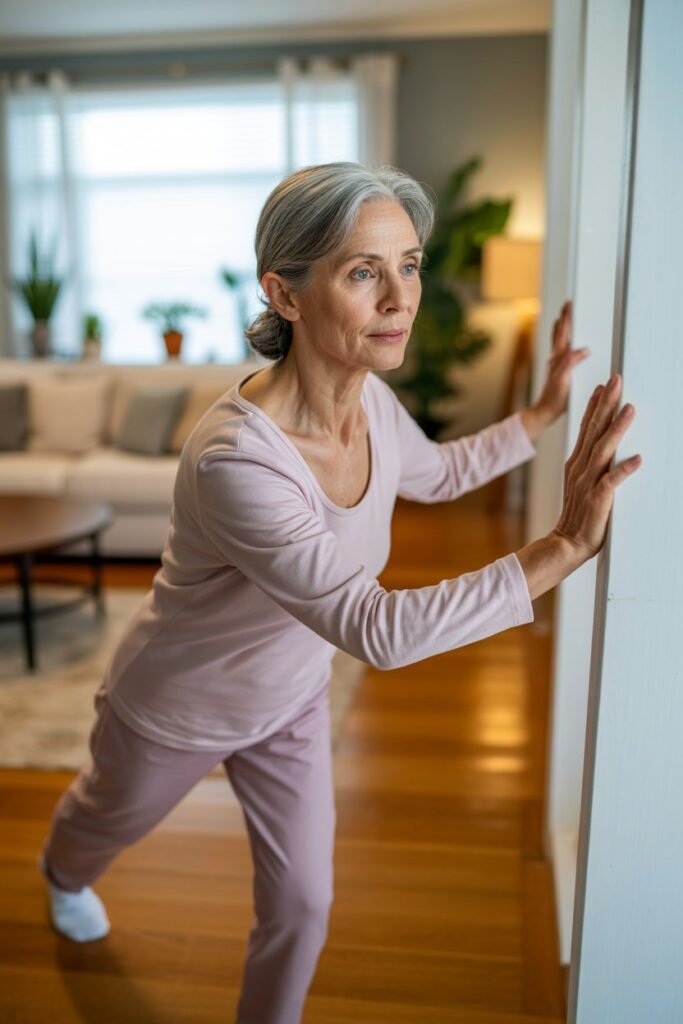
This is great for balance confidence.
I still use a wall sometimes, even today.
How To Do It
Stand near a wall.
Place one hand on it for support.
Lift one foot slightly off the ground.
Hold for a few seconds.
Switch sides.
Why It Helps
- Improves balance
- Builds leg strength
- Increases confidence
- Reduces fall risk
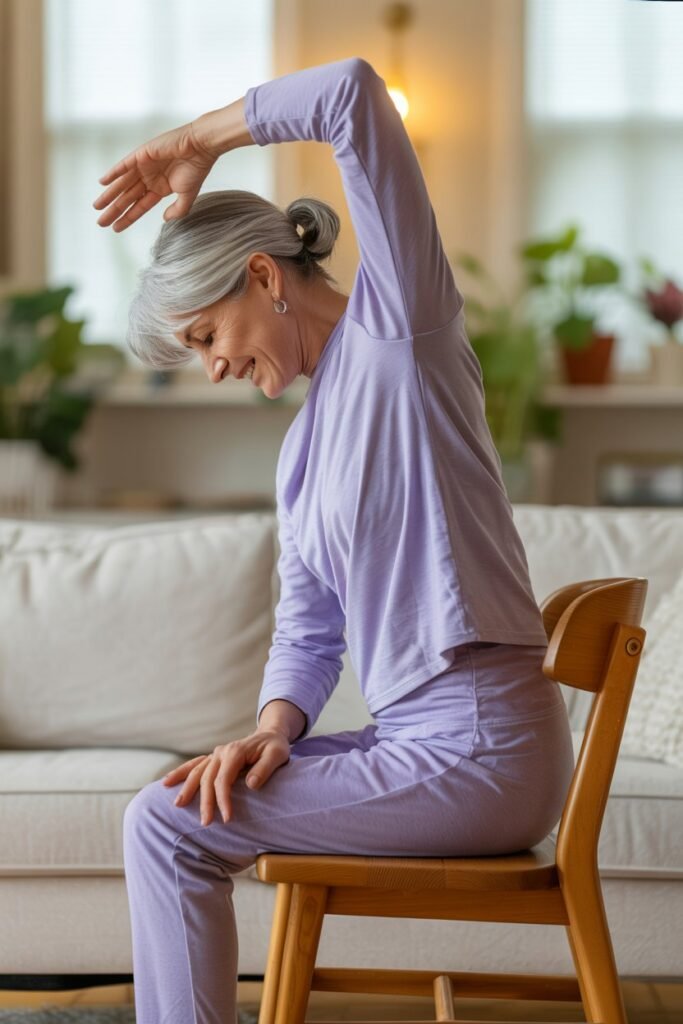
6. Seated Side Stretch
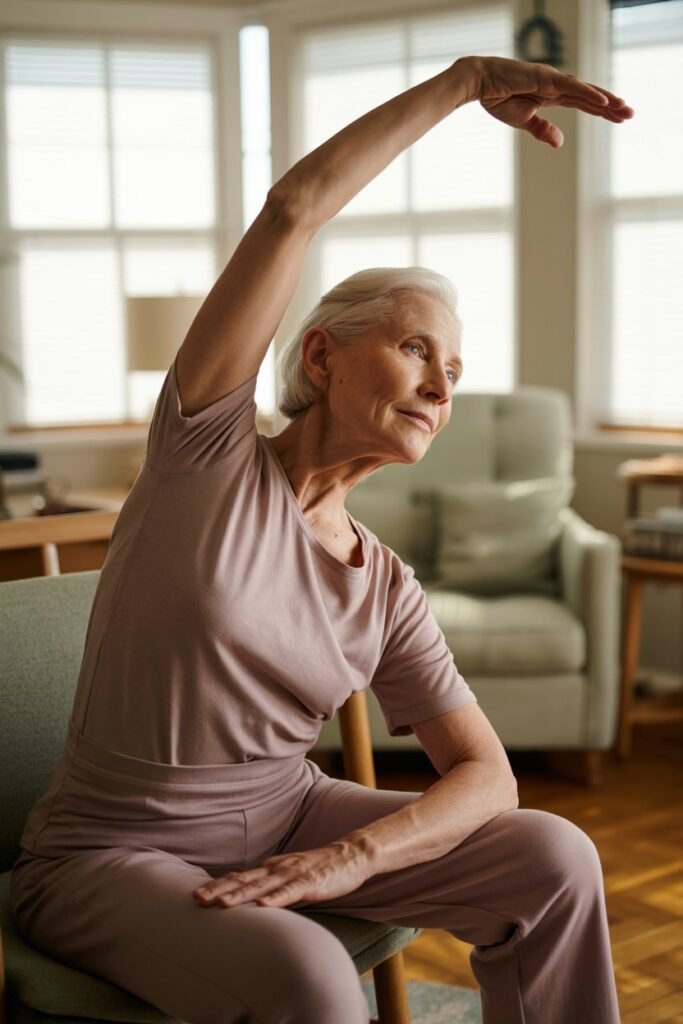
This is one of those stretches that feels small… but makes a big difference.
I remember doing it for the first time and realizing how tight my sides and shoulders had become from years of daily habits.
How To Do It
Sit tall in a chair.
Raise one arm overhead.
Gently lean to the opposite side.
Hold for a few seconds.
Switch sides.
Move slowly and breathe naturally.
Benefits
- Improves flexibility in the upper body
- Reduces stiffness in the torso
- Helps posture
- Encourages better breathing
7. Chair Yoga Cat-Cow
This is a gentle version of a classic yoga movement.
And honestly, it feels amazing on the spine.
How To Do It
Sit on a chair with your feet flat on the ground.
Place hands on your knees.
Inhale and gently arch your back (lift chest).
Exhale and round your back slightly.
Repeat slowly.
Why It Helps
- Improves spinal mobility
- Reduces back stiffness
- Encourages better posture
- Very beginner-friendly
8. Seated Leg Extension
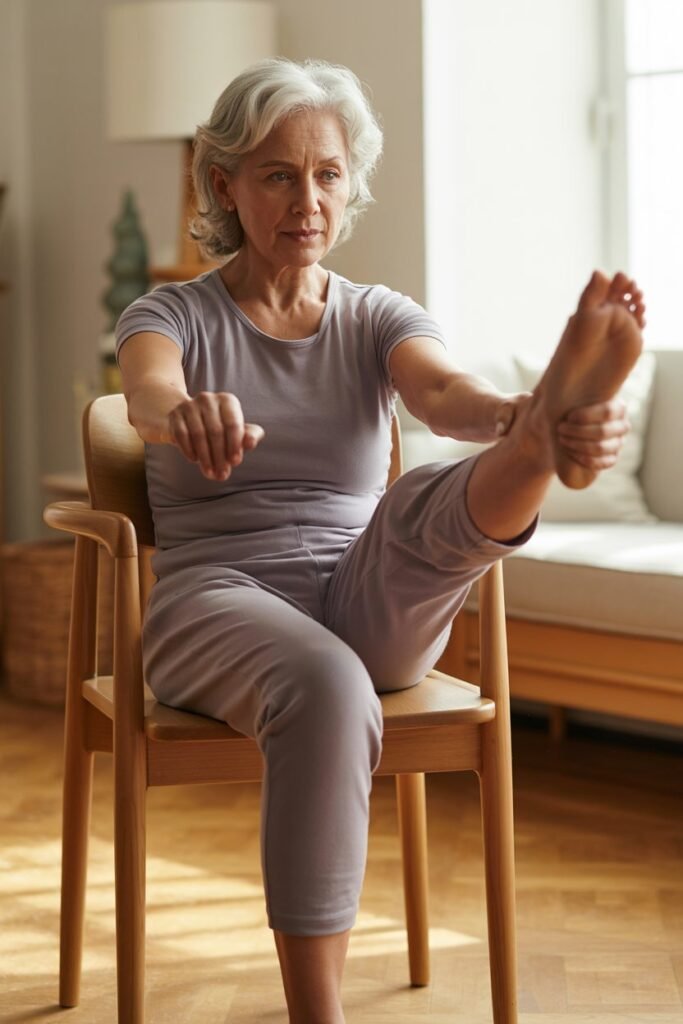
This is a simple strength-building movement that supports independence.
I like this one because it feels achievable even on low-energy days.
How To Do It
Sit upright in a chair.
Slowly extend one leg forward.
Hold for a few seconds.
Lower it gently.
Switch legs.
Benefits
- Strengthens thighs
- Supports walking stability
- Improves knee mobility
- Builds gentle strength
9. Standing Heel Raises
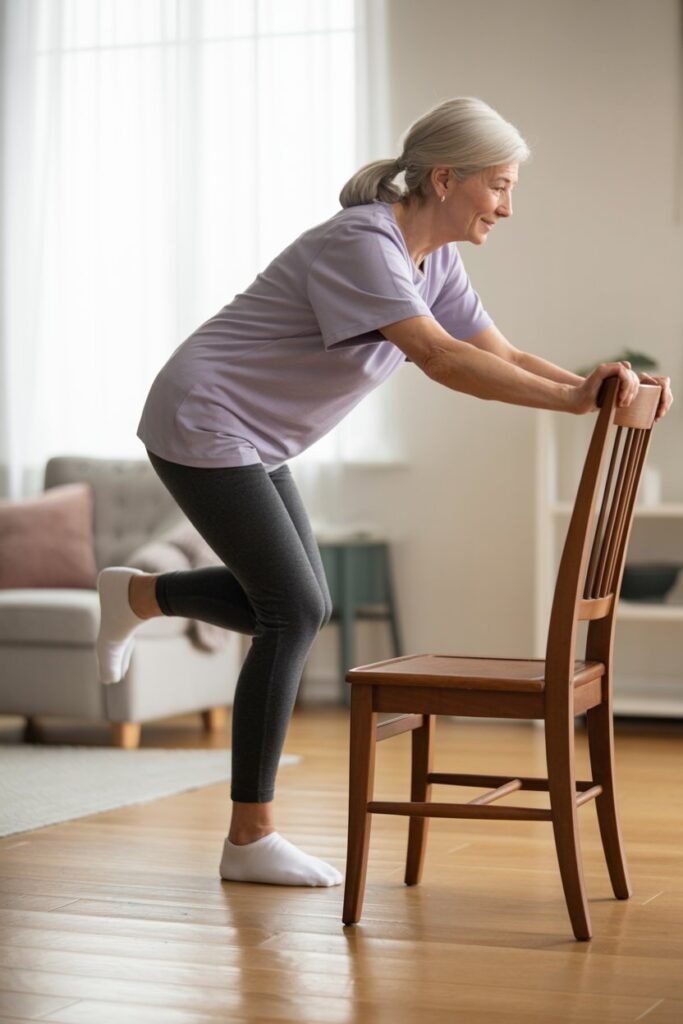
This is one of the best exercises for balance and ankle strength.
I didn’t realize how important this was until I started practicing it regularly.
How To Do It
Stand near a wall or chair for support.
Slowly lift your heels off the ground.
Hold for a moment.
Lower back down.
Repeat slowly.
Why It’s Important
- Improves balance
- Strengthens calves
- Supports walking stability
- Helps prevent falls
10. Relaxation Savasana (Rest Pose)
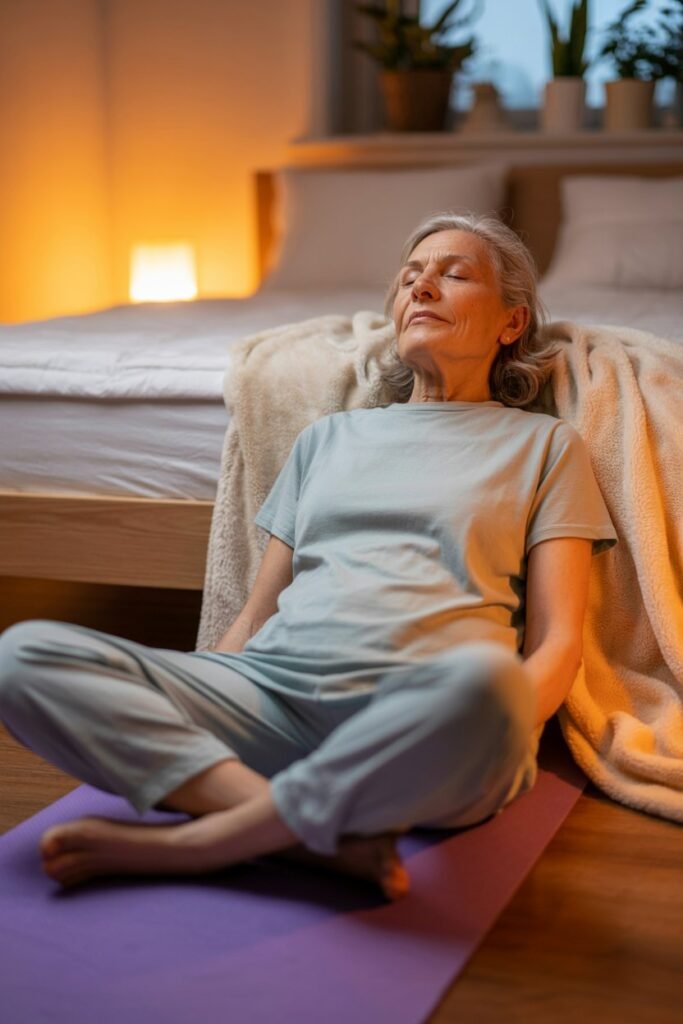
This is my favorite part of any yoga routine.
Not because it’s “easy”… but because it teaches your body how to fully relax again.
How To Do It
Lie down comfortably on your back.
Place a pillow under your knees if needed.
Rest your arms by your sides.
Close your eyes.
Breathe slowly and naturally.
Stay here for 3–10 minutes.
Benefits
- Reduces stress
- Lowers blood pressure
- Improves sleep
- Helps the nervous system reset
Simple Weekly Yoga Routine for Seniors
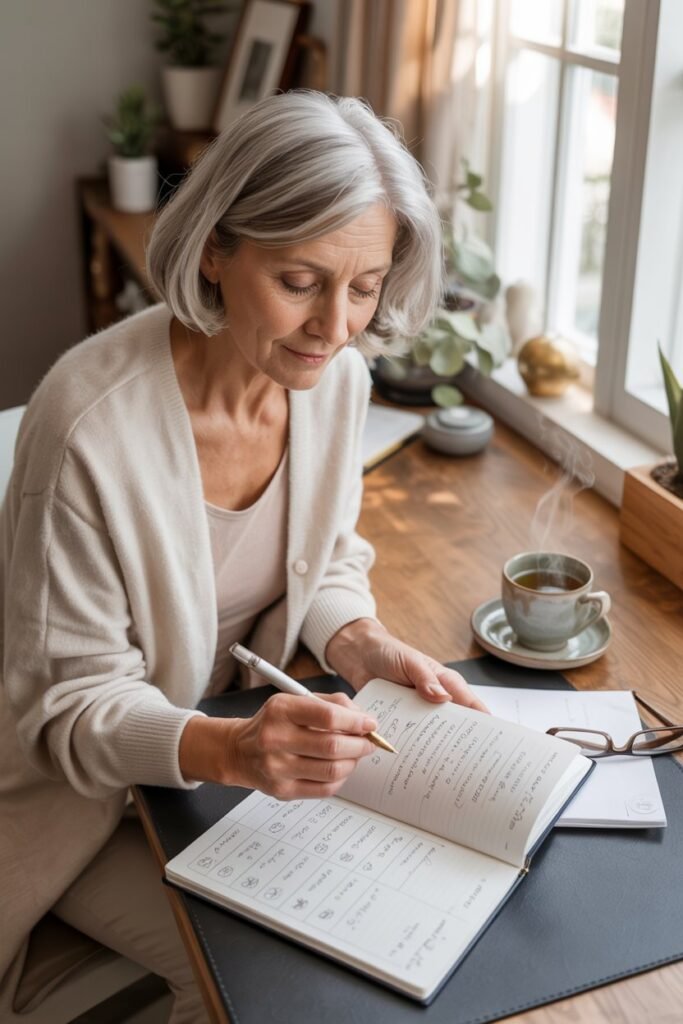
You don’t need a complicated plan.
In fact, simple is better.
Here’s an easy routine I recommend:
Day 1: Seated breathing + chair stretches
Day 2: Balance exercises + leg movements
Day 3: Light stretching + rest
Day 4: Repeat Day 1
Day 5: Gentle full-body yoga flow
Weekend: Rest or light movement
Even 10–15 minutes a day is enough.
Consistency matters more than duration.
Common Mistakes Seniors Should Avoid in Yoga
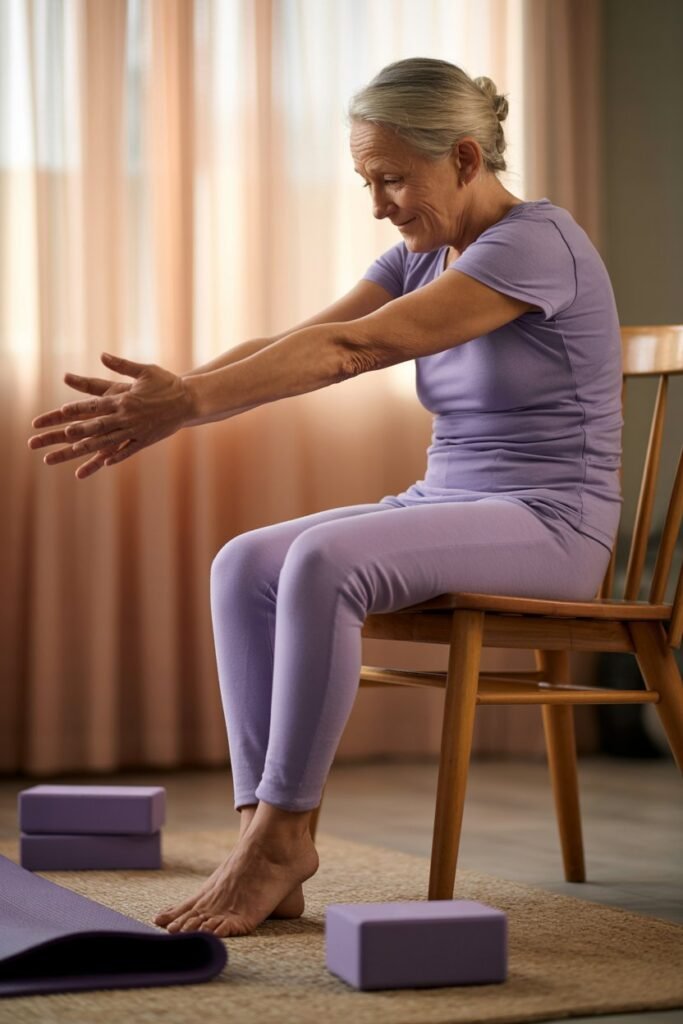
I’ve seen many beginners make the same mistakes.
And I made a few of them myself.
1. Trying to move too fast
Yoga is not a race.
Slow movement is more effective.
2. Forcing flexibility
Your body should never feel pain.
Gentle stretch is enough.
3. Skipping support tools
Chairs, walls, and pillows are not cheating.
They are smart modifications.
4. Comparing yourself to others
Your body has its own timeline.
Focus on your own progress.
Benefits of Yoga for Seniors Over Time
With consistent practice, many people notice:
Better balance
Stronger muscles
Improved posture
Less joint stiffness
More energy in daily life
Better emotional wellbeing
Reduced stress and anxiety
But the most important benefit?
Feeling more confident moving through life again.
That’s what makes yoga powerful.
Frequently Asked Questions (FAQ)
Is yoga safe for seniors with no experience?
Yes.
Yoga for seniors is designed for beginners and can be done at your own pace with simple modifications.
How often should seniors do yoga?
2–5 times per week is ideal.
Even short daily sessions can be very effective.
Can yoga help with joint pain?
Yes, gentle yoga can help improve mobility and reduce stiffness in joints over time.
However, it should always be done gently and without pain.
Do I need flexibility to start yoga?
No.
Flexibility improves as you practice.
You don’t need it to begin.
Can I do yoga in a chair?
Absolutely.
Chair yoga is one of the safest and most effective forms of yoga for seniors.
Final Thoughts
Starting yoga as a senior is not about doing perfect poses.
It’s about movement.
It’s about comfort.
And most importantly, it’s about giving your body the care it deserves.
I’ve learned that it’s never too late to start.
Not at 50.
Not at 60.
Not at 70 or beyond.
Your body still responds to kindness and movement.
So start small.
Stay consistent.
And move at your own pace.
Because every gentle stretch is still progress.