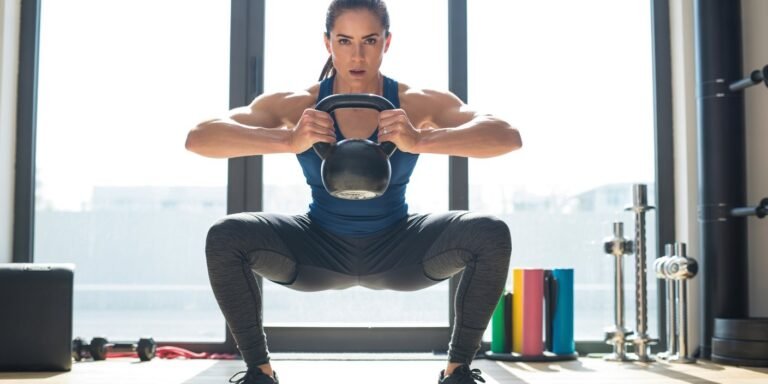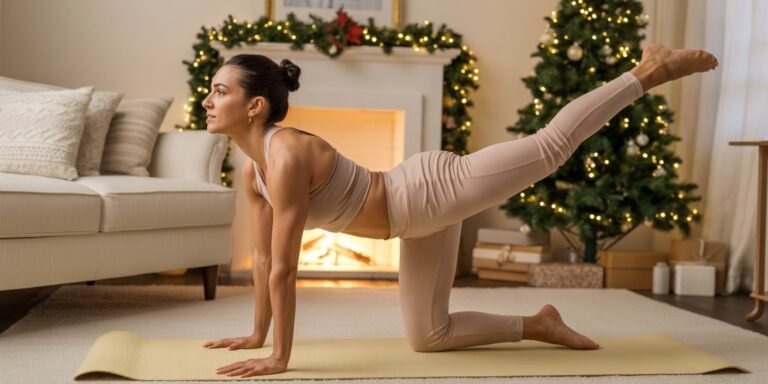
Let’s face it—achieving a flat, toned stomach can feel like chasing a mirage.
You do crunch after crunch, follow countless online challenges, and even try every trending diet, yet somehow the results never seem to match the effort.
You might start the day motivated, only to end up sitting on the couch, scrolling your phone, and wondering why your core still feels soft instead of sculpted. Sound familiar? You’re definitely not alone.
The truth is, a flat stomach isn’t just about endless ab exercises or restrictive dieting—it’s about targeting the right muscles, building strength, and incorporating exercises that work the core efficiently.
And here’s the best part: you don’t need fancy machines, expensive gym memberships, or complicated equipment to make real progress.
Your own bodyweight is all the resistance you need to strengthen your abs, obliques, and deep core muscles while improving posture, balance, and overall strength.
In this comprehensive guide, we’ll show you 15 highly effective, no-equipment exercises that you can do anywhere—whether at home, in a park, or even while traveling. These moves are designed to help you:
- Tone and tighten your midsection
- Strengthen deep core muscles that support posture and stability
- Burn fat efficiently when combined with proper nutrition and consistency
- Improve functional strength for everyday movements
We’ve included exercises suitable for beginners, as well as progressions for those looking to challenge themselves further.
Each move comes with step-by-step instructions, tips for maintaining proper form, and explanations of which muscles you’re targeting.
No guesswork, no complicated setups—just straightforward exercises that deliver results when done consistently.
By the end of this guide, you’ll have a complete no-equipment core workout that not only helps flatten your stomach but also strengthens your entire midsection.
You’ll learn how to engage your core properly, avoid common mistakes, and integrate these exercises into a routine that fits your lifestyle.
So, if you’re ready to stop wasting time on ineffective crunches and start seeing real progress, grab a mat or a comfortable space on the floor, clear a little room, and let’s
dive into the 15 exercises that can transform your midsection—and your confidence—without ever needing a single piece of equipment.
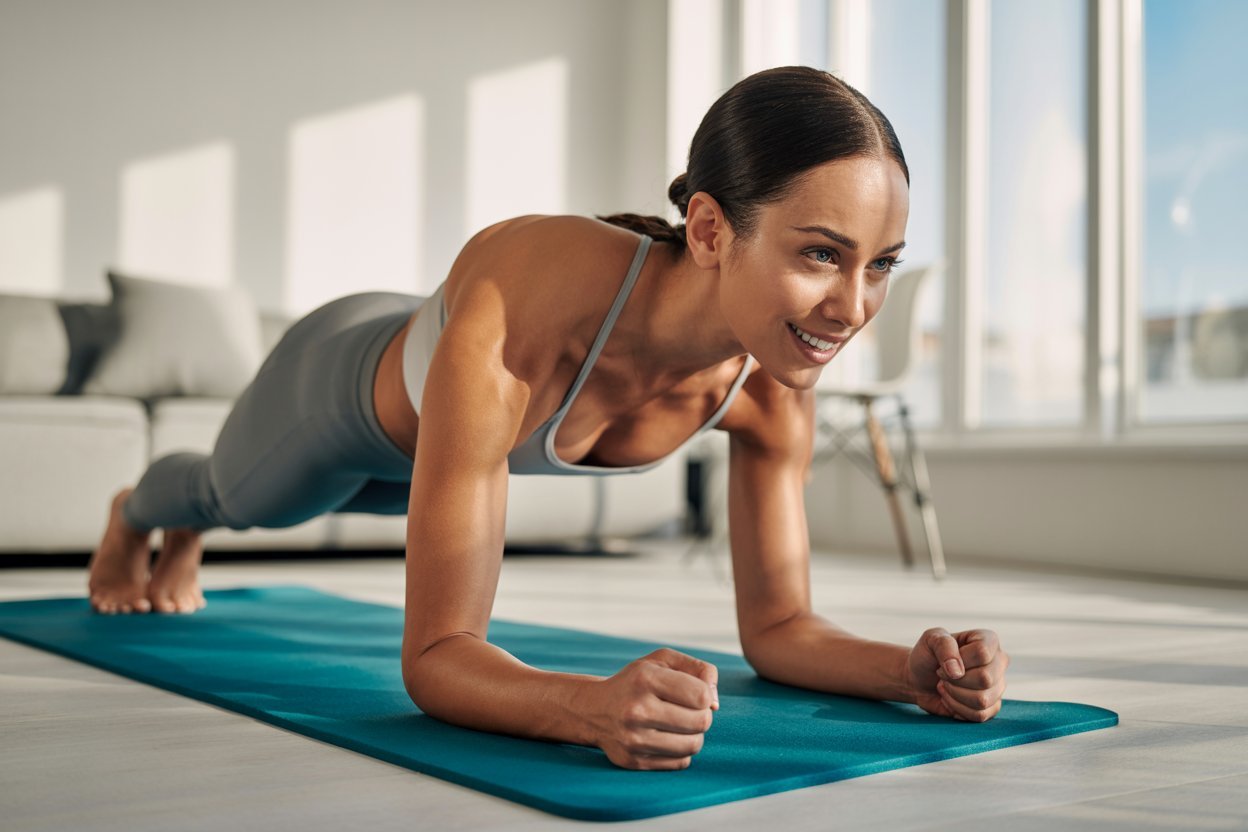
1. Plank
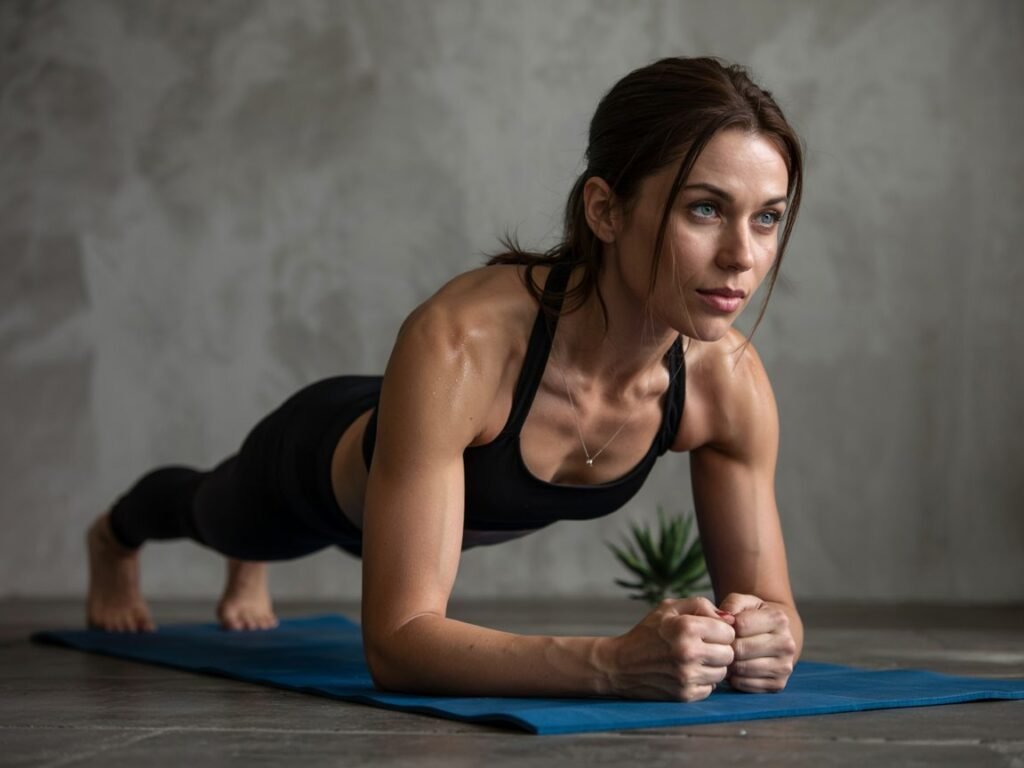
The plank is a classic for a reason—it’s simple, effective, and works almost every muscle in your core.
Unlike traditional crunches that mainly target the front of your abs, the plank engages your entire midsection, including the rectus abdominis, obliques, transverse abdominis, and even the lower back.
It also recruits your shoulders, chest, and glutes, making it a full-body stability exercise that supports better posture and functional strength.
Here’s how to do a proper plank:
Step-by-Step Instructions:
- Start by lying face down on the floor or a mat.
- Place your elbows directly under your shoulders and forearms flat on the ground. Your hands can be clasped or open, whichever feels comfortable.
- Engage your core by drawing your belly button toward your spine, keeping your back straight and avoiding sagging or arching.
- Lift your body so that only your forearms and toes touch the ground. Your body should form a straight line from head to heels.
- Keep your neck neutral, gazing slightly ahead of your hands.
- Hold this position, breathing steadily, for as long as you can maintain proper form. Start with 20–30 seconds and gradually work up to 1–2 minutes.
Tips for Maximum Effectiveness:
- Focus on tightening your abs and glutes throughout the hold. This ensures you’re working the muscles efficiently and protecting your lower back.
- Avoid letting your hips drop or your shoulders shrug—both reduce effectiveness and can cause strain.
- To make it more challenging, try variations like plank with shoulder taps, side planks, or plank with leg lifts.
Benefits of the Plank:
- Strengthens the entire core and improves posture
- Increases stability and balance for daily movements and other exercises
- Engages multiple muscle groups, including arms, shoulders, and glutes
- Can be done anywhere, anytime, without any equipment
The plank may look simple, but when done correctly, it’s incredibly powerful.
It’s a foundational exercise that sets the stage for all other core workouts, making it an essential move for anyone aiming for a flat, strong stomach.
2. Bicycle Crunches
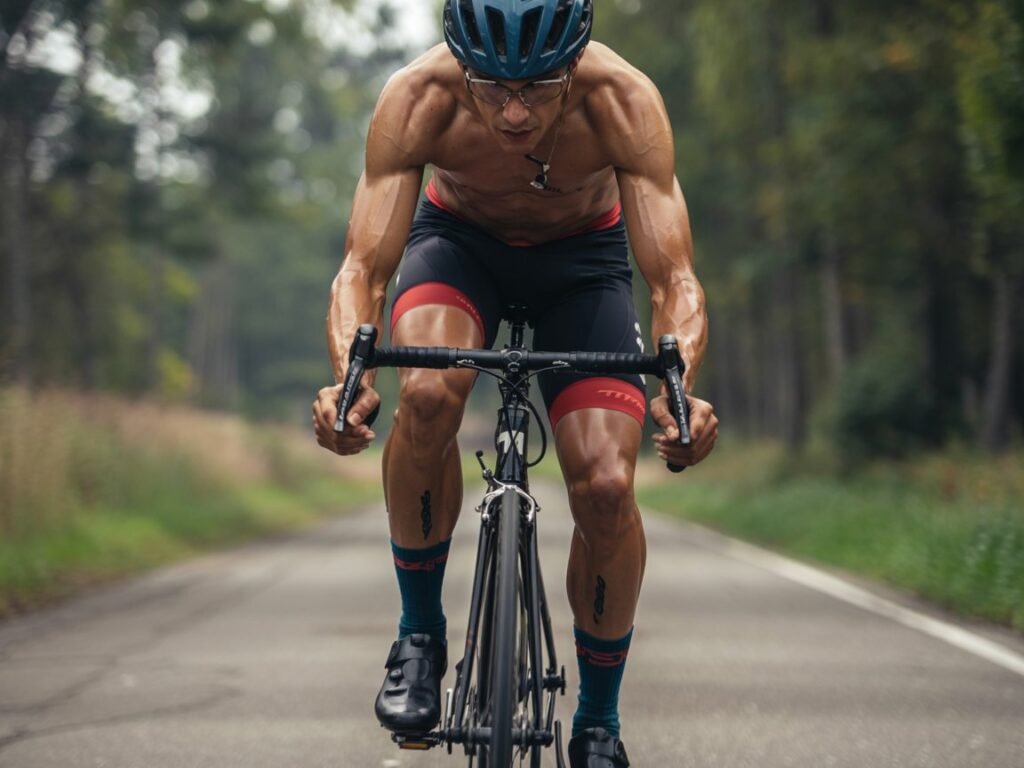
If you’re looking to target both your upper and lower abs while also sculpting your obliques, bicycle crunches are a must-add to your core routine.
Unlike standard crunches, this move incorporates a twisting motion, which engages side muscles and helps create the coveted “hourglass” appearance.
Plus, because it’s a dynamic movement, it elevates your heart rate slightly, giving you a mini cardio boost while strengthening your core.
Step-by-Step Instructions:
- Lie flat on your back with your hands gently supporting your head, elbows pointing outward. Avoid pulling on your neck.
- Lift your shoulders and upper back off the floor while bringing your knees toward your chest.
- Straighten your right leg out at about a 45-degree angle while simultaneously twisting your torso to bring your left elbow toward your right knee.
- Switch sides, bringing your right elbow toward your left knee while straightening your left leg.
- Continue alternating sides in a slow, controlled pedaling motion, focusing on engaging your core rather than rushing through repetitions.
- Perform 12–20 controlled reps per side to start, gradually increasing as your strength improves.
Tips for Maximum Effectiveness:
- Keep your movements slow and deliberate to maximize muscle engagement.
- Exhale as you twist and bring your elbow to your knee, inhale as you return to center.
- Avoid pulling on your neck—your abs should do the work, not your hands.
- To make it easier, keep your feet closer to the floor or perform a smaller range of motion until your core is stronger.
Benefits of Bicycle Crunches:
- Strengthens upper and lower abs as well as obliques
- Improves rotational core strength and stability
- Increases calorie burn compared to static crunches
- Enhances posture and balance through full-core engagement
Bicycle crunches are deceptively challenging. While they might feel like a small
movement, they activate multiple core muscles simultaneously, making them one of the most effective exercises for flattening and sculpting your stomach without any equipment.
3. Leg Raises
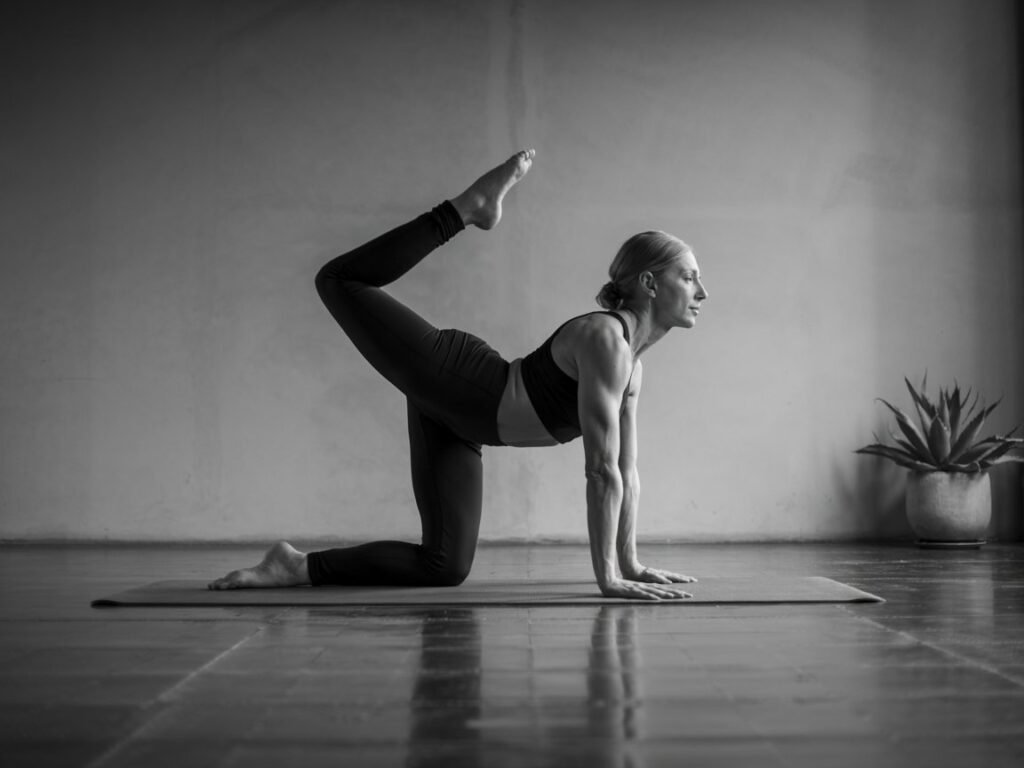
If your goal is to target the lower abs, leg raises are one of the most effective exercises you can do without equipment.
Many traditional ab exercises focus on the upper portion of the stomach, but leg raises specifically engage the lower abdominal muscles, helping to create a balanced, toned core.
They also strengthen your hip flexors and improve overall core stability, which is essential for posture and functional movements.
Step-by-Step Instructions:
- Lie flat on your back with your legs extended and arms resting at your sides, palms facing down.
- Keep your lower back pressed gently into the floor to protect your spine.
- Engage your core and lift both legs off the floor until they are perpendicular to the ground (forming a 90-degree angle with your torso).
- Slowly lower your legs back down without letting your heels touch the floor, maintaining tension in your abs.
- Repeat for 10–15 controlled repetitions, increasing as your strength improves.
Tips for Maximum Effectiveness:
- Focus on controlled movements rather than speed—rushing reduces engagement and increases the risk of strain.
- If keeping your legs straight is too challenging, bend your knees slightly while lifting and lowering.
- Avoid arching your lower back—press your spine into the mat to maintain proper form.
- To make the exercise more challenging, try leg raises with a pause at the top or slow descents, which increase time under tension.
Benefits of Leg Raises:
- Targets the lower abdominal muscles effectively
- Strengthens hip flexors and stabilizing muscles
- Improves core strength for better posture and daily movements
- Can be combined with other exercises for a full, no-equipment core routine
Leg raises might look simple, but when performed correctly, they are a powerful lower-ab sculpting move that complements planks and bicycle crunches perfectly, helping you build a strong, flat stomach from top to bottom.
4. Mountain Climbers
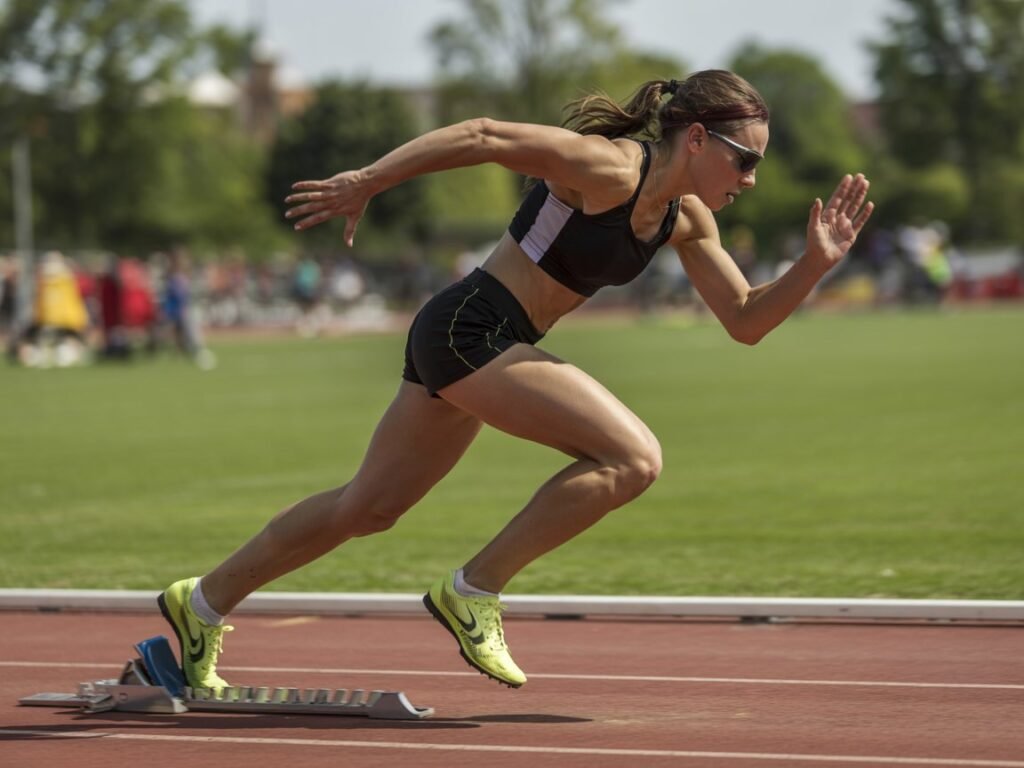
Mountain climbers are a dynamic, full-body movement that not only targets the abs but also engages the shoulders, chest, and legs.
This exercise combines core strengthening with cardio elements, making it perfect for burning calories while sculpting your midsection.
If you’re short on time but want an intense, no-equipment exercise that hits multiple muscle groups, mountain climbers are a go-to move.
Step-by-Step Instructions:
- Start in a high plank position with your hands directly under your shoulders, arms straight, and body forming a straight line from head to heels.
- Engage your core and keep your hips level—avoid letting them sag or rise too high.
- Drive your right knee toward your chest as you maintain a strong plank posture.
- Quickly switch legs, bringing your left knee toward your chest while extending your right leg back.
- Continue alternating legs in a running motion, keeping your movements controlled but brisk.
- Perform 30–60 seconds per set, focusing on quality form rather than speed.
Tips for Maximum Effectiveness:
- Keep your core tight throughout the exercise to protect your lower back.
- Avoid bouncing your hips up and down—your body should stay as level as possible.
- Start slow if needed, then gradually increase speed as your endurance improves.
- To intensify, try cross-body mountain climbers, bringing your knee toward the opposite elbow to engage obliques.
Benefits of Mountain Climbers:
- Strengthens the entire core, including upper and lower abs
- Increases cardiovascular endurance and calorie burn
- Improves agility, coordination, and functional strength
- Engages shoulders, chest, and legs for a full-body workout
Mountain climbers are deceptively tough. While they might feel like a fast-paced run on the spot, they’re incredibly effective for toning the abs and boosting metabolism, making them a staple in any no-equipment flat-stomach workout.
5. Russian Twists
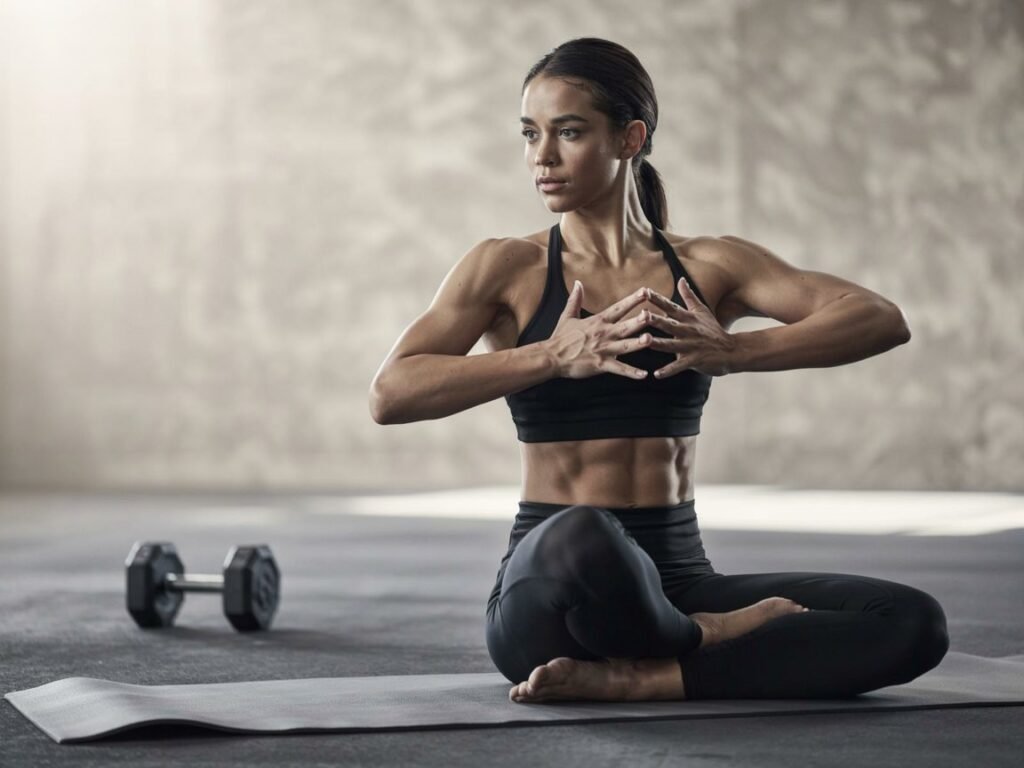
If you want to target your obliques and enhance rotational core strength, Russian twists are a must.
This exercise engages the side muscles of your abdomen while also working the rectus abdominis and hip flexors, making it an effective move for creating a toned, sculpted waistline.
It’s simple, versatile, and can be done anywhere with just your body weight.
Step-by-Step Instructions:
- Sit on the floor with your knees bent and feet flat on the ground. Lean back slightly, keeping your torso at about a 45-degree angle.
- Engage your core to maintain a straight back. Lift your feet slightly off the floor for more challenge, or keep them down if needed for stability.
- Clasp your hands together in front of your chest or hold a light object for added resistance.
- Rotate your torso to the right, bringing your hands or the object beside your hip.
- Return to center and rotate to the left side in a controlled motion.
- Continue alternating sides for 12–20 repetitions per side, focusing on keeping your core engaged throughout the movement.
Tips for Maximum Effectiveness:
- Avoid rounding your back—maintain a straight spine to protect your lower back.
- Twist from your torso, not just your arms. This ensures proper oblique engagement.
- Breathe steadily throughout the exercise, exhaling with each twist.
- For added intensity, lift your feet higher, slow down your twists, or hold a heavier object.
Benefits of Russian Twists:
- Strengthens obliques and rotational core muscles
- Improves balance, stability, and posture
- Tones the waistline and helps define the midsection
- Engages the hip flexors and lower abs for full-core activation
Russian twists are deceptively simple but highly effective. When performed with control and proper form, they shape your obliques, enhance your core strength, and complement other flat-stomach exercises for a complete, no-equipment workout.
6. Flutter Kicks
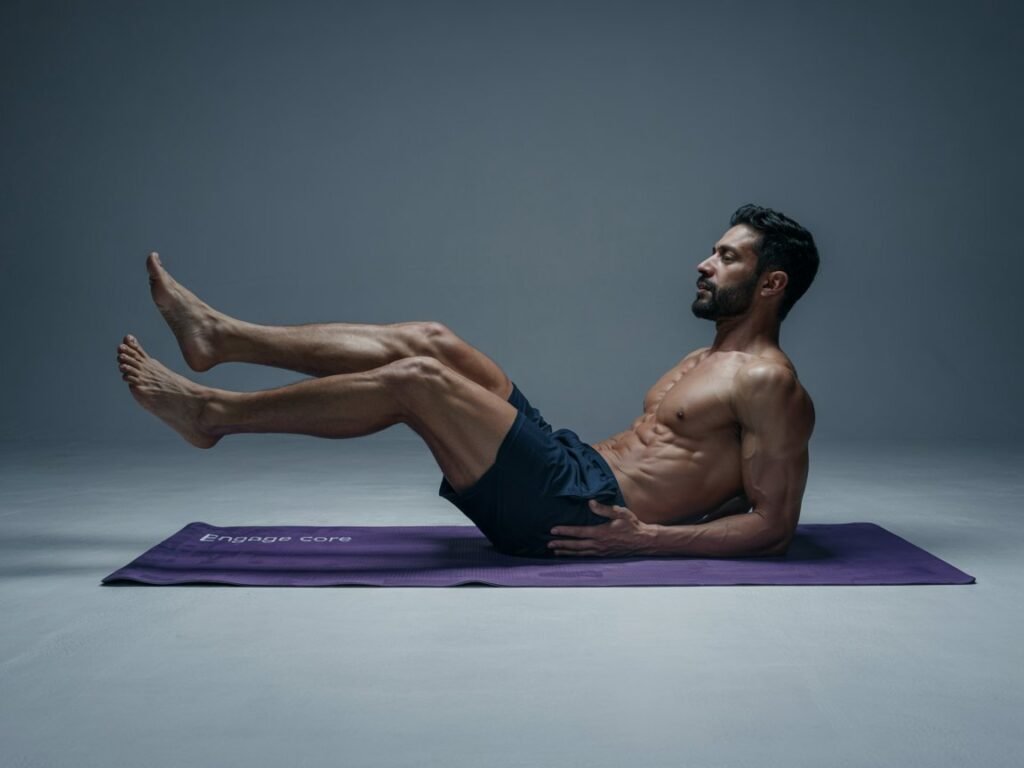
Flutter kicks are an excellent exercise for targeting the lower abs and hip flexors, helping to strengthen the muscles that are often overlooked in traditional ab workouts.
This move also improves core endurance and promotes better stability, making it a key addition to any no-equipment flat-stomach routine.
Despite its simplicity, flutter kicks can be surprisingly challenging, especially when performed with proper form.
Step-by-Step Instructions:
- Lie flat on your back with your legs extended and arms resting by your sides.
- Lift your heels a few inches off the ground while keeping your core engaged and your lower back pressed gently into the floor.
- Alternate lifting one leg higher while lowering the other, creating a small, controlled kicking motion—like swimming on your back without water.
- Keep your movements smooth and deliberate, avoiding jerky motions that strain your lower back.
- Perform 20–30 seconds to start, gradually increasing to 45–60 seconds as your endurance improves.
Tips for Maximum Effectiveness:
- Keep your core tight throughout the exercise—think of drawing your belly button toward your spine.
- Avoid arching your lower back; pressing it gently into the mat protects your spine.
- Move your legs slowly if you’re a beginner to maintain proper engagement.
- For added intensity, hold your arms slightly above the ground or extend them alongside your head.
Benefits of Flutter Kicks:
- Strengthens lower abdominal muscles and hip flexors
- Enhances core endurance and stability
- Improves posture and supports other core exercises
- Can be done anywhere, anytime, without equipment
Flutter kicks may look easy at first glance, but when executed with control and proper form, they fire up your lower abs and help carve a strong, defined midsection, complementing planks, bicycle crunches, and other core exercises in your routine.
7. Dead Bug
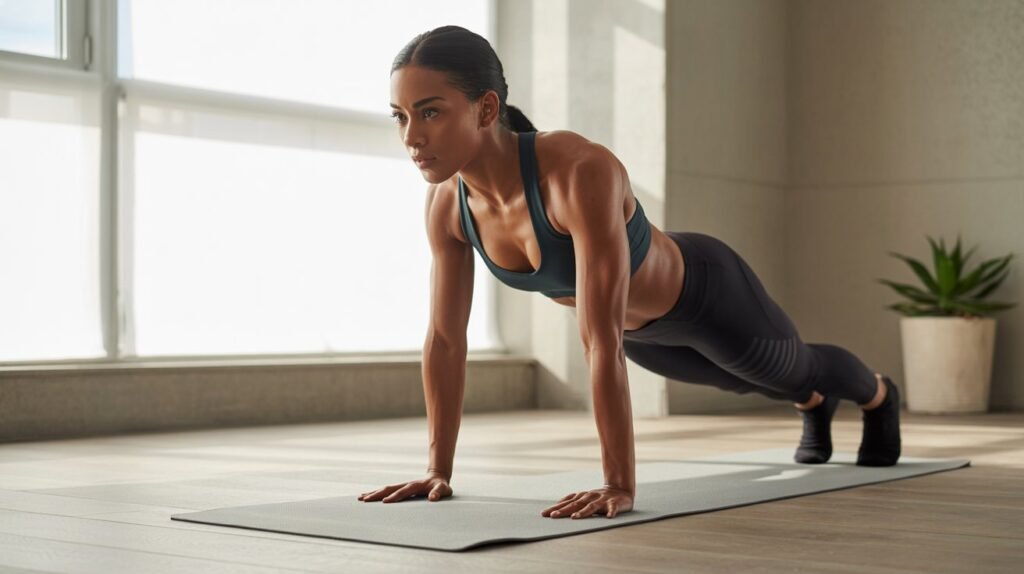
The dead bug is a foundational core exercise that focuses on deep abdominal muscles while also promoting lower back stability.
Unlike more dynamic moves, the dead bug emphasizes control and coordination, making it ideal for strengthening the core without straining the spine.
It’s particularly helpful for improving posture, enhancing functional movement, and preparing your body for more advanced core exercises.
Step-by-Step Instructions:
- Lie flat on your back with your arms extended toward the ceiling and your knees bent at 90 degrees, hips stacked over your knees.
- Engage your core by gently pressing your lower back into the floor. This is key to protecting your spine.
- Slowly lower your right arm overhead toward the floor while simultaneously extending your left leg straight out, keeping it a few inches above the ground.
- Return your arm and leg to the starting position and repeat with the opposite arm and leg.
- Continue alternating sides for 10–15 controlled repetitions per side, focusing on stability rather than speed.
Tips for Maximum Effectiveness:
- Keep your lower back pressed into the floor throughout the movement.
- Move slowly and deliberately—control is more important than how many reps you do.
- Breathe steadily, exhaling as you extend your arm and leg, and inhaling as you return to center.
- To increase difficulty, hold your extended position for a few seconds before returning to start.
Benefits of the Dead Bug:
- Strengthens deep core muscles, including transverse abdominis
- Improves spinal stability and posture
- Reduces risk of lower back pain
- Enhances coordination between upper and lower body
Though it looks simple, the dead bug is one of the most effective exercises for building a strong, stable core.
It complements dynamic moves like bicycle crunches and flutter kicks, ensuring that your abs are not only visible but also functional and resilient.
8. Reverse Crunches
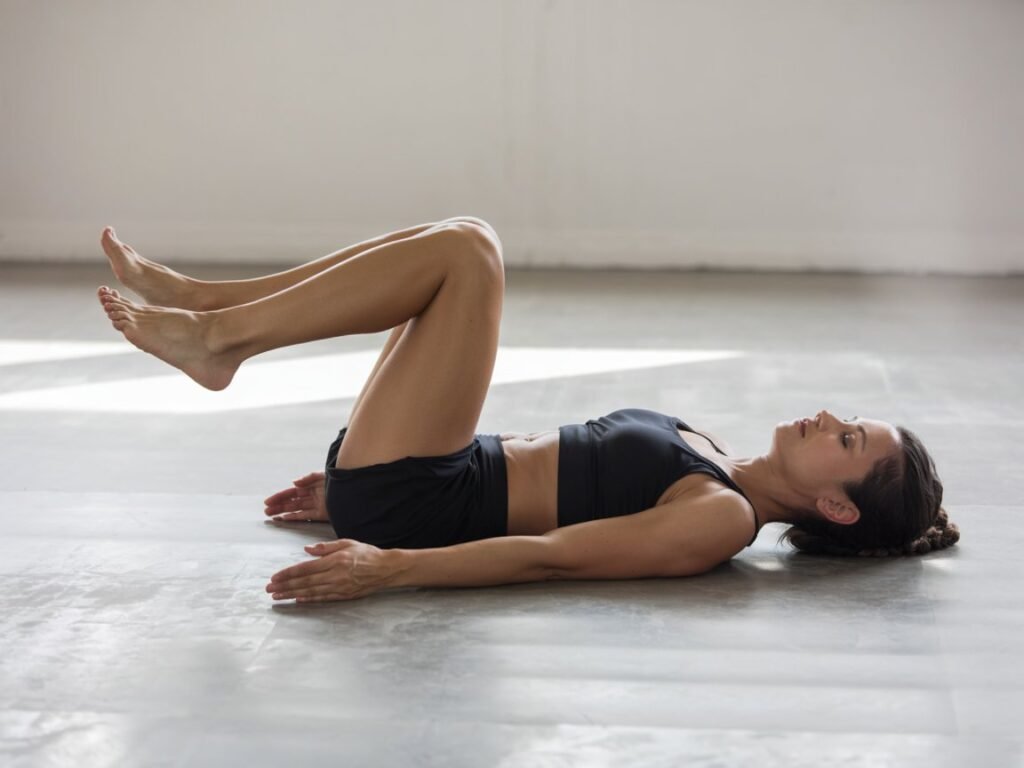
Reverse crunches are a highly effective exercise for targeting the lower abs, an area that many traditional ab exercises struggle to engage fully.
Unlike standard crunches, which mainly focus on the upper abs, reverse crunches emphasize lifting the hips and engaging the lower abdominal muscles, helping you build a balanced, sculpted core.
Step-by-Step Instructions:
- Lie flat on your back with your arms resting by your sides, palms facing down for support.
- Bend your knees at a 90-degree angle and lift your feet off the floor so your thighs are perpendicular to the ground.
- Engage your core and curl your hips off the floor, bringing your knees toward your chest in a controlled motion.
- Slowly lower your hips back down without letting your feet touch the floor, maintaining tension in your lower abs.
- Repeat for 12–15 controlled repetitions, increasing as your strength improves.
Tips for Maximum Effectiveness:
- Avoid swinging your legs—focus on slow, deliberate movements to engage the lower abs properly.
- Keep your upper body relaxed and pressed into the mat; don’t strain your neck or shoulders.
- Exhale as you lift your hips and inhale as you lower them.
- To increase intensity, pause at the top for one to two seconds before lowering your hips.
Benefits of Reverse Crunches:
- Strengthens lower abdominal muscles effectively
- Improves core stability and functional strength
- Enhances posture and spinal alignment
- Complements other ab exercises for a full-core workout
Reverse crunches are deceptively simple but extremely effective. When performed correctly, they sculpt the lower abs, improve core endurance, and balance your overall abdominal development, making them a crucial part of any no-equipment flat-stomach routine.
9. Side Plank
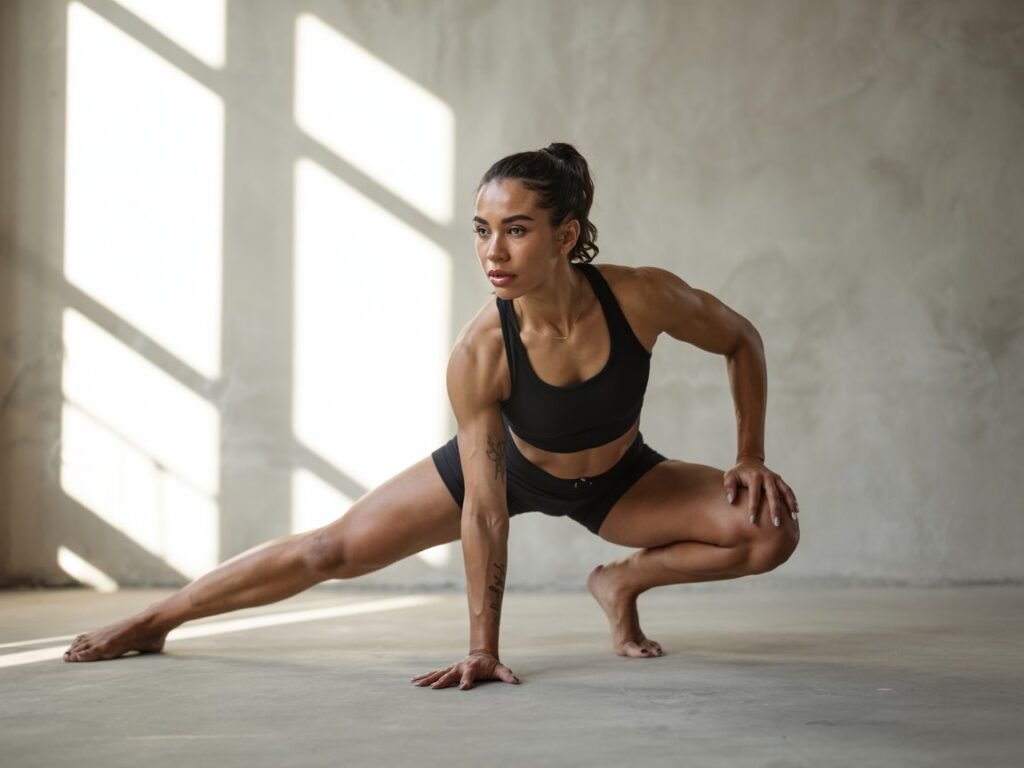
The side plank is one of the best exercises for targeting the obliques, the muscles along the sides of your torso that give your waist a defined look.
Unlike traditional planks, which primarily focus on the front of your core, the side plank emphasizes lateral stability, helping to improve balance, posture, and overall core strength.
It also engages the shoulders, glutes, and hips, making it a multi-muscle, no-equipment powerhouse.
Step-by-Step Instructions:
- Lie on your side with your legs extended, stacking your feet on top of each other.
- Place your bottom elbow directly under your shoulder, forearm flat on the floor, and your other arm resting along your side or reaching toward the ceiling.
- Engage your core and lift your hips off the floor so your body forms a straight line from head to heels.
- Hold this position for 20–45 seconds, focusing on keeping your hips elevated and your body aligned.
- Slowly lower your hips back to the floor and switch sides.
Tips for Maximum Effectiveness:
- Keep your core tight and avoid letting your hips sag.
- Your head should be in a neutral position, looking straight ahead or slightly upward.
- If lifting both legs is too challenging, slightly stagger your feet for extra stability.
- For added intensity, lift your top leg while holding the side plank, or perform side plank dips by lowering and raising your hips slightly.
Benefits of Side Plank:
- Strengthens obliques and lateral core muscles
- Improves balance, stability, and posture
- Engages shoulders, glutes, and hips for full-body activation
- Protects the spine by reinforcing core support
The side plank may seem static, but it’s incredibly effective for sculpting the waistline and building a stable core.
Integrating side planks into your no-equipment routine ensures that your abs are not only strong but also functional and well-rounded.
10. Heel Touches
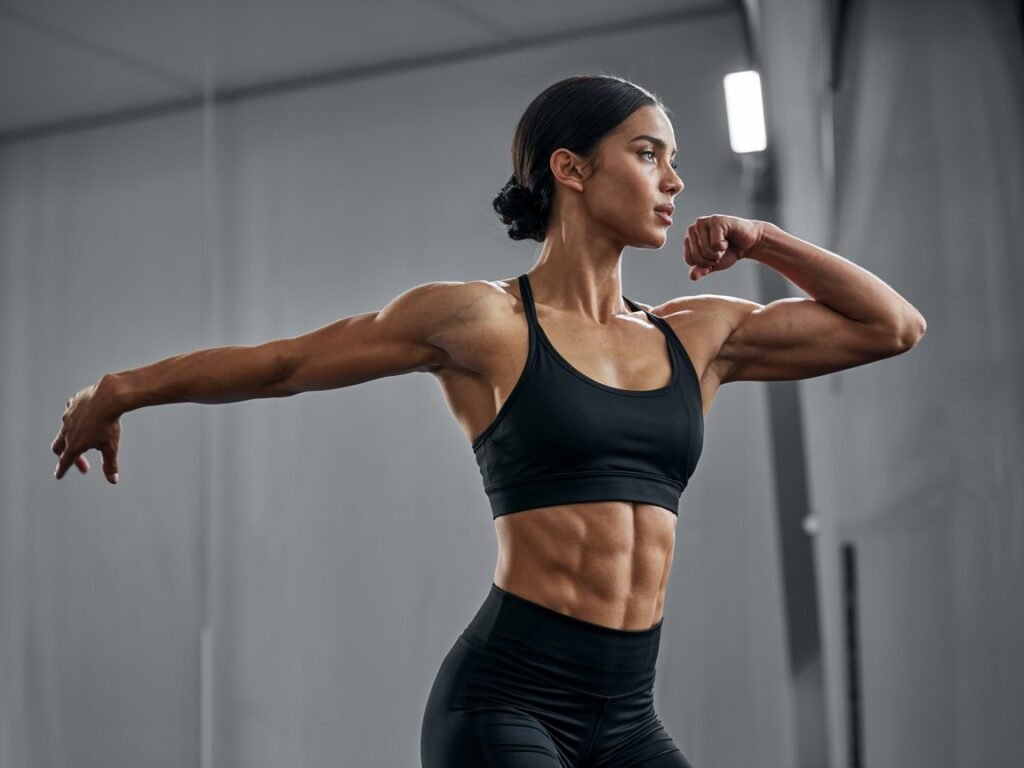
Heel touches are a simple yet effective exercise designed to tone the obliques and strengthen the muscles along the sides of your abdomen.
Unlike dynamic twists or crunches, heel touches are performed with controlled side-to-side movements, making them ideal for targeting the muscles that create a slimmer waistline while also engaging the core.
Step-by-Step Instructions:
- Lie flat on your back with your knees bent and feet flat on the floor, hip-width apart.
- Extend your arms down by your sides with palms facing the floor.
- Lift your shoulders slightly off the ground, engaging your upper abs.
- Reach your right hand toward your right heel, then return to center. Repeat on the left side, alternating back and forth.
- Perform 20–30 controlled repetitions per side, focusing on muscle engagement rather than speed.
Tips for Maximum Effectiveness:
- Keep your core tight and your shoulders lifted throughout the movement.
- Avoid using momentum—reach slowly and deliberately toward your heels.
- Breathe steadily: exhale as you reach toward each heel, inhale as you return to center.
- To increase difficulty, hold a small weight in your hands or extend your arms fully overhead while performing the touches.
Benefits of Heel Touches:
- Strengthens obliques and side abdominal muscles
- Improves core stability and coordination
- Enhances posture and spinal alignment
- Complements other ab exercises for a balanced midsection
Heel touches are a great addition to any no-equipment core routine, helping you define the sides of your stomach and create a toned, symmetrical look while building functional core strength.
11. Standing Oblique Crunch
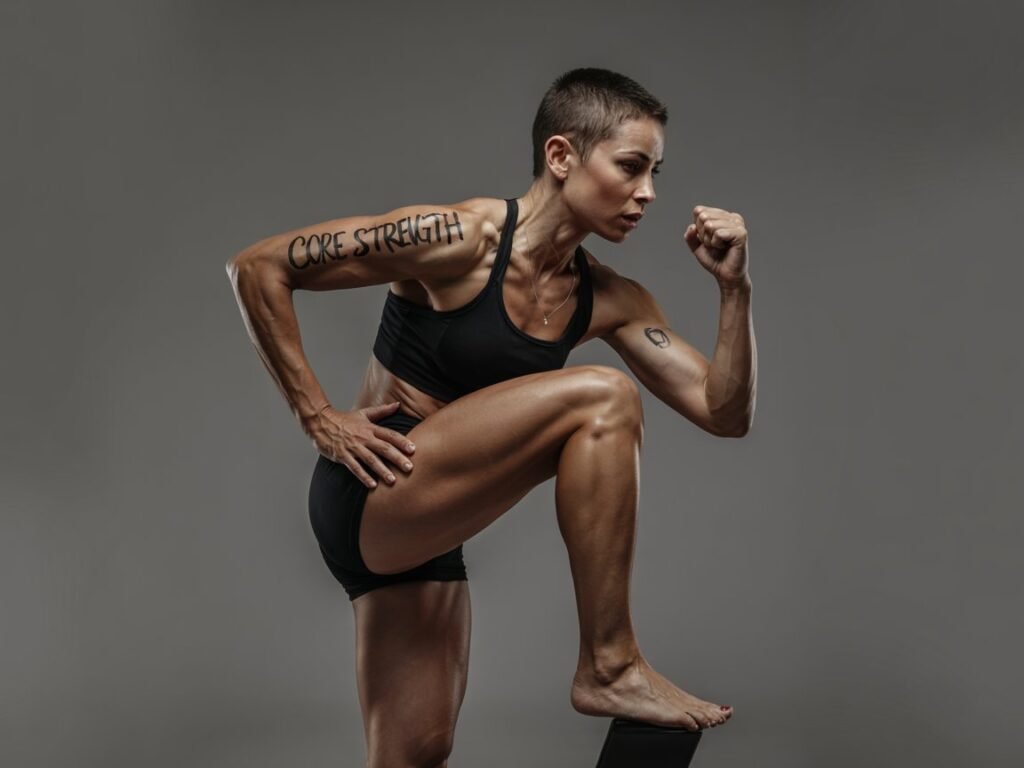
The standing oblique crunch is an excellent alternative to floor-based exercises for targeting your obliques and upper abdominal muscles.
It’s especially useful for those who want to strengthen their core while improving posture and balance.
This exercise can be done anywhere and is a great way to incorporate core work into a quick routine without lying on the floor.
Step-by-Step Instructions:
- Stand with your feet hip-width apart, hands placed behind your head or at your temples.
- Engage your core by drawing your belly button toward your spine.
- Lift your right knee toward your right elbow while simultaneously crunching your torso to the side.
- Return to the starting position with control.
- Repeat on the left side, alternating sides for 12–15 repetitions per side.
- Focus on controlled movements rather than speed to maximize oblique engagement.
Tips for Maximum Effectiveness:
- Keep your back straight and avoid leaning forward or backward.
- Exhale as you crunch and lift your knee, inhale as you return to center.
- To intensify, hold light dumbbells or perform slow, deliberate repetitions.
- Ensure your movements are symmetrical on both sides to prevent muscle imbalances.
Benefits of Standing Oblique Crunch:
- Tones oblique muscles for a slimmer waistline
- Engages upper abs and core stabilizers
- Improves balance, posture, and coordination
- Can be performed anytime, anywhere without equipment
Standing oblique crunches are a practical, effective exercise for sculpting the sides of your midsection while also supporting overall core strength and stability.
They’re perfect for adding variety to your flat-stomach routine and keeping your workouts fresh and challenging.
12. V-Ups
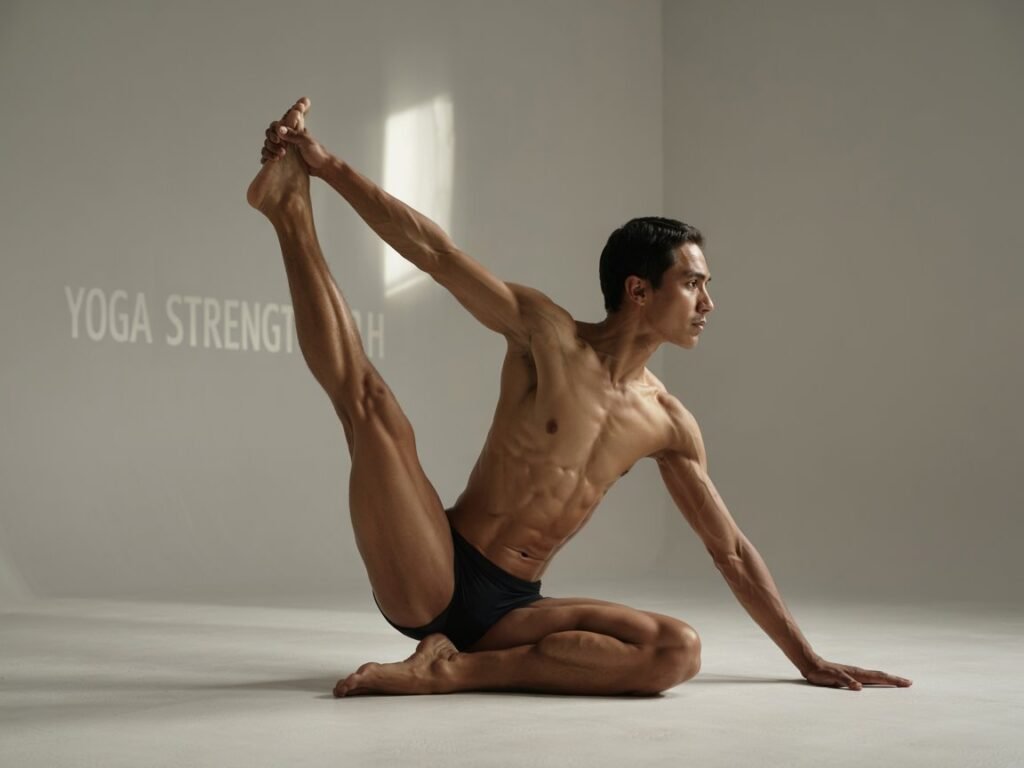
V-Ups are a dynamic, advanced core exercise that targets both the upper and lower abs simultaneously, making them one of the most efficient moves for building a strong, flat stomach.
This exercise also engages the hip flexors and helps improve coordination, balance, and core endurance. While challenging, V-Ups provide excellent results when performed with proper form.
Step-by-Step Instructions:
- Lie flat on your back with your arms extended overhead and legs straight.
- Engage your core and simultaneously lift your legs and upper body off the floor, reaching your hands toward your toes to form a “V” shape with your body.
- Pause briefly at the top, keeping your abdominal muscles contracted.
- Slowly lower your torso and legs back down to the starting position, maintaining control.
- Perform 10–15 repetitions to start, increasing as your strength improves.
Tips for Maximum Effectiveness:
- Move slowly and deliberately—control is more important than speed.
- Keep your lower back pressed into the floor to avoid strain.
- Exhale as you lift your body into the “V,” inhale as you lower it back down.
- Beginners can bend the knees slightly and reach toward shins instead of toes to reduce difficulty.
Benefits of V-Ups:
- Engages both upper and lower abs simultaneously
- Strengthens hip flexors and improves core stability
- Enhances coordination and functional strength
- Contributes to a toned, flat stomach with consistent practice
V-Ups are a powerful, full-core exercise that complement both static and dynamic ab moves.
When added to your no-equipment flat-stomach routine, they help create a strong, sculpted core that’s both functional and visually impressive.
13. Hollow Body Hold
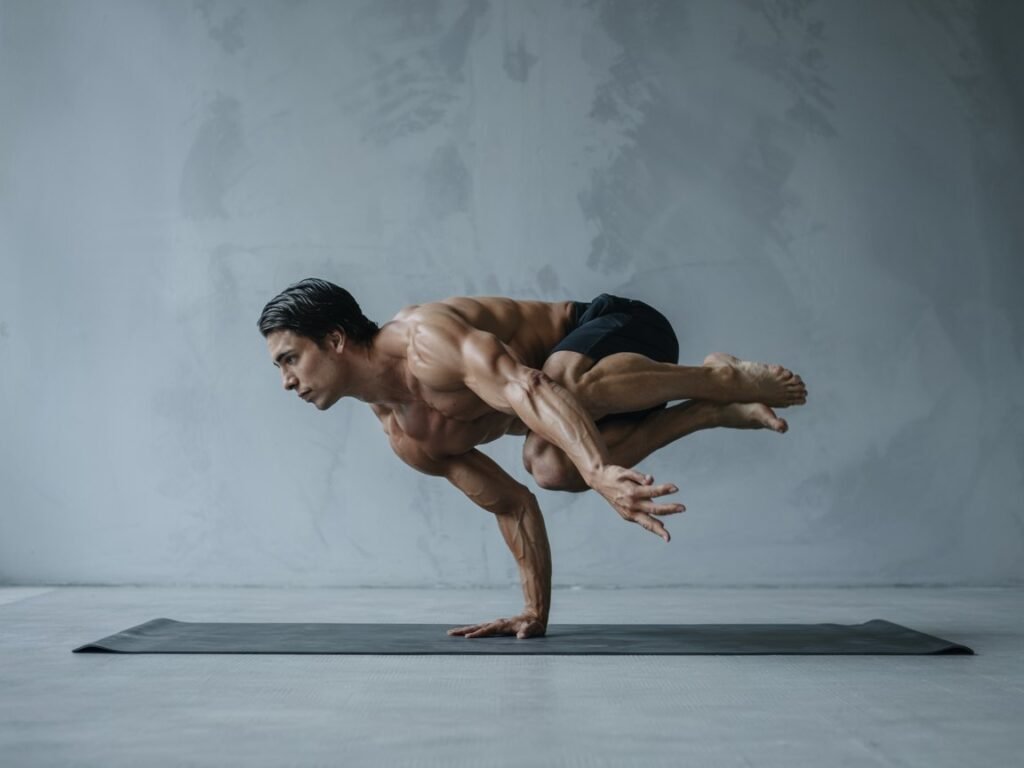
The hollow body hold is a foundational core exercise that challenges the deep abdominal muscles while also engaging the hip flexors and lower back.
It’s often used in gymnastics and athletic training because it builds incredible core stability, endurance, and strength.
This isometric move might look simple, but holding the position correctly requires focus and full-body tension.
Step-by-Step Instructions:
- Lie flat on your back with your arms extended overhead and legs straight.
- Engage your core and press your lower back gently into the floor.
- Lift your arms, shoulders, and legs off the ground simultaneously, keeping your body in a slight “banana” or hollow shape.
- Hold this position for 20–40 seconds to start, gradually increasing the duration as your core strength improves.
- Focus on maintaining tight abs and controlled breathing throughout the hold.
Tips for Maximum Effectiveness:
- Avoid arching your lower back; pressing it into the floor protects your spine.
- Keep your legs straight but slightly lifted off the ground if fully extended legs are too challenging.
- Breathe steadily to maintain tension and control.
- To progress, extend your hold time or add small pulses by gently lowering and raising your arms and legs.
Benefits of the Hollow Body Hold:
- Strengthens deep core muscles, including transverse abdominis
- Enhances spinal stability and posture
- Improves balance, endurance, and overall functional strength
- Supports other core exercises for a well-rounded routine
The hollow body hold is a core-strengthening powerhouse that may seem simple at first glance but provides incredible benefits for core stability and abdominal definition.
Integrating it into your flat-stomach routine ensures your abs are not only visible but also strong and functional.
14. Seated Knee Tucks
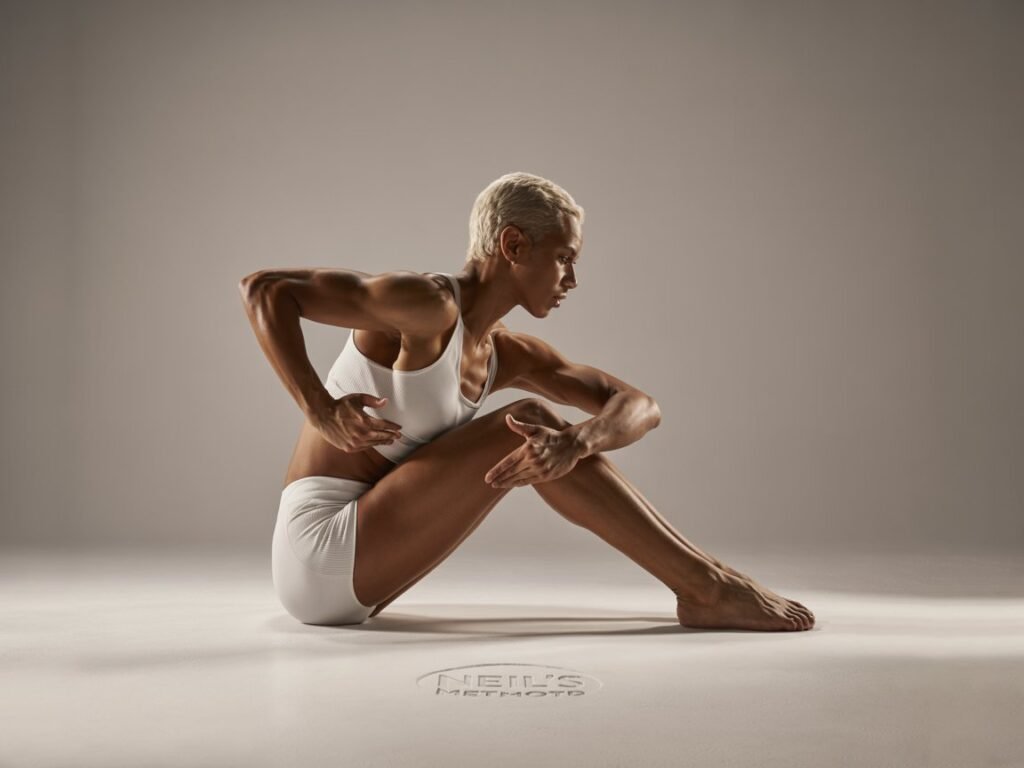
Seated knee tucks are an effective exercise for targeting the lower abs and hip flexors while also engaging the entire core.
This move helps improve core strength, balance, and posture, making it a versatile addition to any no-equipment flat-stomach routine.
It’s particularly useful for strengthening the muscles that support functional movements in daily life.
Step-by-Step Instructions:
- Sit on the floor with your legs extended in front of you and your hands placed slightly behind your hips for support.
- Lean back slightly while keeping your back straight and core engaged.
- Draw your knees toward your chest, curling your torso slightly forward.
- Slowly extend your legs back out without letting them touch the floor, maintaining tension in your lower abs.
- Repeat for 12–15 controlled repetitions, focusing on smooth movements and abdominal engagement.
Tips for Maximum Effectiveness:
- Keep your core tight throughout the exercise to protect your lower back.
- Avoid leaning too far back; a slight recline is enough to engage the abs.
- Exhale as you pull your knees in, inhale as you extend them.
- To increase difficulty, lift your feet slightly off the floor or hold a light weight between your knees.
Benefits of Seated Knee Tucks:
- Strengthens lower abdominal muscles and hip flexors
- Improves core stability and posture
- Enhances coordination and balance
- Complements other core exercises for a full flat-stomach routine
Seated knee tucks are a simple yet powerful exercise that effectively sculpt the lower abs while improving overall core strength.
When included in your flat-stomach routine, they help create a balanced, toned, and functional midsection.
15. High Knees
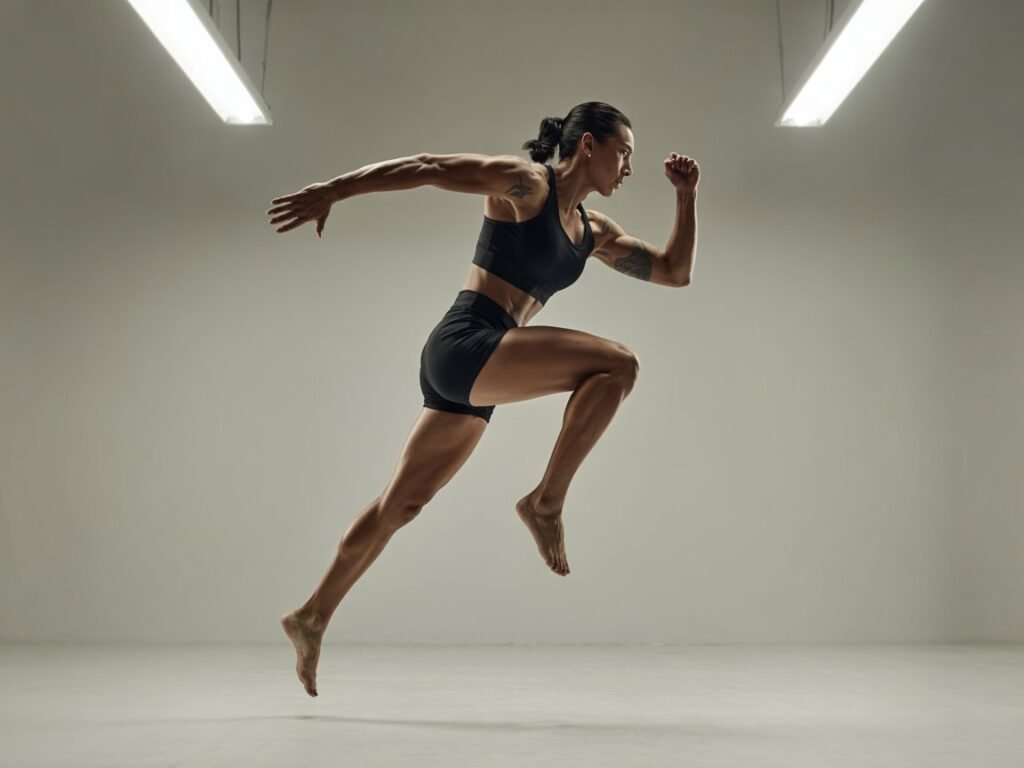
High knees are a dynamic, high-intensity exercise that combines cardiovascular training with core engagement, making them a perfect finisher for a flat-stomach workout.
While they primarily elevate your heart rate and burn calories, high knees also activate your abs, hip flexors, and lower body muscles, giving you a full-body boost in just one move.
Step-by-Step Instructions:
- Stand tall with your feet hip-width apart and arms at your sides.
- Engage your core and lift your right knee toward your chest while driving your left arm forward, mimicking a running motion.
- Quickly switch legs, lifting your left knee and driving your right arm forward.
- Continue alternating knees as fast as you can while maintaining proper posture.
- Perform high knees for 30–60 seconds per set, focusing on keeping your core tight and your movements controlled.
Tips for Maximum Effectiveness:
- Keep your chest lifted and shoulders relaxed. Avoid leaning forward.
- Drive your knees high toward your chest to maximize lower abdominal engagement.
- Land softly on the balls of your feet to reduce impact on your joints.
- Breathe steadily and maintain a fast but controlled pace.
Benefits of High Knees:
- Boosts cardiovascular endurance and calorie burn
- Engages core, hip flexors, and lower body muscles
- Improves agility, coordination, and speed
- Acts as a powerful finisher to enhance overall workout intensity
High knees are a simple, high-energy exercise that elevate your heart rate while targeting your abs and lower body.
Including them at the end of your flat-stomach routine ensures you burn extra calories, strengthen your core, and leave your workout feeling complete and energized.
Bonus Tips for a Flatter Stomach
- Maintain a calorie deficit through clean eating.
- Drink plenty of water to reduce bloating.
- Reduce processed sugars and refined carbs.
- Pair exercises with cardio like walking or jogging.
FAQs About Flat Stomach Workouts
Q1: Can I get a flat stomach by doing ab exercises alone?
No. A flat stomach requires a combination of ab training, cardio, and proper nutrition to reduce overall body fat.
Q2: How often should I do these exercises?
Aim for 3–5 times a week, including both core workouts and full-body movements.
Q3: Are these exercises beginner-friendly?
Yes! Most exercises listed are suitable for all fitness levels.
Q4: How long will it take to see results?
With consistency and proper diet, many people notice results in 4–8 weeks.
Final Thought
Building a flat, strong stomach doesn’t require expensive gym equipment or hours of grueling workouts.
With the right combination of exercises, consistency, and focus on form, you can sculpt your core, strengthen your hip flexors, tone your obliques, and improve overall stability—all from the comfort of your home.
The 15 exercises outlined in this guide offer a comprehensive, no-equipment routine that hits every part of your midsection.
From static moves like the plank and hollow body hold to dynamic exercises like mountain climbers and high knees, each movement has a purpose: to challenge your muscles, burn calories, and improve functional strength.
Incorporating exercises like V-Ups, reverse crunches, and seated knee tucks ensures your lower abs receive as much attention as your upper abs, while side planks and heel touches sculpt your obliques for a defined waistline.
Remember, a strong core is more than just aesthetics. It supports posture, reduces the risk of injury, and enhances performance in almost every physical activity—from lifting groceries to running, swimming, or playing sports.
Consistently practicing these exercises strengthens the muscles that stabilize your spine, improve balance, and make everyday movements easier.
To maximize results, pair this workout with a balanced diet, proper hydration, and adequate rest.
Consistency is key—perform these exercises 3–5 times per week, gradually increasing intensity as your strength and endurance improve.
Listen to your body, focus on proper form, and challenge yourself progressively.
By dedicating time to your core, you’re not just working toward a flatter stomach—you’re investing in functional strength, better posture, and overall well-being.
Stick with it, celebrate small victories along the way, and enjoy the journey of building a stronger, healthier, and more energized you.
This routine proves that you don’t need fancy equipment or hours in the gym to achieve noticeable results.
With discipline, focus, and the right exercises, a toned and functional core is absolutely achievable—right at home.