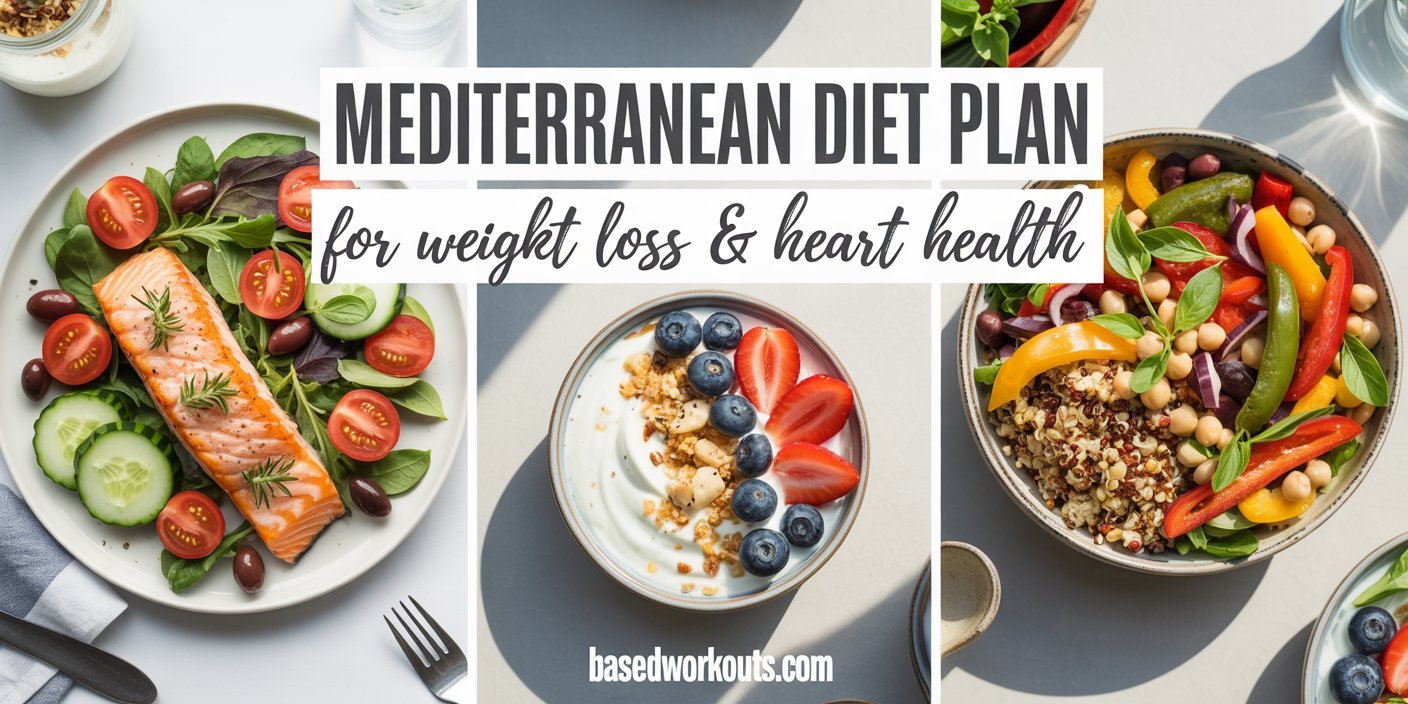
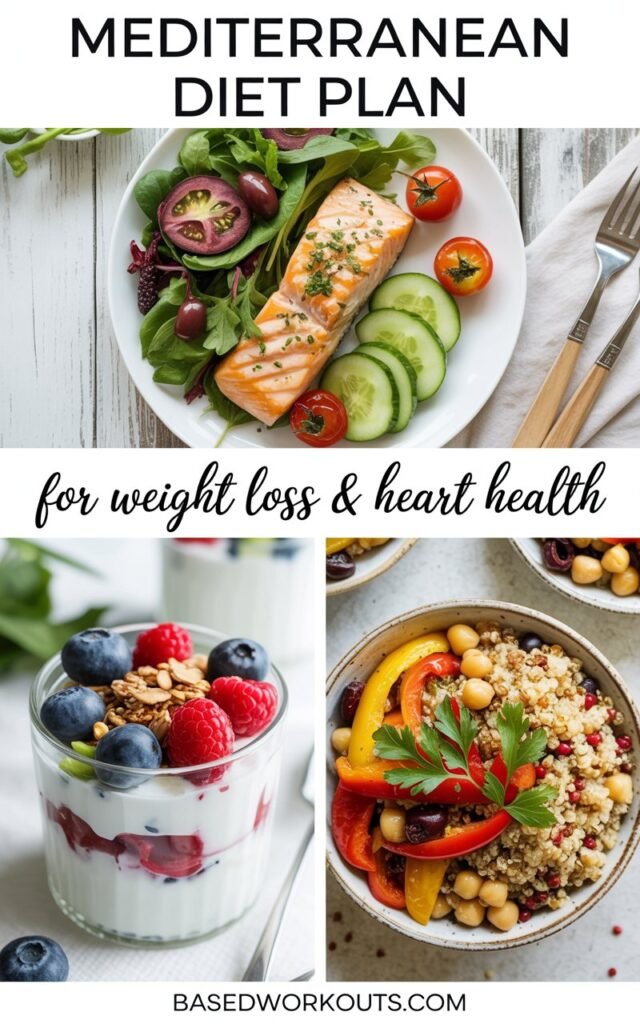
When it comes to eating for both weight loss and long-term health, the Mediterranean diet continues to rank as one of the best choices worldwide.
Inspired by the traditional eating patterns of countries like Greece, Italy, and Spain, this lifestyle focuses on whole, nutrient-dense foods that are not only delicious but also proven to support heart health, reduce inflammation, and promote sustainable fat loss.
Unlike restrictive diets that leave you feeling deprived, the Mediterranean approach is flexible, balanced, and satisfying.
It emphasizes fresh fruits and vegetables, whole grains, lean proteins like fish and poultry, heart-healthy fats such as olive oil and nuts, and moderate portions of red wine.
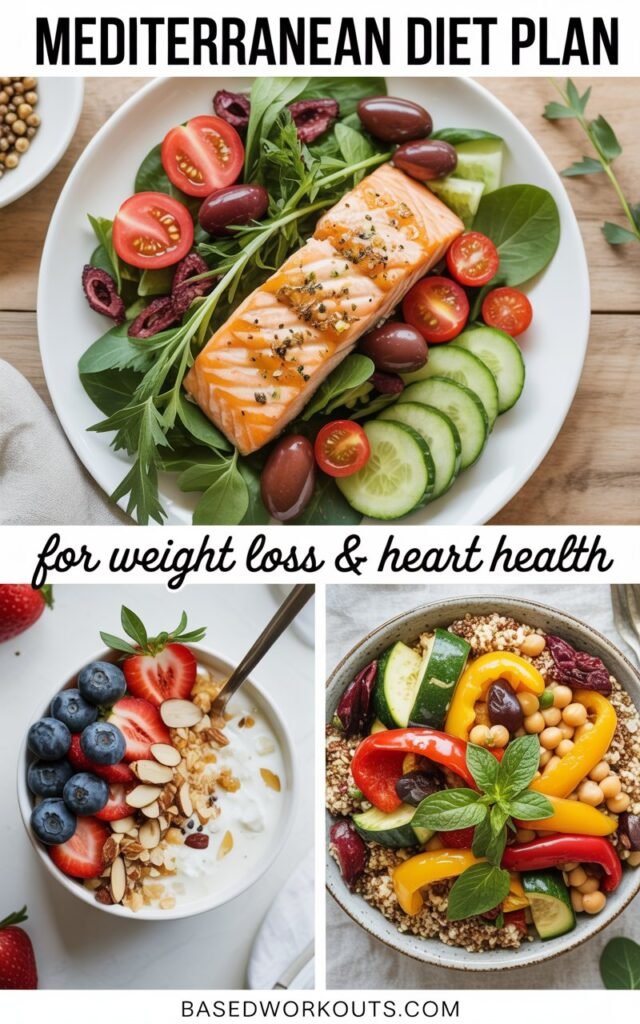
Research has consistently shown that following this plan can help lower cholesterol, improve blood pressure, reduce the risk of heart disease, and even aid in weight management—making it one of the most well-rounded diets you can follow.
In this complete guide, we’ll cover:
- The core principles of the Mediterranean diet
- A 7-day meal plan for weight loss and better heart health
- Foods to eat (and what to limit) for the best results
- The science behind why this diet works for both fat loss and cardiovascular health
Whether your goal is to shed a few pounds, boost your energy, or protect your heart for years to come, the Mediterranean diet offers a sustainable, enjoyable way to achieve it.
Let’s dive into the Mediterranean diet plan for weight loss and heart health—and see how you can start reaping the benefits today.
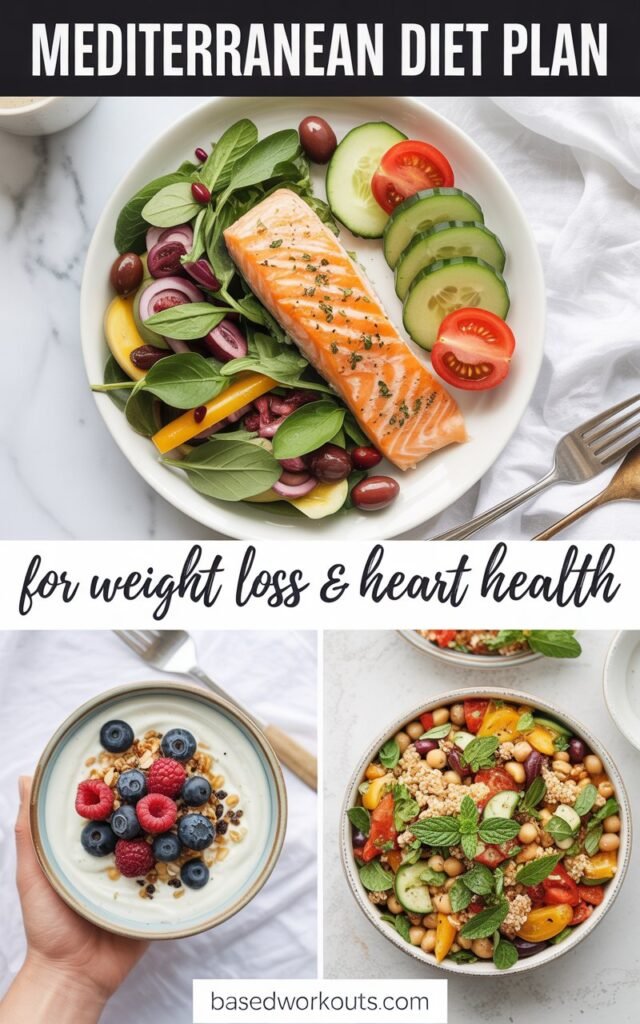
This post may contain affiliate links. If you click and purchase, we may earn a small commission — at no extra cost to you. Every cookbook, olive oil, and healthy product we recommend is handpicked to help you enjoy delicious Mediterranean meals, support heart health, and achieve your weight loss goals naturally.
For simple, tasty meals that fit this diet, try our 20 Sheet Pan Meals for the Mediterranean Diet — perfect for busy weeknights.
Amazon Gear for Mediterranean Diet Success I Recommend
Want to Eat Healthy, Lose Weight, and Support Heart Health?
The Mediterranean diet is rich in whole foods, healthy fats, and lean protein — and having the right tools makes meal prep easier, more efficient, and enjoyable.
Below are my top Amazon picks to help you stick to your diet and maximize results.
| Product | Why You’ll Love It | Shop Now |
|---|---|---|
| High-Quality Glass Meal Prep Container Set | Perfect for prepping Mediterranean meals and portion control to stay on track. | Check Price on Amazon |
| Premium Extra-Large Blender / Food Processor | Make smoothies, hummus, sauces, and dressings with fresh, whole ingredients. | View on Amazon |
| Olive Oil Infuser & Dispenser Set | Elevates flavor while ensuring you use healthy fats for cooking and salads. | Shop Now |
| Non-Stick Cast Iron or Ceramic Skillet | Ideal for cooking lean proteins, vegetables, and healthy grains with minimal oil. | Buy on Amazon |
| Digital Food Scale (High-Precision) | Track servings, measure ingredients, and maintain portion control effortlessly. | See Details |
These premium kitchen tools make it easier to follow the Mediterranean diet consistently, save time on meal prep, and enjoy healthy, heart-supportive meals every day.
1. What Is the Mediterranean Diet?
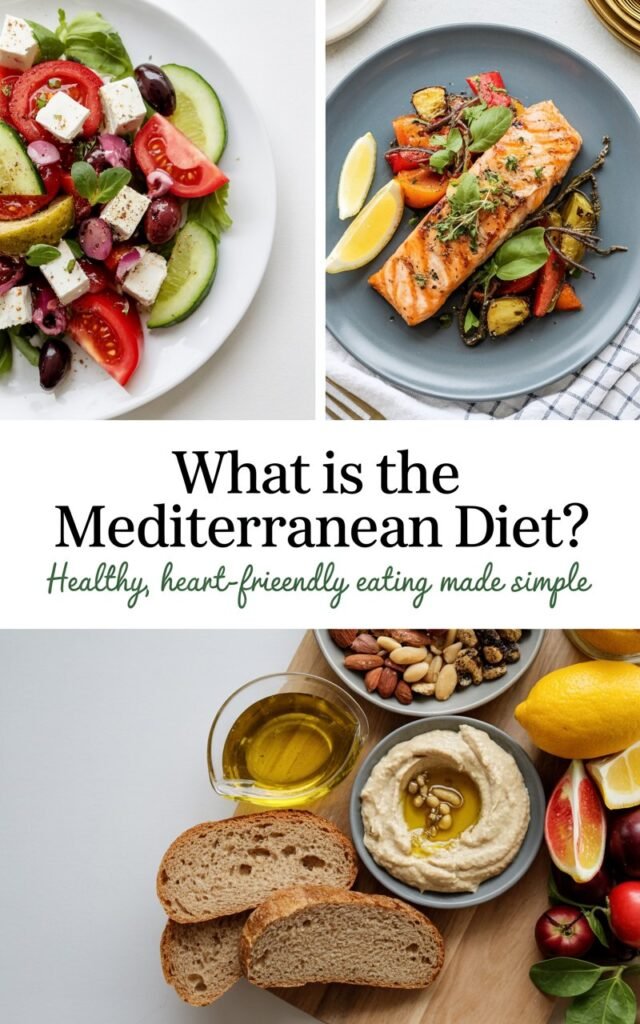
The Mediterranean Diet is one of the most researched and celebrated eating patterns in the world, praised for its remarkable health benefits, delicious flavors, and balanced approach to nutrition.
Originating from the traditional dietary habits of people living in countries that border the Mediterranean Sea — such as Greece,
Italy, Spain, and southern France — this diet emphasizes whole, natural foods and a lifestyle centered on balance, moderation, and enjoyment.
At its foundation, the Mediterranean Diet encourages an abundance of fresh fruits and vegetables, whole grains, legumes, nuts, and seeds, along with heart-healthy fats like extra virgin olive oil.
Olive oil is a cornerstone of this eating style, replacing butter or processed oils and offering powerful antioxidants and monounsaturated fats that promote cardiovascular health.
The diet also emphasizes lean protein sources, especially fish and seafood, which are eaten at least twice a week for their omega-3 fatty acids.
Poultry, eggs, and dairy products like Greek yogurt and cheese are consumed in moderation, while red meat and sugary foods are enjoyed only occasionally.
Herbs and spices replace salt for flavor, adding both aroma and nutritional value to meals.

But the Mediterranean Diet goes far beyond what’s on the plate — it’s also about how you eat. Meals are meant to be enjoyed slowly, often shared with family and friends, fostering connection and mindfulness.
Physical activity, such as walking or outdoor recreation, is also a key part of the Mediterranean lifestyle, making it not just a diet but a holistic approach to living well.
Scientific studies consistently show that following the Mediterranean Diet can lower the risk of heart disease, stroke, type 2 diabetes, and certain cancers.
It also supports healthy weight management, improves brain function, and may contribute to a longer lifespan.
Its anti-inflammatory and antioxidant-rich foods help combat cellular damage and promote overall vitality.
Ultimately, the Mediterranean Diet isn’t about strict rules or deprivation. It’s about celebrating real food — colorful vegetables, flavorful herbs, wholesome grains, fresh seafood, and good company.
It’s an eating pattern that nourishes your body, uplifts your mood, and inspires a healthier, more sustainable way of life.
2. Mediterranean Diet Food List for Beginners
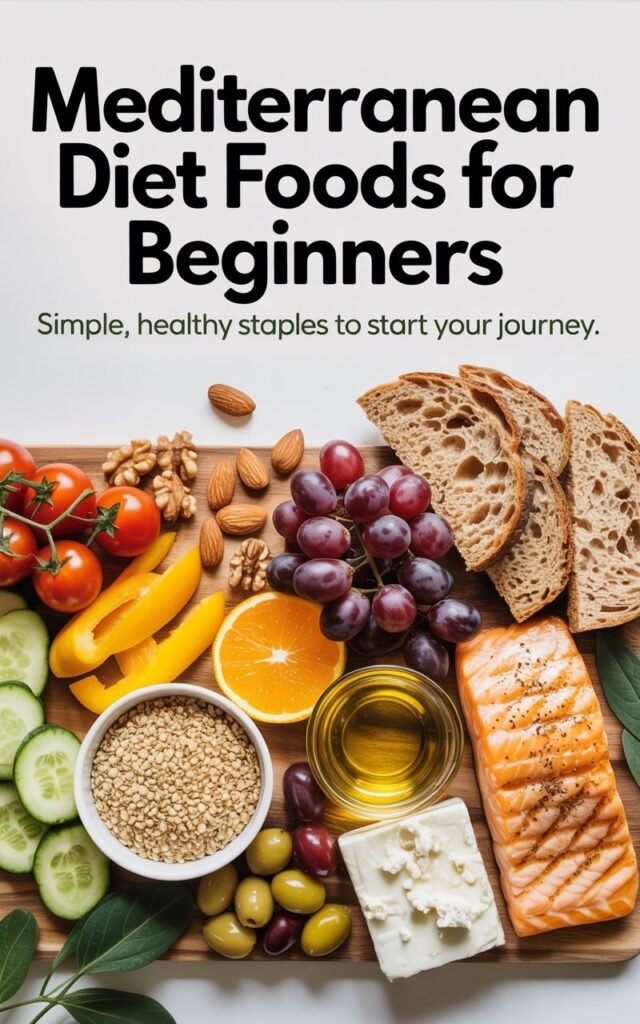
Starting the Mediterranean Diet can feel exciting yet overwhelming at first — but the beauty of this lifestyle is its simplicity and flexibility.
You don’t need exotic ingredients or complex recipes; it’s all about choosing wholesome, natural foods that fuel your body and keep you satisfied.
Below is a complete guide to help beginners understand what to eat, what to enjoy in moderation, and what to limit.
1. Fruits and Vegetables (Eat Daily)
These are the foundation of the Mediterranean Diet. Aim to fill half your plate with colorful, seasonal produce.
Fresh fruits and vegetables provide essential vitamins, minerals, fiber, and antioxidants that support heart health and digestion.
Examples include:
- Leafy greens (spinach, kale, arugula)
- Tomatoes, cucumbers, bell peppers, zucchini, and eggplant
- Citrus fruits, berries, apples, pomegranates, grapes, and figs
2. Whole Grains (Main Source of Energy)
Replace refined grains with whole, fiber-rich options to maintain steady energy and support healthy digestion.
Examples:
- Whole wheat bread, brown rice, quinoa, barley, farro, bulgur, and oats
3. Healthy Fats (Use Olive Oil as the Main Fat)
Olive oil is the heart of the Mediterranean Diet.
It’s rich in antioxidants and monounsaturated fats that help reduce inflammation and support heart health.
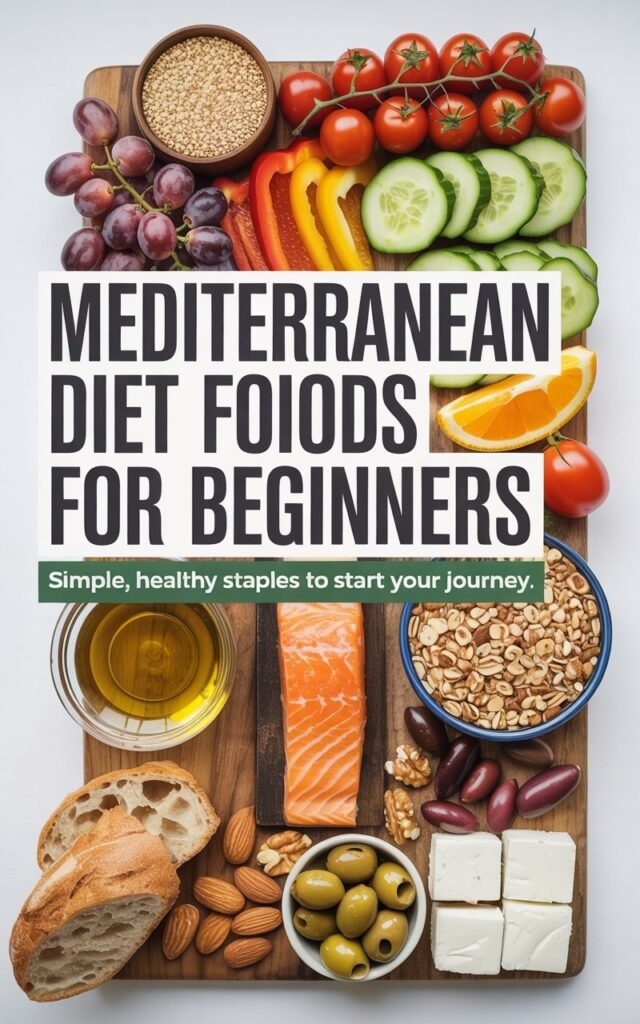
Use it for cooking, salad dressings, or drizzling over cooked meals.
Other healthy fat sources include:
- Avocados, nuts (almonds, walnuts, pistachios), and seeds (chia, flax, sunflower)
4. Protein Sources (Choose Lean and Natural)
Protein plays a crucial role in maintaining muscle and overall health. Focus on lean, nutrient-dense sources.
Examples:
- Fish and seafood (salmon, sardines, mackerel, tuna, shrimp) — at least twice a week
- Poultry (chicken, turkey), eggs, and plant-based proteins (lentils, chickpeas, beans)
5. Dairy (In Moderation)
Opt for high-quality, minimally processed dairy products. Choose Greek yogurt and aged cheeses for added protein and probiotics.
Examples:
- Greek yogurt, feta, Parmesan, or goat cheese
6. Herbs and Spices (Flavor Without Excess Salt)
Instead of relying on salt, season your meals with herbs and spices that add flavor and antioxidants.
Examples:
- Basil, oregano, rosemary, thyme, parsley, mint, garlic, and turmeric
7. Beverages (Stay Hydrated Naturally)
Water is the preferred drink. Herbal teas and moderate coffee are also part of the Mediterranean lifestyle. A small glass of red wine with meals is optional for those who drink alcohol — but not necessary.
8. Foods to Limit
To maintain the health benefits of this diet, try to reduce:
- Processed foods, refined grains, and added sugars
- Red meat (enjoy occasionally)
- Sweetened beverages and artificial snacks
Getting Started Tip:
Transition gradually. Start by replacing butter with olive oil, adding more vegetables to your meals, and enjoying fresh fruit as dessert.
Over time, these small, sustainable changes will naturally align your diet with the Mediterranean lifestyle — one delicious meal at a time.
3. Mediterranean Diet Recipes for Weight Loss
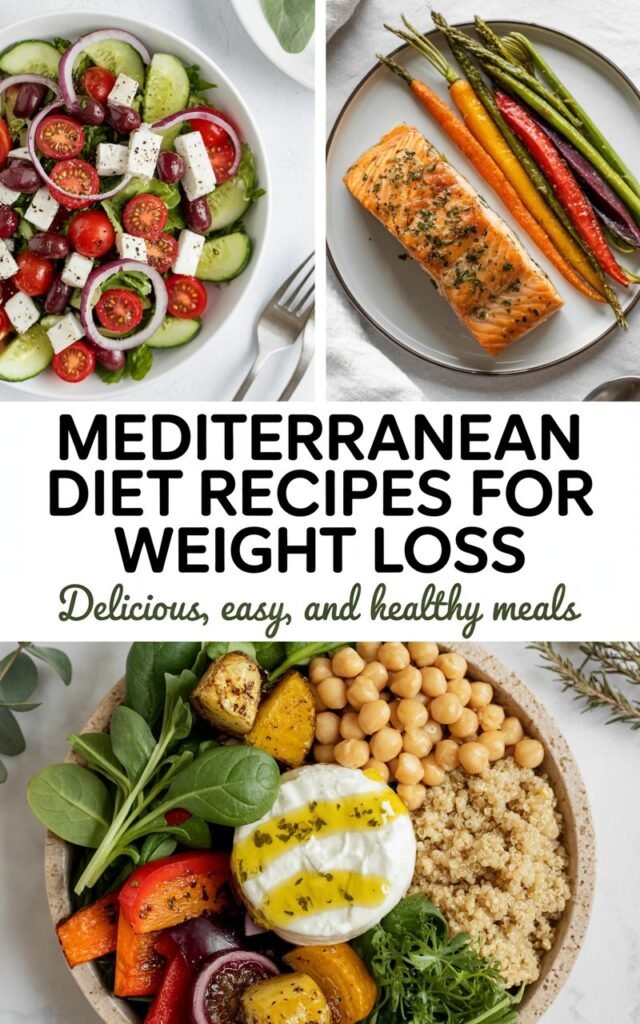
The Mediterranean Diet isn’t just about eating healthy — it’s about enjoying food that nourishes your body while supporting your fitness and weight-loss goals.
Unlike restrictive diets, this approach focuses on balance, portion control, and nutrient-dense ingredients that keep you full longer and reduce cravings naturally.
Whether you’re looking to slim down, tone up, or simply feel more energized, these Mediterranean-inspired recipes make weight loss sustainable and satisfying.
1. Greek Yogurt Parfait with Berries and Honey
A perfect start to your morning, this high-protein breakfast balances sweetness and nutrition.
- Ingredients: Greek yogurt, mixed berries, a drizzle of honey, and a sprinkle of walnuts or chia seeds.
- Why it works: The protein in yogurt keeps you full, while fiber from berries supports digestion and helps control appetite.
2. Quinoa and Chickpea Salad
This refreshing salad is rich in plant-based protein, fiber, and heart-healthy fats.
- Ingredients: Cooked quinoa, chickpeas, cucumber, tomatoes, red onion, parsley, and olive oil with lemon juice dressing.
- Why it works: The combination of fiber and protein promotes fullness, while olive oil adds healthy fats for steady energy.
3. Baked Salmon with Roasted Vegetables
A simple yet satisfying dinner that’s rich in omega-3 fatty acids and antioxidants.
- Ingredients: Salmon fillet, olive oil, garlic, lemon, and mixed vegetables like broccoli, zucchini, and bell peppers.
- Why it works: Salmon boosts metabolism and supports lean muscle maintenance, while veggies provide vitamins and fiber.
4. Mediterranean Stuffed Peppers
A flavorful, low-calorie meal that packs in plenty of nutrients.
- Ingredients: Bell peppers filled with a mix of brown rice, lentils, spinach, tomatoes, and herbs.
- Why it works: High in fiber and plant protein, this meal keeps you satisfied and prevents overeating.
5. Hummus and Veggie Wrap
An ideal light lunch or snack that’s full of flavor and texture.
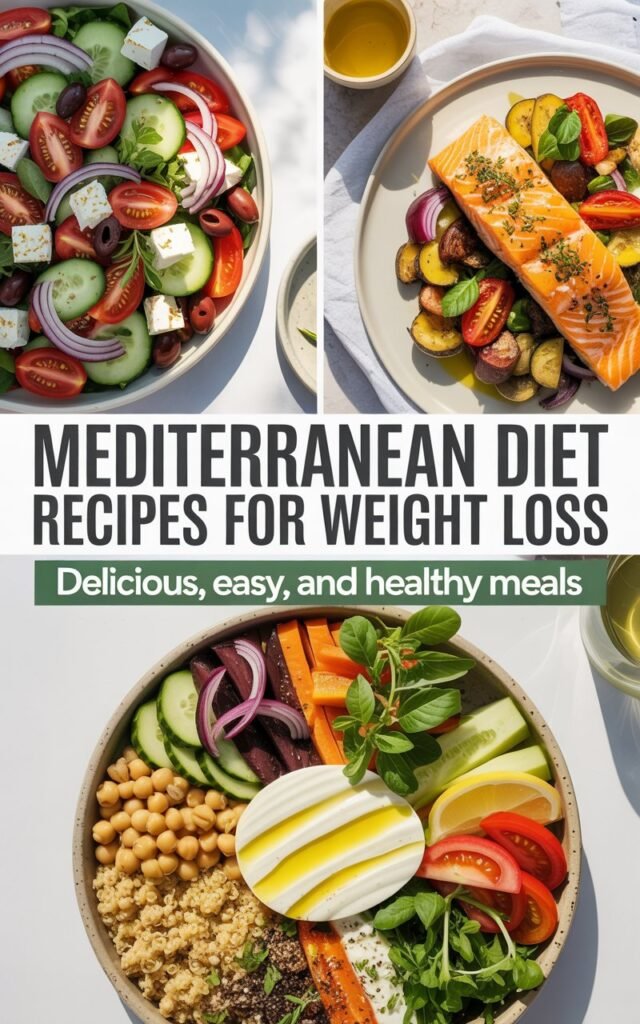
- Ingredients: Whole-grain wrap, hummus, cucumbers, carrots, spinach, and roasted red peppers.
- Why it works: The hummus provides protein and healthy fats, while the veggies add crunch and nutrients.
6. Grilled Chicken with Greek Salad
A lean-protein classic that fits perfectly into any weight-loss meal plan.
- Ingredients: Grilled chicken breast served with tomatoes, cucumbers, olives, feta, and olive oil dressing.
- Why it works: High in protein, moderate in healthy fats, and low in refined carbs — perfect for maintaining satiety.
7. Lentil Soup with Olive Oil and Herbs
Comforting and filling, this soup makes for a great meal-prep option.
- Ingredients: Lentils, onions, carrots, celery, garlic, and a drizzle of olive oil.
- Why it works: Lentils are rich in protein and fiber, keeping you full and energized without excess calories.
8. Roasted Eggplant with Tahini Sauce
A savory side or light main dish that’s naturally vegan and nutrient-dense.
- Ingredients: Roasted eggplant slices topped with tahini, lemon juice, and parsley.
- Why it works: Healthy fats from tahini and antioxidants from eggplant help stabilize blood sugar and reduce cravings.
9. Tuna and White Bean Salad
Quick, protein-packed, and ideal for busy days.
- Ingredients: Canned tuna, white beans, red onion, olive oil, and fresh lemon juice.
- Why it works: Tuna and beans deliver a one-two punch of protein and fiber to keep you full longer.
10. Grilled Vegetable Bowl with Brown Rice
A colorful, satisfying meal that balances carbs, fats, and protein perfectly.
- Ingredients: Brown rice topped with grilled zucchini, bell peppers, mushrooms, and a drizzle of olive oil.
- Why it works: Complex carbs and fiber help sustain energy while supporting healthy digestion.
Final Tip for Weight Loss:
When following Mediterranean Diet recipes, focus on portion control and mindful eating. Enjoy each bite, eat slowly, and stop when you feel satisfied — not stuffed.
With its focus on fresh, flavorful ingredients and natural balance, the Mediterranean Diet makes losing weight not only effective but genuinely enjoyable.
4. 7-Day Mediterranean Diet for Weight Loss
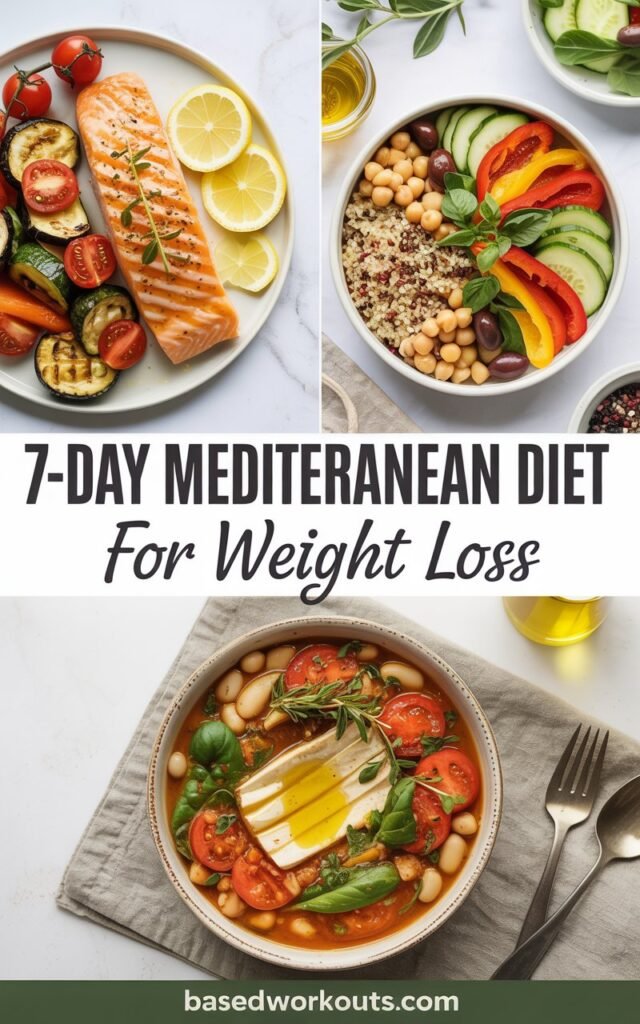
If you’re ready to jumpstart your weight-loss journey the healthy way, a 7-day Mediterranean Diet plan can help you build momentum while nourishing your body with balanced, flavorful meals.
This plan focuses on fresh fruits and vegetables, lean proteins, whole grains, and healthy fats — the cornerstones of the Mediterranean lifestyle.
It’s not about counting calories or cutting out food groups; it’s about choosing nutrient-dense meals that keep you satisfied, energized, and on track.
Here’s a beginner-friendly 7-day meal plan designed for steady, sustainable weight loss:
Day 1
Breakfast: Greek yogurt with berries, a drizzle of honey, and a handful of almonds
Lunch: Quinoa salad with chickpeas, cucumbers, tomatoes, and olive oil
Dinner: Baked salmon with steamed broccoli and brown rice
Snack: Apple slices with natural peanut butter
Day 2
Breakfast: Whole-grain toast topped with mashed avocado, a boiled egg, and cherry tomatoes
Lunch: Mediterranean lentil soup with a side of mixed greens
Dinner: Grilled chicken with roasted vegetables and a small portion of quinoa
Snack: Handful of mixed nuts or a few olives
Day 3
Breakfast: Overnight oats with chia seeds, cinnamon, and sliced banana
Lunch: Tuna and white bean salad drizzled with olive oil and lemon juice
Dinner: Stuffed bell peppers with brown rice, lentils, and spinach
Snack: Greek yogurt with walnuts
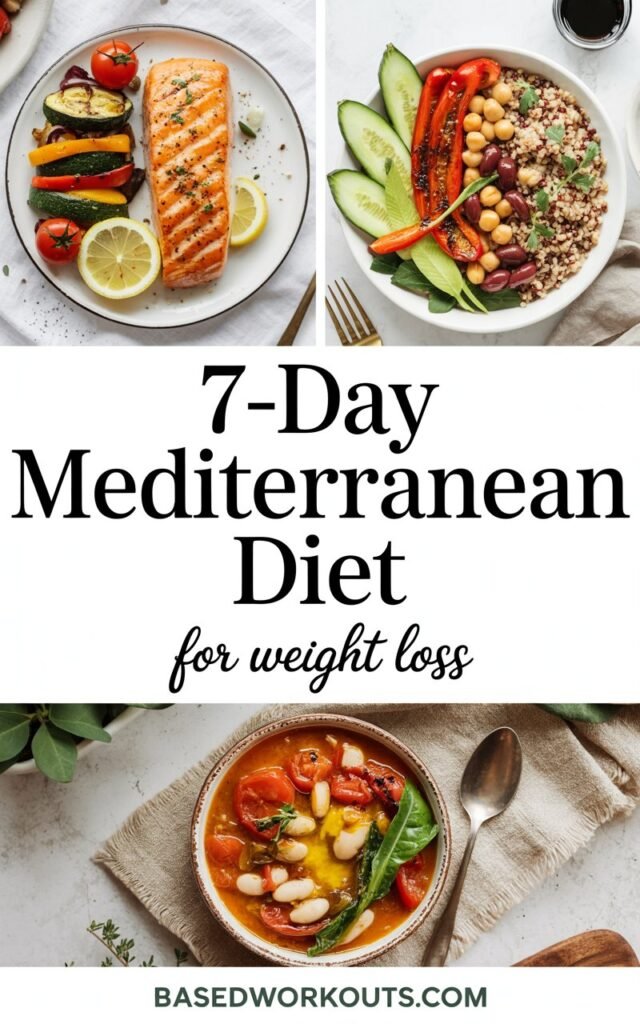
Day 4
Breakfast: Smoothie made with spinach, banana, almond milk, and a scoop of protein powder
Lunch: Whole-grain wrap with hummus, carrots, cucumbers, and roasted red peppers
Dinner: Grilled shrimp served with roasted eggplant and a side salad
Snack: A handful of pistachios or sliced veggies with hummus
Day 5
Breakfast: Scrambled eggs cooked in olive oil with spinach and tomatoes
Lunch: Quinoa bowl with chickpeas, kale, and avocado slices
Dinner: Baked cod with olive oil, herbs, and roasted sweet potatoes
Snack: Orange slices or fresh berries
Day 6
Breakfast: Greek yogurt parfait layered with oats, blueberries, and chia seeds
Lunch: Mediterranean pasta salad made with whole-grain pasta, olives, tomatoes, and feta cheese
Dinner: Grilled chicken skewers with vegetables and a side of tabbouleh
Snack: A small handful of almonds or walnuts
Day 7
Breakfast: Oatmeal topped with pomegranate seeds, walnuts, and a drizzle of honey
Lunch: Lentil and vegetable stew with olive oil
Dinner: Grilled salmon with quinoa and a side of roasted asparagus
Snack: Apple slices or a few squares of dark chocolate (70% cocoa or higher)
Key Tips for Success
- Hydrate well: Drink plenty of water and herbal teas throughout the day.
- Control portions: Use smaller plates and eat slowly to recognize fullness cues.
- Cook with olive oil: It’s your main healthy fat source for cooking and drizzling.
- Add flavor naturally: Use herbs, spices, garlic, and lemon instead of excess salt.
- Stay active: Pair your diet with light exercise, such as walking, yoga, or strength training, for best results.
These meals pair perfectly with the principles outlined in our 20 Sheet Pan Meals for the Mediterranean Diet post, making it easy to stick to your goals.
5. 4-Week Mediterranean Diet Menu Plan (Free & Printable)
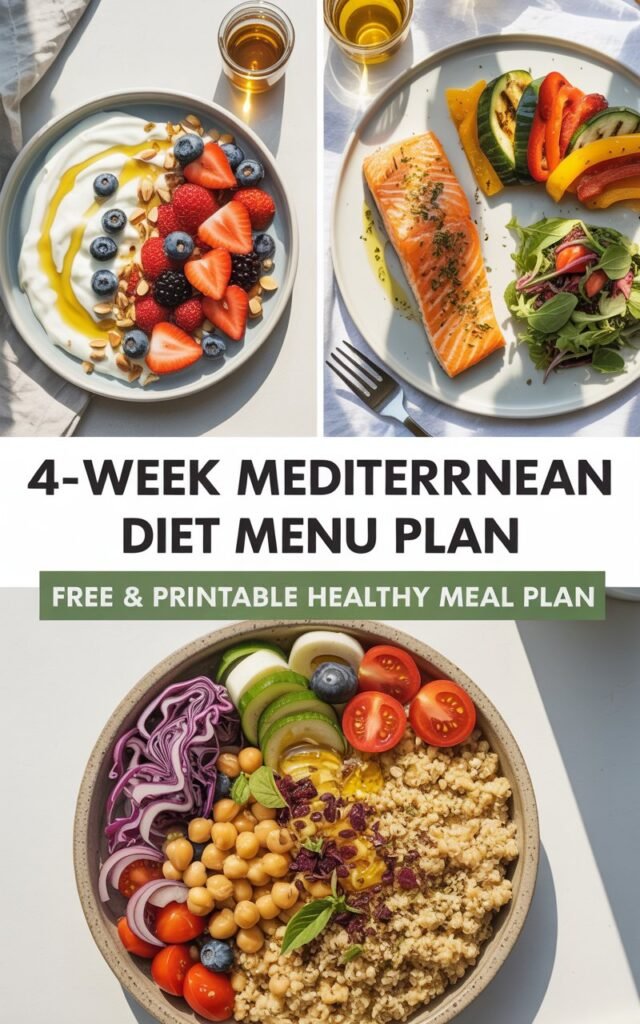
If you’re ready to take your healthy eating goals to the next level, this 4-week Mediterranean Diet menu plan will guide you through a full month of balanced, delicious meals.
It’s designed to help you lose weight, improve heart health, and boost energy—all while enjoying food that tastes amazing.
The Mediterranean Diet isn’t a short-term fix; it’s a lifestyle built around fresh vegetables, whole grains, lean proteins, and healthy fats that keep your body strong and your appetite satisfied.
This 4-week plan includes easy, beginner-friendly recipes using simple, affordable ingredients.
You can also download and print it to make meal prep and grocery shopping even easier.
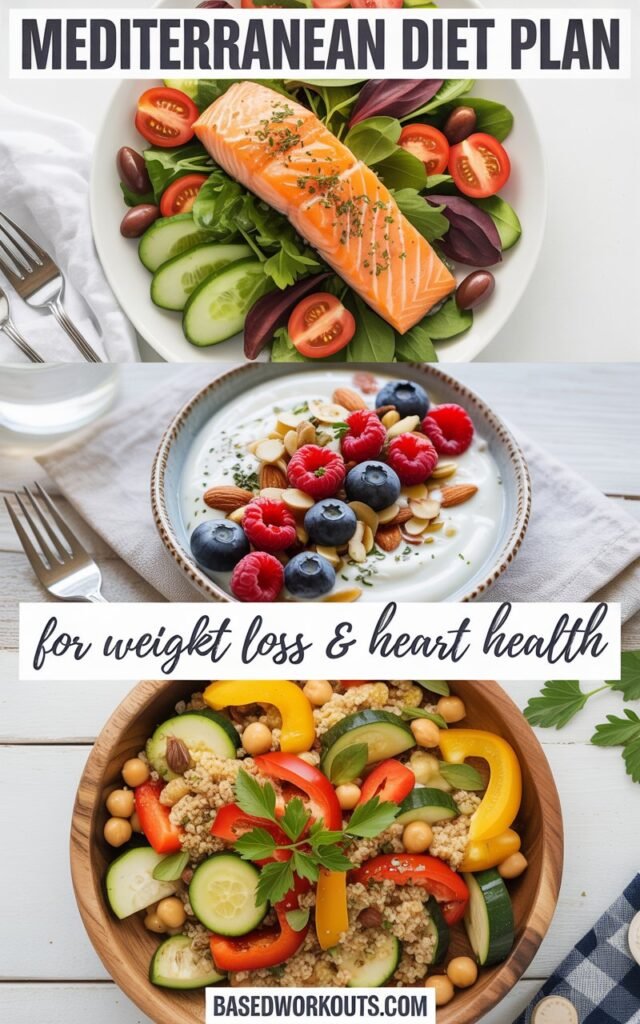
Week 1: Getting Started with Simplicity
Focus on introducing Mediterranean staples like olive oil, whole grains, and vegetables.
Breakfast ideas:
- Greek yogurt with berries and honey
- Whole-grain toast with avocado and poached egg
- Oatmeal with walnuts and sliced banana
Lunch ideas:
- Quinoa salad with chickpeas, cucumber, and lemon dressing
- Tuna and white bean salad
- Lentil soup with mixed greens
Dinner ideas:
- Baked salmon with roasted vegetables
- Grilled chicken with quinoa and spinach
- Stuffed bell peppers with rice and lentils
Snacks:
Fresh fruit, nuts, or veggies with hummus
Week 2: Building Momentum
Add more variety and flavor with new ingredients and herbs.
Breakfast:
- Smoothie with spinach, banana, and Greek yogurt
- Mediterranean omelet with tomatoes, feta, and parsley
- Overnight oats with chia seeds and berries
Lunch:
- Whole-grain wrap with hummus and roasted red peppers
- Grilled shrimp salad with olive oil and lemon
- Mediterranean pasta salad with olives, feta, and cherry tomatoes
Dinner:
- Baked cod with roasted sweet potatoes
- Chickpea and vegetable stew
- Grilled chicken skewers with tabbouleh
Snacks:
Almonds, olives, or Greek yogurt with honey
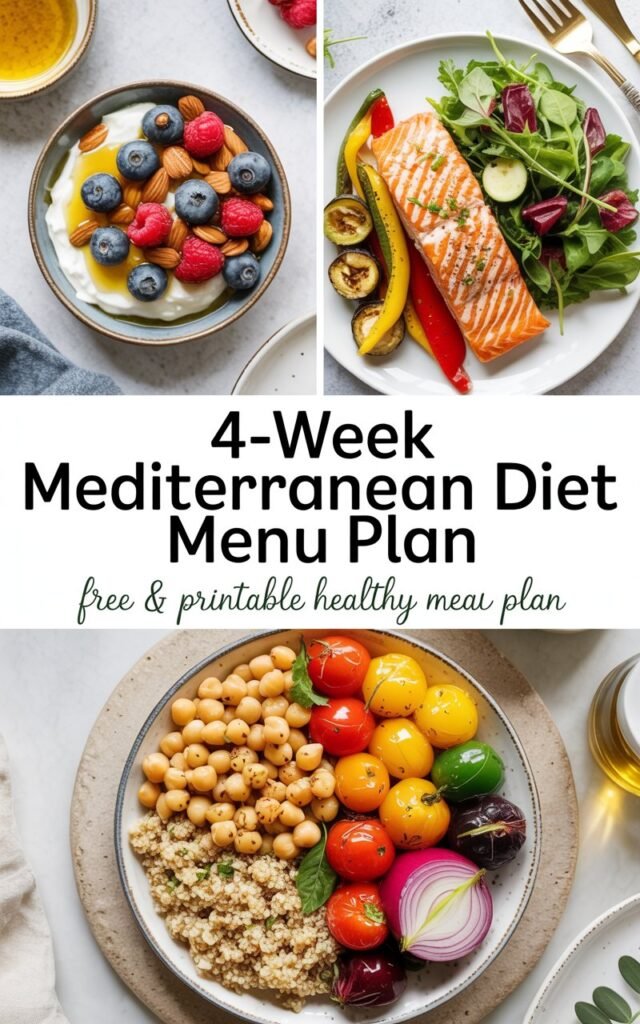
Week 3: Focus on Lean Proteins and Whole Foods
This week emphasizes balance—more fish, legumes, and colorful produce.
Breakfast:
- Greek yogurt parfait with oats and honey
- Oatmeal topped with pomegranate seeds
- Avocado toast with a boiled egg
Lunch:
- Lentil and veggie soup
- Quinoa and kale salad with olive oil dressing
- Tuna salad with white beans and herbs
Dinner:
- Grilled salmon with roasted eggplant
- Chicken breast with sautéed spinach and brown rice
- Mediterranean vegetable stir-fry with olive oil
Snacks:
Mixed nuts, fruit slices, or a small square of dark chocolate
Week 4: Mastering the Mediterranean Lifestyle
By now, eating the Mediterranean way will feel natural and enjoyable.
Breakfast:
- Whole-grain toast with peanut butter and sliced strawberries
- Greek yogurt with almonds and honey
- Smoothie bowl with oats and blueberries
Lunch:
- Chickpea and avocado salad
- Hummus wrap with spinach, carrots, and bell peppers
- Grilled vegetable bowl with brown rice
Dinner:
- Baked trout with lemon and garlic
- Stuffed zucchini with quinoa and feta
- Shrimp with whole-grain pasta and tomato sauce
Snacks:
Walnuts, fruit, or cucumber slices with hummus
Meal Prep & Planning Tips
- Cook once, eat twice: Make larger batches for easy leftovers.
- Stock your pantry: Keep olive oil, canned beans, grains, and herbs on hand.
- Stay flexible: Swap meals or ingredients as needed—just keep it balanced.
- Stay hydrated: Drink plenty of water, herbal teas, or sparkling water with lemon.
Download the Free Printable Menu Plan
You can download and print the 4-Week Mediterranean Diet Menu Plan (PDF) to use as a checklist for meals and grocery shopping. It’s perfect for keeping your healthy habits on track all month long.
6. Mediterranean Diet Meal Plan UK (28-Day Focus)
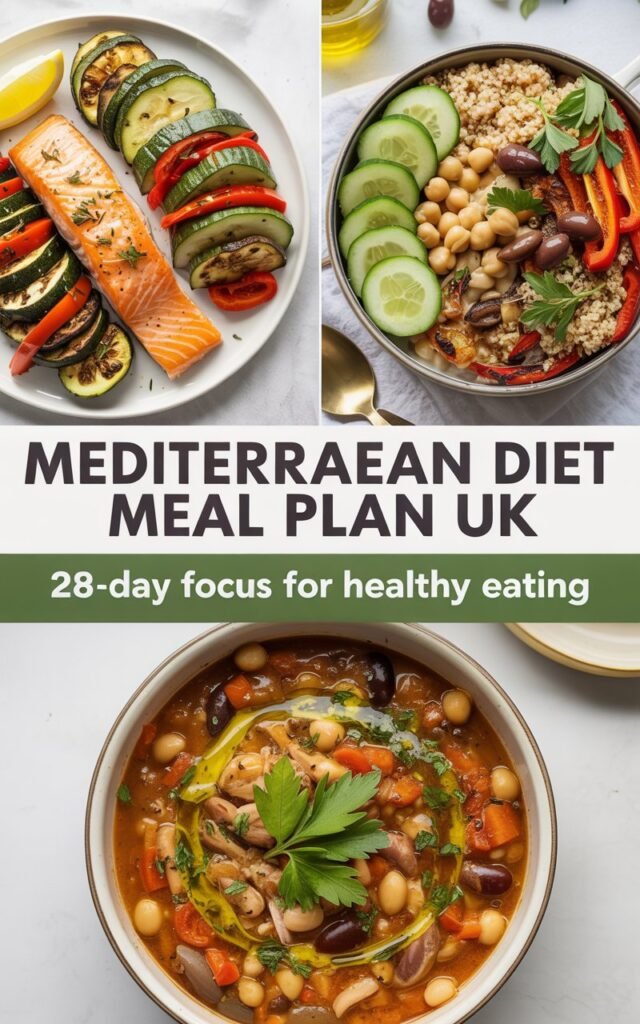
If you live in the UK and want to enjoy the benefits of the Mediterranean Diet while using local, easily available foods, this 28-day Mediterranean Diet meal plan is for you.
It’s a practical and delicious way to eat healthier, lose weight, and boost energy—without cutting out your favorite foods.
The Mediterranean Diet works perfectly with the UK lifestyle, combining the best of fresh produce, lean proteins, and whole grains with heart-healthy olive oil and vibrant flavors.
This 4-week (28-day) plan focuses on balance, simplicity, and accessibility—using ingredients you can find in any UK supermarket.
Each week includes a variety of breakfast, lunch, dinner, and snack ideas that fit both busy workdays and relaxed weekends.
Week 1: Kickstarting the Mediterranean Lifestyle
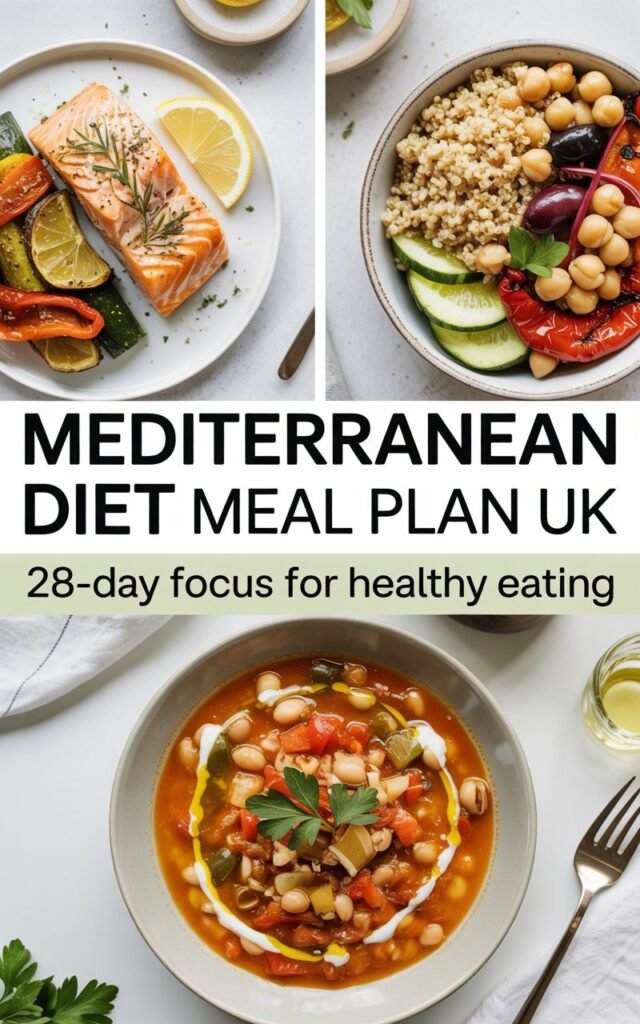
Begin by incorporating Mediterranean staples like olive oil, fresh vegetables, and whole grains into your daily meals.
Breakfast ideas:
- Porridge oats topped with Greek yogurt, honey, and berries
- Wholemeal toast with smashed avocado and poached egg
- Smoothie with spinach, banana, and almond milk
Lunch ideas:
- Tuna and cannellini bean salad with olive oil and lemon dressing
- Lentil soup with crusty wholemeal bread
- Hummus and roasted vegetable wrap
Dinner ideas:
- Grilled chicken with quinoa and roasted vegetables
- Baked salmon with steamed broccoli and sweet potato mash
- Stuffed peppers with brown rice and chickpeas
Snacks:
Almonds, apple slices, or cucumber sticks with hummus
Week 2: Adding Variety and Seasonal Flavours
Experiment with more herbs, whole grains, and seafood for nutrient diversity.
Breakfast:
- Overnight oats with chia seeds and strawberries
- Greek yogurt with walnuts and pomegranate
- Scrambled eggs with spinach and mushrooms
Lunch:
- Mediterranean couscous salad with feta and olives
- Grilled chicken wrap with rocket and hummus
- Tomato and lentil soup with a drizzle of olive oil
Dinner:
- Baked cod with roasted Mediterranean vegetables
- Chickpea curry with brown rice
- Grilled prawns with lemon, garlic, and courgettes
Snacks:
Handful of mixed nuts, Greek yogurt, or fresh fruit
Week 3: Focus on Balance and Smart Portions
This week is about portion control and enjoying lighter, balanced meals.
Breakfast:
- Porridge with almond butter and banana slices
- Wholemeal toast with ricotta and honey
- Smoothie bowl with oats, berries, and seeds
Lunch:
- Quinoa salad with chickpeas, spinach, and roasted red peppers
- Tuna salad with wholegrain crackers
- Lentil and vegetable stew
Dinner:
- Grilled chicken breast with roasted root vegetables
- Salmon fillet with green beans and new potatoes
- Aubergine bake with tomato sauce and mozzarella
Snacks:
Carrot sticks with hummus, almonds, or a small square of dark chocolate
Week 4: Mastering Long-Term Habits
In your final week, focus on maintaining consistency while enjoying more variety and flavor.
Breakfast:
- Greek yogurt parfait with granola and honey
- Wholemeal toast with peanut butter and sliced strawberries
- Scrambled eggs with smoked salmon
Lunch:
- Mediterranean grain bowl with bulgur, chickpeas, and tahini dressing
- Roasted vegetable and halloumi salad
- Tuna and avocado sandwich on wholemeal bread
Dinner:
- Grilled seabass with roasted courgettes and peppers
- Chicken kebabs with couscous and tzatziki
- Veggie stir-fry with olive oil and whole-grain noodles
Snacks:
Fruit, nuts, or plain popcorn
UK-Friendly Grocery Staples
To make this plan easier to follow, stock your kitchen with:
- Extra virgin olive oil
- Canned beans and lentils
- Wholemeal bread, pasta, and rice
- Fresh fruits and vegetables
- Greek yogurt and feta cheese
- Fresh or frozen fish (salmon, cod, tuna)
- Herbs and spices like basil, oregano, garlic, and thyme
Meal Prep Tips for Busy Weeks
- Cook in batches: Prepare soups, grains, and proteins ahead of time.
- Use leftovers: Turn last night’s roasted veggies into tomorrow’s salad.
- Shop smart: Buy seasonal produce from local UK markets for better taste and value.
- Stay hydrated: Aim for at least 6–8 glasses of water daily, and enjoy herbal teas like chamomile or peppermint.
7. Low Cholesterol Mediterranean Diet Recipes
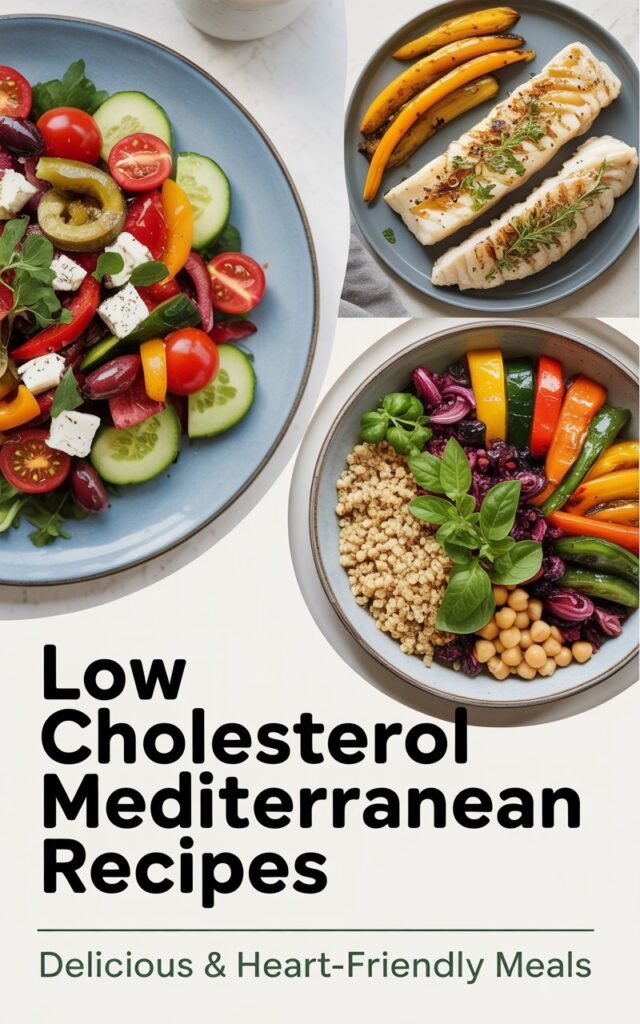
One of the greatest advantages of the Mediterranean diet is its natural ability to promote heart health and maintain healthy cholesterol levels.
Unlike diets that rely heavily on processed foods or saturated fats, the Mediterranean approach focuses on whole, nutrient-rich ingredients that support optimal cardiovascular function.
Low cholesterol Mediterranean recipes are centered around foods rich in unsaturated fats, fiber, and antioxidants — all proven to help lower LDL (bad cholesterol) and increase HDL (good cholesterol).
Think of meals built around olive oil, legumes, fish, fruits, and vegetables, with minimal red meat and dairy.
Here are a few examples of low cholesterol-friendly Mediterranean dishes you can enjoy:
- Grilled Salmon with Quinoa and Spinach: Packed with omega-3 fatty acids, this dish helps reduce inflammation and improve heart health.
- Chickpea and Veggie Stew: A fiber-filled vegetarian option that keeps you full while supporting healthy cholesterol levels.
- Greek Lentil Soup (Fakes Soupa): High in protein and fiber, lentils are excellent for lowering LDL cholesterol naturally.
- Zucchini Noodles with Olive Oil and Cherry Tomatoes: A low-carb, antioxidant-rich meal that’s both light and flavorful.
- Mediterranean Grain Bowl with Hummus and Roasted Vegetables: A colorful mix of whole grains, healthy fats, and plant-based protein.
To maintain a low cholesterol focus, choose lean proteins like fish or legumes instead of red meat, cook with extra virgin olive oil, and incorporate plenty of fresh produce into every meal.
Limit added sugars and processed foods, and opt for whole grains like barley, bulgur, or farro.
Following this approach not only helps lower cholesterol naturally but also boosts overall energy, supports weight management, and promotes long-term heart health — making it one of the most sustainable eating patterns year-round.
Related Mediterranean Diet Guides:

Final Thought
The Mediterranean diet is more than just a way to lose weight or lower cholesterol — it’s a long-term approach to healthy, joyful living.
By focusing on fresh, natural, and nutrient-rich foods, this diet nourishes your body while reducing the risk of chronic diseases such as heart disease, diabetes, and inflammation.
It’s not about strict rules or deprivation; it’s about balance, flavor, and sustainability.
What makes the Mediterranean lifestyle truly special is its focus on quality over quantity — enjoying meals made with wholesome ingredients, connecting with loved ones, and maintaining an active, stress-free lifestyle.
Over time, these habits promote better physical and emotional health, leading to a more vibrant life.
If you’re just starting, begin with simple changes: swap butter for olive oil, add more vegetables and legumes to your meals, and include fish at least twice a week. Small steps lead to lasting results.
Ultimately, the Mediterranean diet is a sustainable, heart-healthy, and enjoyable way of eating that proves healthy food doesn’t have to be boring or restrictive.
It’s a lifestyle that celebrates food, family, and well-being — a timeless blueprint for living your healthiest life.
Frequently Asked Questions (FAQ)
1. Can the Mediterranean diet really lower cholesterol?
Yes. The Mediterranean diet has been shown through numerous studies to lower LDL (bad) cholesterol while raising HDL (good) cholesterol.
This effect comes mainly from the diet’s focus on healthy fats (like olive oil, nuts, and fish), high-fiber foods (like fruits, vegetables, and legumes), and limited saturated fats.
2. How much olive oil should I use daily?
Most health experts recommend about 1–2 tablespoons of extra virgin olive oil per day. It can be used in salads, cooking, or drizzled over vegetables.
Olive oil contains monounsaturated fats that help reduce harmful cholesterol and improve heart health.
3. Are eggs allowed on a low-cholesterol Mediterranean diet?
Yes, in moderation. Eggs are rich in nutrients and contain cholesterol, but research shows that dietary cholesterol has less effect on blood cholesterol than saturated fat.
Limiting eggs to 3–4 per week is a balanced approach if you’re watching cholesterol levels.
4. Can I eat cheese or yogurt on this plan?
Yes, but choose wisely. Opt for low-fat or Greek yogurt and small portions of cheeses like feta or ricotta. The goal is to keep saturated fat low while still enjoying calcium-rich foods in moderation.
5. What are the best protein sources for a low-cholesterol Mediterranean diet?
Great options include fish (especially salmon, sardines, and tuna), lentils, beans, chickpeas, tofu, and skinless poultry.
These proteins are lean and rich in nutrients that help maintain healthy cholesterol levels.
6. Can I still eat bread on the Mediterranean diet?
Absolutely — just make it whole grain. Whole-grain bread, barley, or brown rice provides fiber that helps remove cholesterol from the bloodstream and keeps you feeling full for longer.
7. How soon can I expect to see cholesterol improvements?
Most people begin to see improvements in their cholesterol levels within 6–8 weeks of consistent eating.
However, results vary depending on your overall lifestyle, including exercise, sleep, and stress management.
8. Is this diet suitable for people with high blood pressure or diabetes?
Yes. The Mediterranean diet is one of the most recommended eating patterns for people managing high blood pressure or type 2 diabetes.
Its nutrient-rich, balanced approach helps control blood sugar levels and supports cardiovascular health.