Let’s be real — most women don’t think about their pelvic floor until it starts causing problems.
You know, that moment when a sneeze, a laugh, or a jumping jack turns into an unexpected oops.
It’s one of those body parts we rarely talk about, yet it quietly supports us every single day.
The pelvic floor is like your body’s internal foundation — holding up your bladder, bowel, and uterus, while also playing a crucial role in posture, stability, and even sexual health.
Here’s the surprising part: even though your pelvic floor works hard for you 24/7, it’s one of the most neglected muscle groups.
Most people remember to train their abs, glutes, and legs, but forget about the deep core muscles that literally keep everything in place.
Over time, that neglect can lead to issues like bladder leaks, lower back pain, poor posture, or decreased confidence during intimacy.
The good news? You can prevent and even reverse many of these problems through a few simple daily exercises.
Pelvic floor training isn’t about lifting heavy weights or breaking a sweat. It’s about small, intentional movements that strengthen the muscles from the inside out.
You don’t need fancy gym equipment or hours of your day — just a few focused minutes can help you build lasting strength, control, and stability.
Whether you’re a new mom recovering after childbirth, someone approaching menopause, or simply a woman who wants to feel stronger and more in tune with her body, these exercises are for you.
Think of them as your secret weapon for long-term health and confidence.
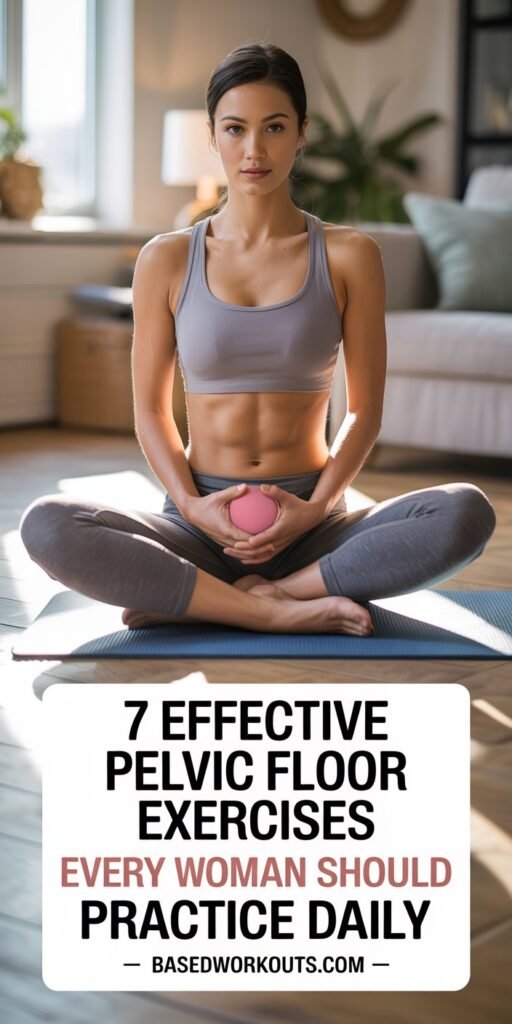
In this guide, we’ll explore seven effective pelvic floor exercises every woman should practice daily.
Each one targets the muscles that matter most — helping you improve bladder control, enhance intimacy, and strengthen your entire core from the base up.
Along the way, you’ll also learn how to properly engage your pelvic muscles (without overdoing it), avoid common mistakes, and make these moves a natural part of your everyday routine.
So, grab a quiet spot, relax your body, and let’s start focusing on the strength you can’t see — but will definitely feel.
Because true fitness isn’t just about visible muscles; it’s about the inner foundation that keeps everything working smoothly, confidently, and beautifully.
1. What Are Pelvic Floor Muscles?

The pelvic floor muscles are one of the most important — yet most overlooked — parts of the human body.
Imagine them as a supportive hammock made of muscle and tissue, stretching from your tailbone at the back to your pubic bone at the front.
This muscular “hammock” holds up your bladder, uterus, and bowel, keeping everything in its proper place while helping these organs work smoothly.
In simple terms, your pelvic floor is your body’s built-in support system. When it’s strong, you can control your bladder and bowel easily, maintain better posture, and enjoy improved stability in your hips and core.
But when these muscles weaken — often due to childbirth, aging, hormonal changes, or even long hours of sitting — it can lead to uncomfortable problems like urinary leaks, pelvic pressure, or lower back pain.
Here’s something most people don’t realize: your pelvic floor works closely with your deep core muscles, including your diaphragm, abdominal muscles, and lower back.
When you breathe properly and engage your core, your pelvic floor naturally contracts and relaxes too.
That means every movement — from walking to laughing — involves these hidden muscles.
If the pelvic floor is too weak, it struggles to hold everything in place. If it’s too tight, it can cause tension, pain, or discomfort.
That’s why learning to both strengthen and relax these muscles is essential for balance and overall health.
Think of it like this: you wouldn’t build a house on a weak foundation, right?
Your pelvic floor is that foundation for your body — supporting strength, stability, and confidence from the inside out.
By understanding how it works and giving it the attention it deserves, you’re not just preventing issues — you’re investing in long-term health and well-being.
2. How to Know If You Have a Weak Pelvic Floor

Here’s the thing — most women don’t realize their pelvic floor muscles have weakened until their body starts dropping little hints.
The signs can be subtle at first, but over time, they become hard to ignore.
A weak pelvic floor doesn’t just affect bladder control; it can influence your posture, core strength, and even confidence.
So how do you know if your pelvic floor needs some extra attention? Let’s break it down.
If you’ve ever noticed a small leak of urine when you laugh, cough, sneeze, or exercise, that’s one of the most common signs.
It happens because the pelvic floor muscles that support your bladder aren’t contracting strongly enough to prevent leakage.
Some women describe it as an “oops” moment — and while it’s extremely common, it’s not something you have to live with forever.
You might also feel a heavy, dragging, or “falling” sensation in your lower pelvis — almost like something is pulling downward.
This can be a sign of pelvic organ prolapse, which occurs when weakened muscles can’t fully support the internal organs.
Other symptoms of a weak pelvic floor include:
- Frequent urges to urinate even when your bladder isn’t full
- Difficulty controlling gas or bowel movements
- Pain or discomfort during intimacy
- Lower back or hip pain that doesn’t seem to go away
- Reduced core strength or poor posture
It’s worth noting that many factors can contribute to a weaker pelvic floor — pregnancy and childbirth, hormonal changes during menopause, chronic constipation, heavy lifting, or even long periods of sitting.
But no matter the cause, the good news is that the pelvic floor is trainable.
Like any other muscle, it can regain strength and function with regular exercise and proper technique.
If you’re unsure whether your pelvic floor is weak, try this simple test: while using the restroom, see if you can stop the flow of urine midstream (just once, for testing).
If it’s difficult or impossible to do so, that’s a sign your muscles could use strengthening.
However, don’t make a habit of doing this regularly — it’s just a quick way to assess muscle control.
Understanding these signs is the first step toward taking control of your pelvic health.
With the right exercises, you can rebuild strength, improve stability, and eliminate many of these uncomfortable symptoms.
A strong pelvic floor doesn’t just prevent problems — it enhances your overall quality of life.
3. Benefits of Pelvic Floor Exercises

When most people think of fitness, they picture toned abs, sculpted legs, or a strong back — but what if we told you that real strength starts from deep within?
Strengthening your pelvic floor muscles can transform more than just your core.
It impacts your posture, confidence, and even your daily comfort in ways you might not expect.
Pelvic floor exercises are simple, subtle, and powerful.
Whether you’re a busy mom, a professional spending long hours at a desk, or someone simply wanting better control and stability, these exercises offer life-changing benefits that go far beyond the gym.
Here are some of the most important benefits of training your pelvic floor:
1. Improved Bladder Control
If you’ve ever laughed, sneezed, or jumped and suddenly needed a change of clothes, you already know how frustrating bladder leaks can be.
Strengthening your pelvic floor helps you regain control by tightening the muscles that support your bladder.
Over time, this reduces or completely eliminates leakage and gives you the confidence to move freely — no worries, no stress.
2. Enhanced Core Stability and Posture
Your pelvic floor is a key part of your core, working together with your abs, lower back, and diaphragm.
When it’s strong, it helps you maintain proper posture and balance.
That means fewer back aches, better alignment, and a more stable foundation for every movement — from walking to lifting weights.
3. Faster Recovery After Childbirth
Pregnancy and childbirth can stretch and weaken the pelvic floor muscles.
Regular pelvic floor exercises help rebuild that strength, reduce postpartum discomfort, and promote faster healing.
They also help prevent long-term issues like prolapse or urinary incontinence after delivery.
4. Better Sexual Health and Pleasure
A stronger pelvic floor increases blood flow and muscle tone in the pelvic area, which can enhance sensitivity and control.
Many women report improved satisfaction and confidence in intimacy after consistently practicing these exercises.
It’s a benefit that goes beyond health — it’s about reconnecting with your body.
5. Reduced Risk of Pelvic Organ Prolapse
A weakened pelvic floor can cause internal organs like the bladder or uterus to drop or press into the vaginal wall, leading to discomfort and pressure.
Strengthening these muscles helps keep everything supported and in its proper place.
6. Easier Menopause Transition
As estrogen levels drop during menopause, pelvic muscles can lose elasticity and tone.
Regular exercises help counteract these changes, maintaining strength and control as your body adjusts.
7. Boosted Confidence and Quality of Life
When you’re not worried about leaks, discomfort, or posture, you naturally move with more confidence.
A strong pelvic floor helps you feel in control of your body — something every woman deserves.
The best part? You don’t need any equipment or a gym membership. Just a few minutes of daily practice can make a significant difference.
Think of these exercises as your silent investment in long-term health — small actions that deliver lasting results.
A strong pelvic floor doesn’t just make you feel stronger — it helps you live stronger. And that’s something worth committing to.
4. Kegel Exercises (Basic Contractions)
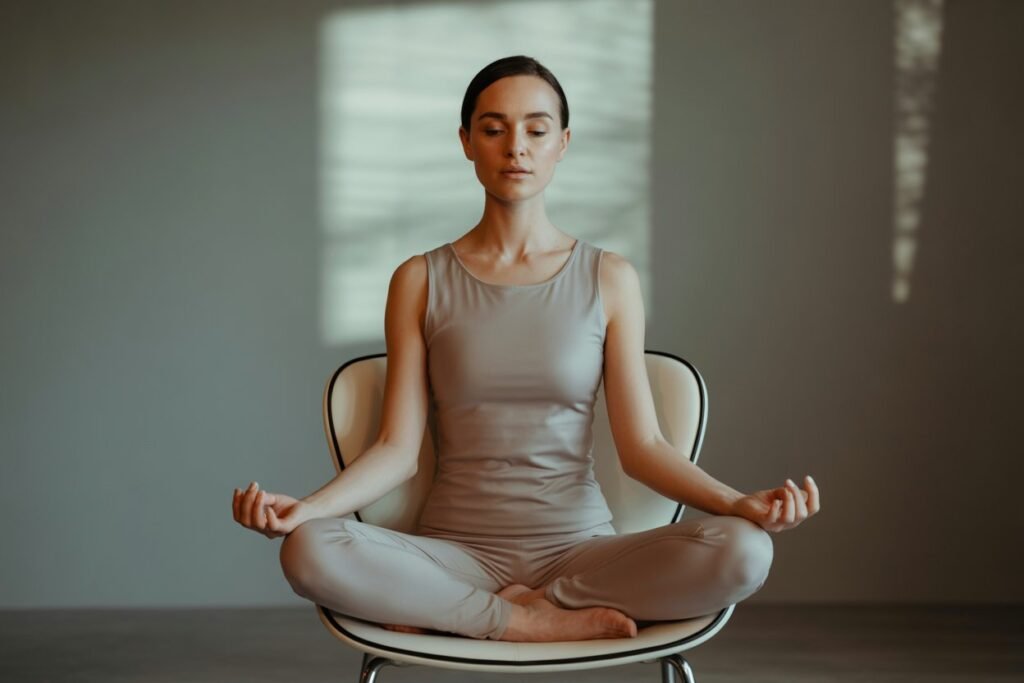
When it comes to pelvic floor training, Kegel exercises are the gold standard — the foundation of a stronger, more supportive core from the inside out.
Named after Dr. Arnold Kegel, who first introduced them in the 1940s, these exercises are simple, discreet, and incredibly effective when done correctly.
The best part? You can do them anywhere — sitting at your desk, watching TV, or even while brushing your teeth — and no one will ever know.
So, what exactly are Kegels?
Kegel exercises involve contracting and relaxing the pelvic floor muscles — the same ones you’d use to stop the flow of urine midstream.
These gentle contractions strengthen the muscles that support your bladder, uterus, and bowel, helping improve control, stability, and circulation in the pelvic region.
But here’s the key: form and awareness matter more than speed or intensity. Doing Kegels incorrectly can actually make things worse, so let’s walk through the proper technique step by step.
How to Do Kegel Exercises Correctly:
- Find the Right Muscles
The easiest way to locate your pelvic floor muscles is by trying to stop urination midstream once (just for identification, not as a regular practice). The muscles you feel engaging are your pelvic floor muscles. - Get Comfortable
You can perform Kegels sitting, standing, or lying down. For beginners, lying on your back with your knees bent is often the easiest position. - Contract and Lift
Tighten your pelvic floor muscles as if you’re stopping the flow of urine or holding in gas. Focus on lifting the muscles upward rather than squeezing your abdomen, thighs, or glutes. - Hold the Contraction
Hold the contraction for about 3 to 5 seconds while continuing to breathe normally. Avoid holding your breath — breathing helps keep your body relaxed and ensures proper engagement. - Release and Relax
Slowly release the muscles and relax for 5 to 10 seconds before repeating. The relaxation phase is just as important as the contraction. - Repeat Consistently
Aim for 10 to 15 repetitions, two to three times a day. As your strength improves, gradually increase your hold time up to 10 seconds per contraction.
Common Mistakes to Avoid:
- Don’t tighten your stomach, thighs, or buttocks — only your pelvic muscles should move.
- Don’t hold your breath. Steady, calm breathing is essential.
- Don’t overdo it. Like any muscle, your pelvic floor can become fatigued if you push too hard.
With consistent practice, Kegel exercises can help you gain better bladder control, reduce the risk of leaks, improve core stability, and even enhance sexual function.
The key is consistency — small, mindful repetitions each day can lead to major improvements over time.
Remember, your pelvic floor is just like any other muscle — it gets stronger when you train it regularly.
Start small, stay consistent, and soon you’ll notice that subtle but empowering sense of control returning to your body.
5. Bridge Pose with Pelvic Activation
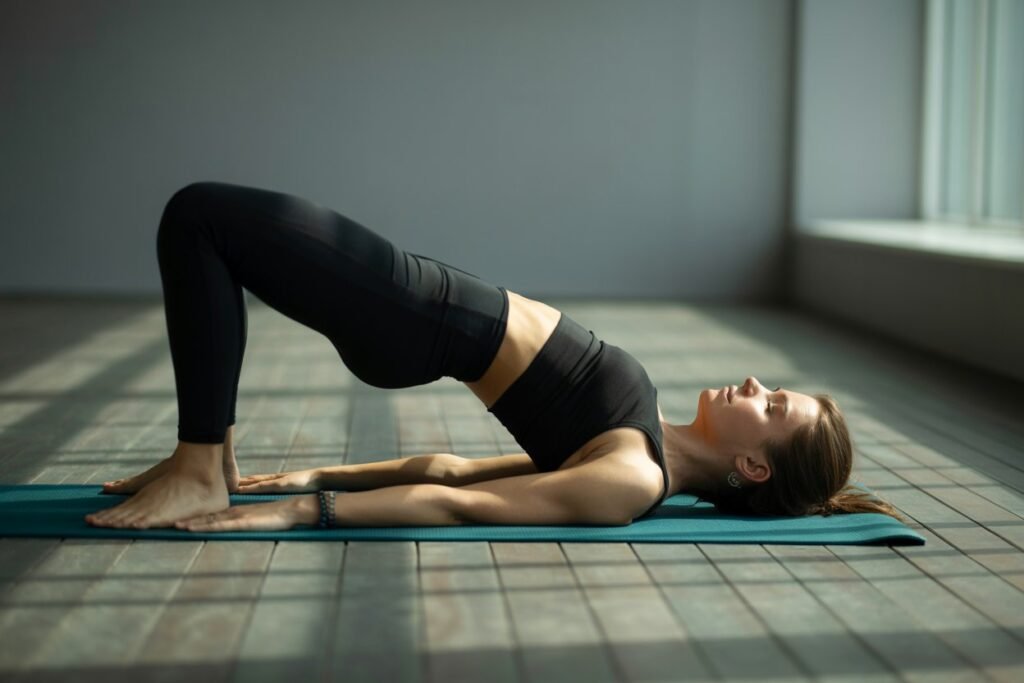
The Bridge Pose with Pelvic Activation is a powerful, full-body exercise that primarily targets your pelvic floor muscles, glutes, hamstrings, and lower back.
It combines strength training with mindful control, helping you build stability and tone the muscles that support your bladder, uterus, and bowel.
This move is particularly beneficial for women dealing with postpartum recovery, mild urinary leakage, or core weakness — but it’s also excellent for anyone seeking improved posture, pelvic alignment, and total lower-body strength.
To get started, lie on your back on a yoga mat with your knees bent and your feet flat on the floor, hip-width apart.
Keep your arms resting by your sides with palms facing down. Before lifting your hips, take a deep breath in, allowing your abdomen to expand.
As you exhale, gently engage your pelvic floor muscles — imagine trying to stop the flow of urine or hold in gas — and slowly lift your hips toward the ceiling.
Your body should form a straight line from your shoulders to your knees.
At the top of the movement, squeeze your glutes and maintain the pelvic floor contraction.
Hold this position for about 5–10 seconds, breathing deeply and keeping your neck relaxed.
Slowly lower your hips back down to the floor on an exhale, releasing the pelvic contraction as you come down.
Repeat the movement 10–15 times, performing 2–3 sets depending on your fitness level.
For an added challenge, place a resistance band just above your knees to activate your outer thighs or try lifting one leg off the ground while maintaining pelvic stability.
This not only enhances balance but also increases the intensity of the glute and pelvic floor engagement.
Performing the Bridge Pose with Pelvic Activation consistently can lead to noticeable improvements in pelvic control, sexual function, and lower back support.
It also enhances your body awareness and coordination — making it an essential exercise for women of all ages who want to maintain a strong, functional, and well-balanced core.
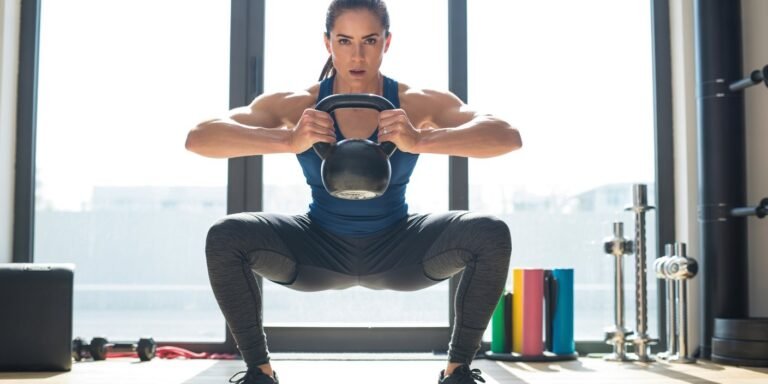
6. Squats with Pelvic Floor Focus
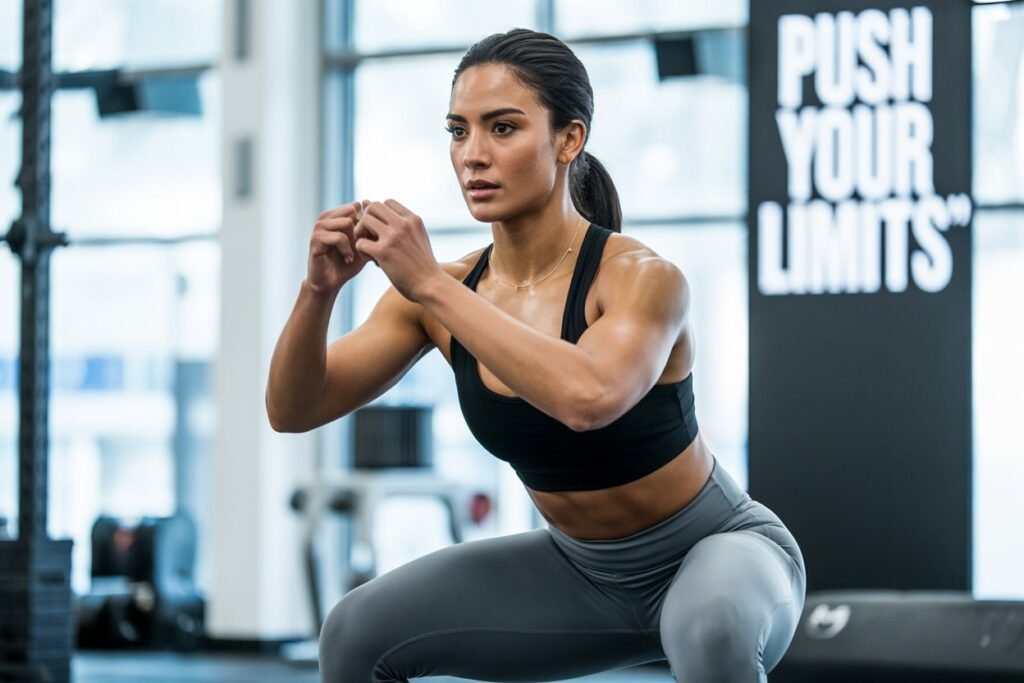
Squats are widely known as one of the most effective lower-body exercises, but when performed with pelvic floor awareness, they become even more powerful.
This variation — Squats with Pelvic Floor Focus — not only strengthens your glutes, quads, and hamstrings, but also helps activate and tone the pelvic floor muscles, which play a crucial role in bladder control, posture, and core stability.
To begin, stand tall with your feet slightly wider than hip-width apart and your toes turned out slightly. Keep your spine neutral, chest lifted, and shoulders relaxed.
Take a deep breath in as you begin to lower your body down into a squat, bending at the hips and knees as if you’re sitting back into a chair.
During this downward motion, relax your pelvic floor muscles—this is when they naturally lengthen and prepare for contraction.
As you exhale, press through your heels to return to standing, and at the same time, gently engage your pelvic floor muscles by lifting and tightening them inward and upward (like stopping the flow of urine).
Maintain the contraction for a second or two at the top before releasing as you move into the next squat.
Continue this pattern for 10–15 repetitions, performing 2–3 sets depending on your comfort level.
Focus on slow, controlled movements rather than speed. This allows you to truly connect your breath, pelvic engagement, and muscle coordination.
Keep your knees aligned with your toes and avoid letting them cave inward during the squat.
If needed, you can perform the movement against a wall or with a stability ball behind your back for extra support — especially if you’re a beginner or recovering postpartum.
For added intensity, hold a light dumbbell or resistance band around your thighs to challenge your legs and glutes while maintaining pelvic floor focus.
When practiced regularly, Squats with Pelvic Floor Focus can significantly improve pelvic stability, bladder control, and lower-body strength.
They also promote better posture, balance, and functional movement in everyday activities — making them an essential addition to any woman’s daily routine for total-body wellness and pelvic health.
7. Deep Core Breathing (Diaphragmatic Breathing)

Deep Core Breathing, also known as Diaphragmatic Breathing, is one of the most fundamental and restorative pelvic floor exercises every woman should practice daily.
While it may seem simple, this mindful breathing technique is essential for maintaining pelvic floor health, core stability, and relaxation.
It trains your diaphragm, pelvic floor, and deep abdominal muscles (transverse abdominis) to work together harmoniously — helping to reduce tension, improve circulation, and restore natural muscle balance.
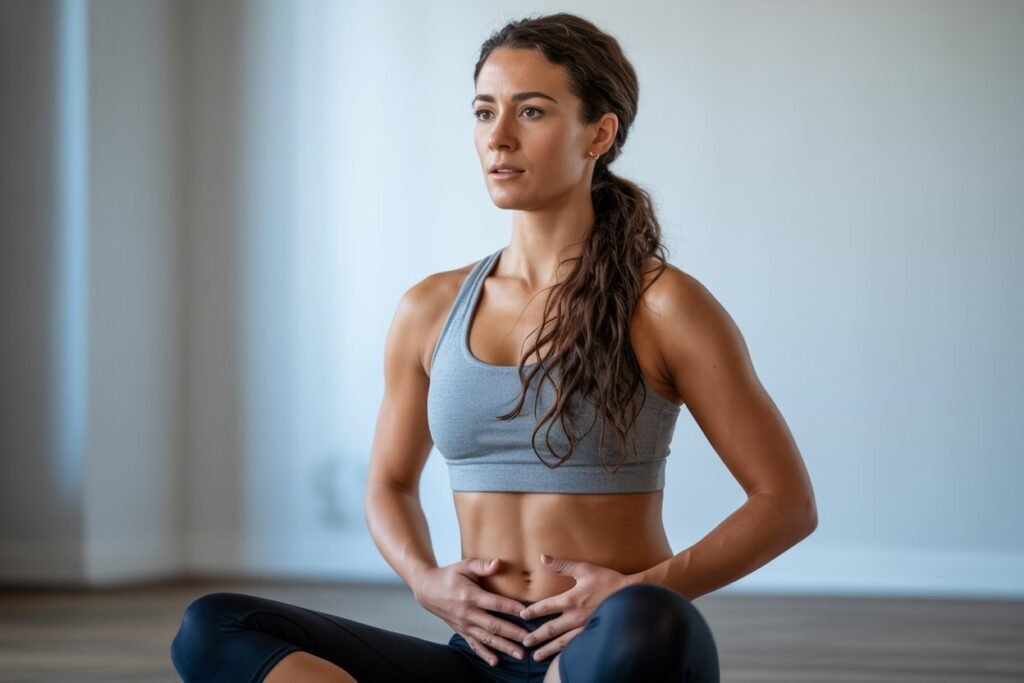
To begin, find a comfortable position — you can sit upright with good posture or lie flat on your back with your knees bent and feet flat on the floor.
Place one hand on your chest and the other on your abdomen.
Take a slow, deep breath in through your nose, allowing your belly to rise and expand outward while keeping your chest relatively still.
As your diaphragm moves downward, your pelvic floor naturally relaxes and lengthens, creating gentle pressure and promoting elasticity.
Next, exhale slowly through your mouth, gently lifting and engaging your pelvic floor muscles as your abdomen draws inward.
Imagine your pelvic muscles pulling up and in, similar to stopping the flow of urine or lifting a marble with your muscles.
This coordinated movement between your breath and pelvic engagement strengthens your internal support system, helping to stabilize your spine and reduce pelvic tension.
Repeat this breathing cycle 10–15 times, maintaining smooth, controlled breaths. Aim for at least 2–3 rounds daily, especially in the morning or before bedtime.
Over time, this practice enhances your body awareness, reduces stress, and improves the connection between your breath and core.
For women who experience postpartum recovery, incontinence, pelvic pain, or core weakness,
Deep Core Breathing is especially beneficial. It encourages healing and functional strength without the strain that comes from more intense workouts.
Additionally, it can be practiced anywhere — while sitting at a desk, lying in bed, or even during yoga or meditation sessions.
When practiced consistently, Deep Core Breathing not only strengthens your pelvic floor and deep core muscles, but also promotes better posture, improved digestion, and overall relaxation.
It’s a gentle yet powerful way to reconnect with your body — making it a cornerstone exercise for women of all ages who want to nurture long-term pelvic health and inner strength.
Frequently Asked Questions (FAQs
Q1: How often should I do pelvic floor exercises?
Daily practice is recommended—aim for at least 3 sets of Kegels and other movements.
Q2: Can I overdo pelvic floor training?
Yes, overtraining may lead to tight muscles, so balance is key. Focus on controlled, relaxed repetitions.
Q3: Do pelvic floor exercises really help with incontinence?
Absolutely. Studies show consistent practice significantly reduces urinary leakage.
Q4: Are these exercises safe during pregnancy?
Yes, pelvic floor exercises are highly recommended during and after pregnancy. Consult your healthcare provider first.
Q5: When will I start seeing results?
You may notice improvements within a few weeks, but significant changes can take 6–8 weeks of consistent practice.
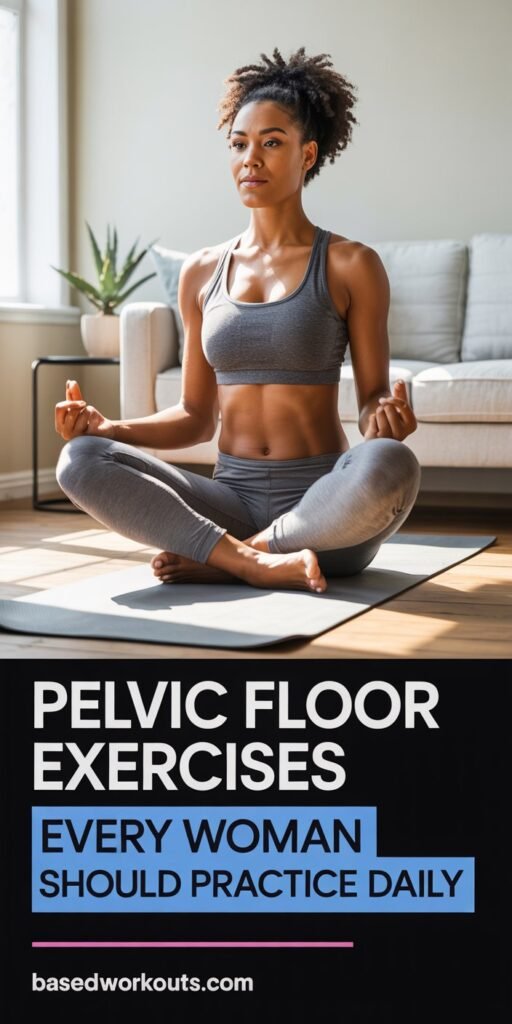
Final Thoughts
Your pelvic floor plays a vital role in your core strength, posture, bladder control, and overall body stability, yet it’s often one of the most overlooked muscle groups in a woman’s fitness routine.
Incorporating pelvic floor exercises into your daily life doesn’t just enhance your physical health — it also boosts your confidence, energy, and overall well-being.
These 7 pelvic floor exercises — from Kegels and Bridge Pose to Deep Core Breathing — work together to strengthen, stabilize, and restore balance to your body.
They’re simple, equipment-free, and can be done anywhere, making them perfect for beginners, postpartum women, or anyone looking to improve their core and pelvic health naturally.
Consistency is key. Start with a few minutes a day, focusing on your breathing and muscle control, and gradually increase your duration as your strength builds.
Over time, you’ll notice better core engagement, improved posture, enhanced bladder control, and even increased sexual satisfaction.
Remember, true pelvic health isn’t about perfection — it’s about awareness, connection, and progress.
Make these exercises part of your self-care routine, and your body will thank you with lasting strength, stability, and confidence from the inside out.