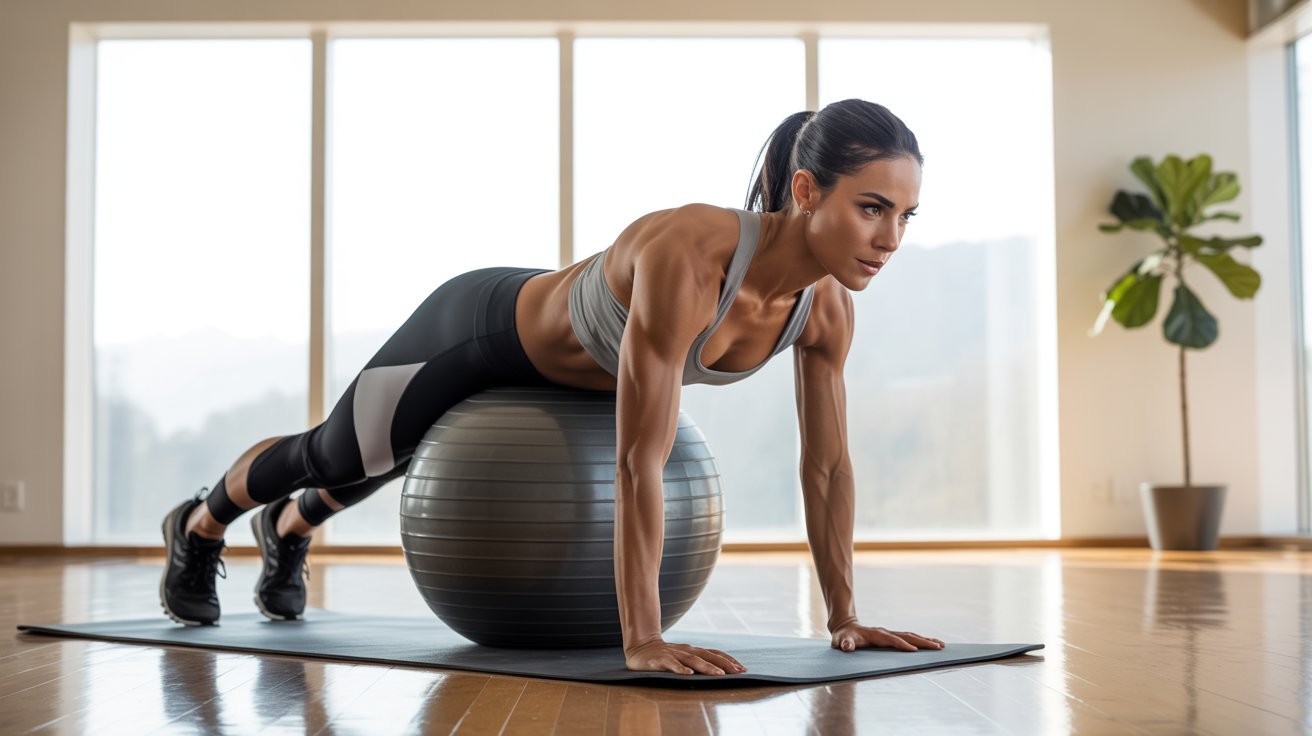
If you’ve ever felt tightness in your lower back, stiffness in your shoulders, or struggled with balance during workouts, chances are your posture and core strength need some attention.
In today’s world—where long hours of sitting, working on laptops, and scrolling on phones are the norm—poor posture is more common than ever.
But the good news is that with the right core and posture exercises, you can not only reduce discomfort but also build a stronger, more stable body that looks and feels healthier.
Your core is more than just your abs—it’s the powerhouse of your body. It includes your back, hips, and pelvic muscles, all working together to support your spine, improve balance, and keep you moving efficiently.
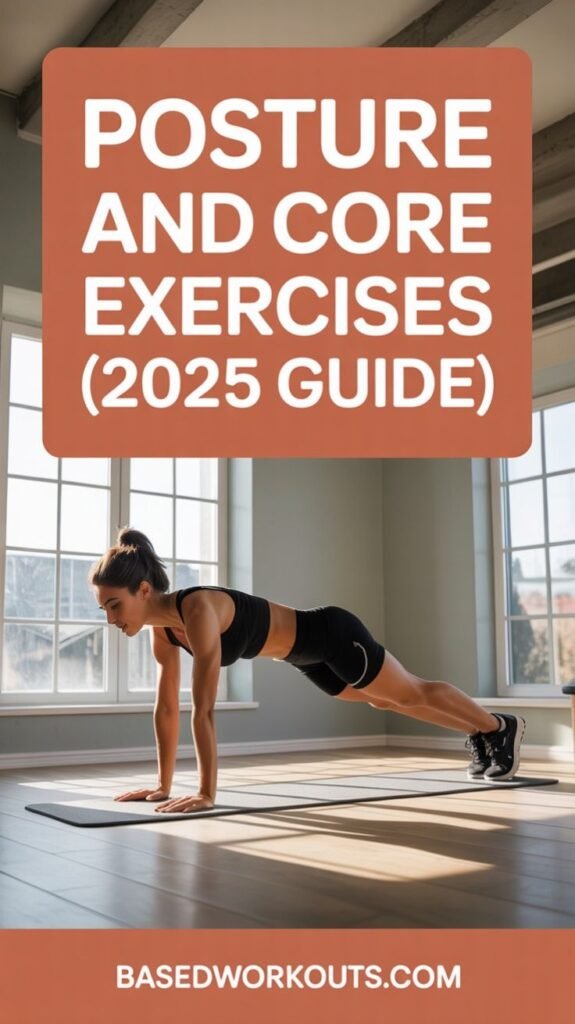
A weak core often leads to slouching, back pain, and poor movement patterns. On the flip side, a strong core improves athletic performance, reduces injury risk, and even boosts confidence in how you carry yourself.
In this 2025 guide to posture and core exercises, we’ll cover:
- Simple posture correction exercises to relieve stiffness and tension
- Core-strengthening moves to build stability, balance, and strength
- Beginner-friendly routines you can do at home—no fancy equipment needed
- Expert tips on improving daily posture habits for long-term results
Whether you’re sitting at a desk all day, recovering from back issues, or simply want to tone your midsection, these exercises will help you feel stronger, move better, and stand taller.
Let’s dive into the best posture and core exercises to strengthen your back, abs, and balance in 2025!
Amazon Gear for Posture & Core Strength I Recommend
Want Better Posture and a Stronger Core at Home?
Improving your posture starts with strengthening your core and using the right support tools. These affordable Amazon finds can help you align your spine, build stability, and relieve back tension — all from the comfort of your home.
| Product | Why You’ll Love It | Shop Now |
|---|---|---|
| Posture Corrector Brace | Gently aligns your shoulders and back, helping reduce slouching and improve confidence. | Check Price on Amazon |
| Balance Ball Chair | Strengthens your core while you sit — great for posture correction and daily stability training. | View on Amazon |
| Ab Wheel Roller | Builds core muscles and improves spinal support for better posture and overall strength. | Shop Now |
| Resistance Bands (Set of 5) | Ideal for posture exercises that open the chest, stretch tight muscles, and activate your back. | Buy on Amazon |
| Foam Roller | Relieves tension in the back and shoulders while promoting better alignment and recovery. | See Details |
These are the same tools I recommend for building a strong, balanced body — helping you stand taller, move easier, and support long-term spine health.
1. Why Good Posture is Essential for Health & Fitness
Good posture is often overlooked in fitness, but it plays a vital role in overall health, performance, and even physical appearance.
Posture refers to the way you hold your body while standing, sitting, or moving.
When your body is aligned correctly, your muscles, joints, and ligaments work together efficiently, reducing strain and preventing long-term problems.

Improves Breathing and Oxygen Flow
When you slouch or hunch forward, your lungs and diaphragm are compressed, limiting your ability to take deep breaths.
Good posture opens up the chest and allows better lung expansion, improving oxygen flow throughout the body.
This helps boost stamina, energy, and performance during workouts.
Prevents Pain and Injuries
Poor posture often leads to back pain, stiff shoulders, and neck discomfort.
Over time, it can also cause muscle imbalances that affect your form during exercises like squats, deadlifts, or push-ups.
Maintaining proper posture reduces stress on your spine, joints, and muscles, lowering the risk of injury both in the gym and daily life.
Enhances Exercise Performance
Whether you’re lifting weights, running, or doing yoga, posture directly impacts how efficiently your body moves.
Correct alignment helps you engage the right muscles, lift heavier without strain, and perform cardio with better endurance.
For example, keeping your spine neutral during strength training improves stability and maximizes muscle activation.
Supports Better Digestion and Circulation
Slouching compresses your abdominal organs, which can slow digestion and restrict blood flow.
Proper posture allows your organs to function optimally, supporting better nutrient absorption, circulation, and even metabolism—all of which contribute to overall fitness and fat loss.
Boosts Confidence and Mental Health
Posture doesn’t just affect the body—it influences the mind as well. Standing tall with your shoulders back projects confidence, reduces stress, and can even improve mood.
Studies show that good posture is linked to higher self-esteem and greater mental focus, which are important when staying consistent with fitness goals.
Key takeaway: Good posture is not just about “looking taller.” It’s a foundation for better health, stronger workouts, fewer injuries, and even improved confidence.
By making posture a priority in your daily life and exercise routine, you set yourself up for long-term fitness success.
2. Core Strength: The Secret to Better Posture
When most people think about posture, they picture standing tall with their shoulders back.
But what many don’t realize is that core strength is the foundation of good posture.
Your core muscles act like the body’s central support system, keeping your spine aligned and your upper and lower body balanced.
Without a strong core, it’s nearly impossible to maintain proper posture for long periods.
Why the Core Matters for Posture
The core isn’t just your “abs.” It includes a group of muscles in your abdomen, lower back, pelvis, and even the hips.
These muscles work together to stabilize your spine, support your organs, and help you move with balance.
If your core is weak, other muscles—like your shoulders, neck, and lower back—end up overcompensating, which leads to slouching, stiffness, and pain.
How Core Strength Supports Alignment
A strong core holds your spine in a neutral position, which reduces pressure on your vertebrae and joints.
This not only improves posture but also allows you to breathe more deeply, stand taller, and move with greater ease.
Think of your core as the “pillar” that keeps your whole body upright—without it, everything else collapses inward.
Core Exercises That Improve Posture
You don’t need fancy equipment to strengthen your core. Some of the most effective posture-friendly moves include:
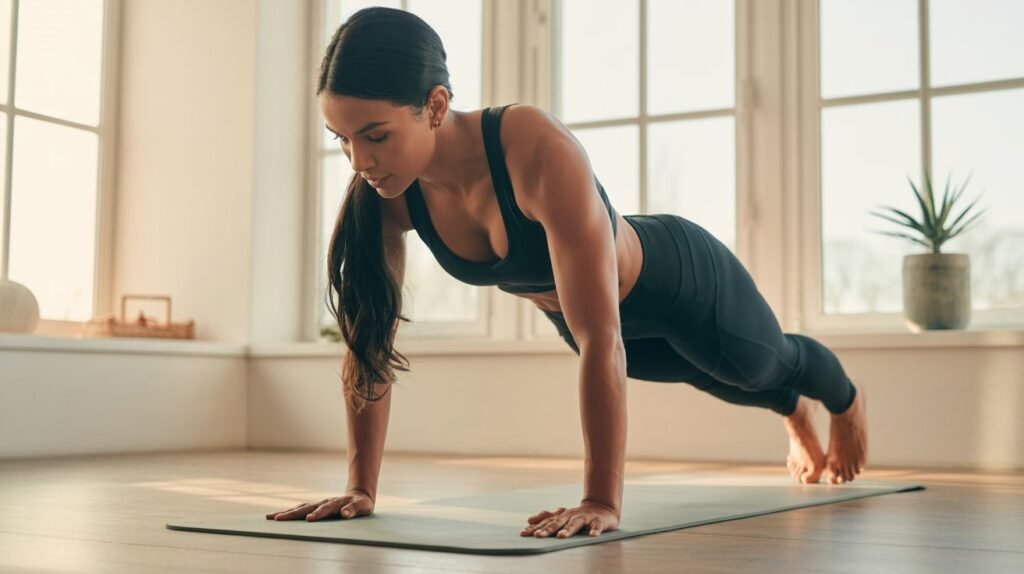
- Planks – Engage the entire core while keeping the spine neutral.
- Dead bugs – Improve coordination and spinal stability.
- Bird dogs – Strengthen the lower back and balance muscles.
- Glute bridges – Support pelvic alignment and reduce lower-back stress.
Doing these consistently helps correct rounded shoulders, prevent lower-back pain, and make standing or sitting upright feel natural rather than forced.
Core Strength in Everyday Life
A stronger core not only improves posture in the gym but also in daily life—while sitting at a desk, carrying groceries, or even sleeping.
Over time, better posture reduces fatigue, boosts confidence, and protects your body from common aches that come with poor alignment.
Key takeaway: If you want better posture, don’t just focus on your back and shoulders—build a stronger core.
Core strength is the secret weapon for long-term spinal health, proper alignment, and a more confident, upright stance.
3. How to Tell if You Have Bad Posture
Bad posture doesn’t usually appear overnight. Instead, it develops slowly from everyday habits like sitting at a desk, scrolling on your phone, or standing incorrectly for long periods.
Because the changes are gradual, many people don’t even realize they have poor posture until it starts affecting their health, fitness, or appearance.
The good news is that by learning the warning signs, you can catch posture problems early and start making corrections before they turn into long-term issues.

Common Signs of Bad Posture
Here are the most noticeable red flags that your posture needs improvement:
- Rounded Shoulders
- If your shoulders naturally slouch forward, it’s often a result of weak upper-back muscles and tight chest muscles. This can make you look hunched even when you’re standing tall.
- Forward Head Position (“Tech Neck”)
- This happens when your head juts out in front of your body instead of stacking directly over your shoulders. It’s common among people who spend hours on computers or looking down at phones. Over time, it can lead to neck pain, tension headaches, and even breathing issues.
- Excessive Arch in the Lower Back (Lordosis)
- If your lower back curves inward too much, it could mean your hip flexors are tight and your core muscles are weak. This type of posture imbalance often causes lower-back pain and stiffness.
- Flat Back
- The opposite of an excessive arch. A flat back reduces the natural curve of your spine and makes standing for long periods uncomfortable. It can also affect your balance.
- Uneven Shoulders or Hips
- If one shoulder appears higher than the other, or if your hips tilt forward or backward, it may signal muscle imbalances or scoliosis. These imbalances can throw off your entire body alignment.
- Frequent Back, Shoulder, or Neck Pain
- Ongoing aches and stiffness are some of the clearest signs of posture problems. Your muscles and joints are working harder than they should to support your body, leading to strain and discomfort.
- Feeling Tired After Sitting or Standing
- If holding yourself upright feels exhausting, poor posture could be the culprit. Bad posture forces the wrong muscles to overwork while your core muscles weaken, leaving you drained.
Simple Self-Tests for Posture
You don’t always need a doctor or specialist to know if your posture is off. Try these quick tests at home:
- The Wall Test
- Stand with your back against a wall. Ideally, your head, shoulders, and glutes should touch the wall, with a small natural curve in your lower back.
- If your head or shoulders don’t touch easily, it’s a sign of forward head posture or rounded shoulders.
- The Mirror Test
- Stand sideways in front of a full-length mirror. Draw an imaginary straight line through your ear, shoulder, hip, knee, and ankle.
- If your head leans forward, shoulders slump, or hips tilt, your posture alignment needs attention.
- The Sitting Test
- Sit at your desk as you normally do. If your shoulders round forward, your back hunches, or your neck cranes toward the screen, you’re practicing poor sitting posture.
The Hidden Effects of Bad Posture
Even if your posture doesn’t cause pain right now, it can still affect your health and lifestyle. Poor posture can:
- Reduce lung capacity, making it harder to breathe deeply during workouts.
- Cause tension headaches from tight neck and shoulder muscles.
- Limit flexibility and range of motion.
- Make you appear shorter and less confident.
When to Seek Professional Help
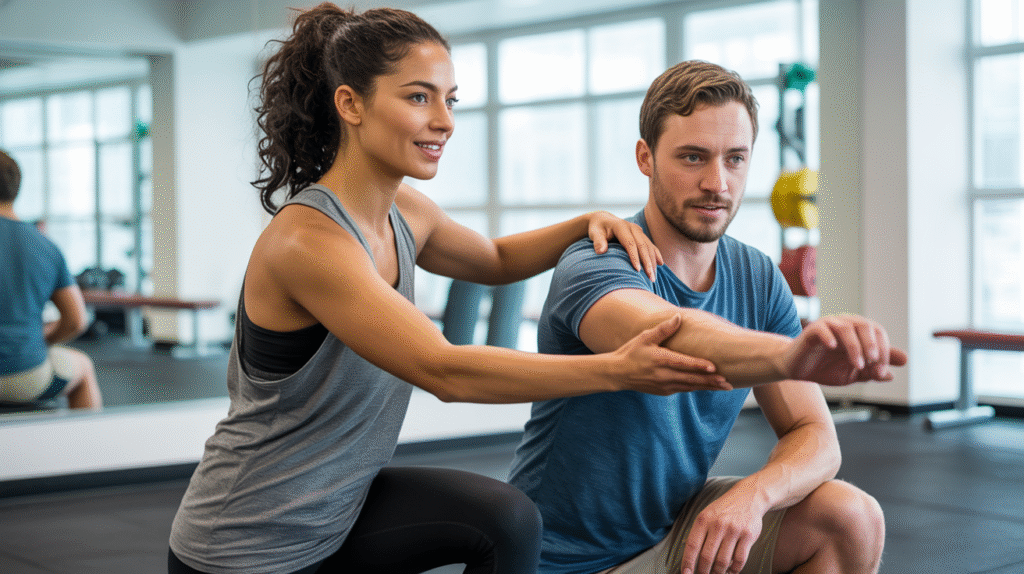
If posture problems cause persistent pain, frequent headaches, or limit your daily activities, it’s worth seeking professional help.
A physical therapist, chiropractor, or personal trainer can:
- Identify imbalances in your muscles and joints.
- Teach corrective exercises tailored to your body.
- Provide hands-on adjustments and guidance to restore proper alignment.
Key Takeaway: Bad posture isn’t always obvious, but the signs are there — from rounded shoulders to constant fatigue.
By testing yourself at home, staying aware of your alignment, and seeking help when needed, you can prevent long-term damage and build a stronger, healthier foundation for both everyday life and fitness.
4. Daily Warm-Up Routine for Core & Posture
Before diving into strength training, cardio, or even a long workday, a daily warm-up routine can prepare your muscles, activate your core, and reset your posture.
Think of it as a quick “recalibration” for your body — helping you stand taller, move more efficiently, and reduce the risk of back or neck pain.
A good warm-up for posture and core doesn’t need to be long. Just 5–10 minutes daily can help loosen stiff muscles, fire up your stabilizers, and remind your body of the correct alignment.
Here’s a simple step-by-step warm-up routine you can follow:
1. Cat-Cow Stretch (1 minute)
- Start on all fours with your hands under shoulders and knees under hips.
- Inhale as you arch your back (cow), lifting your head and tailbone.
- Exhale as you round your spine (cat), tucking your chin and pelvis.
- This stretch improves spinal mobility and helps release tension in the back.
2. Pelvic Tilts (1 minute)
- Lie on your back with knees bent and feet flat on the floor.
- Slowly tilt your pelvis upward, flattening your lower back into the ground.
- Relax and return to neutral.
- This exercise gently activates your lower abs and realigns the spine.
3. Bird-Dog (1 minute each side)
- On all fours, extend your right arm forward and left leg back.
- Keep your core tight and avoid arching your back.
- Hold for 3–5 seconds, then switch sides.
- Bird-dog strengthens your deep core and improves balance — both essential for good posture.
4. Wall Angels (1–2 minutes)
- Stand with your back against a wall, feet about 6–12 inches away.
- Keep your lower back gently pressing into the wall.
- Raise your arms up and down like making a “snow angel.”
- This exercise strengthens your upper back and opens tight chest muscles.
5. Standing Forward Fold with Shoulder Opener (1 minute)
- Hinge at your hips and fold forward, letting your arms hang.
- Option: Clasp hands behind your back and let them fall forward to open the shoulders.
- This stretch helps release tight hamstrings and shoulders that contribute to slouching.
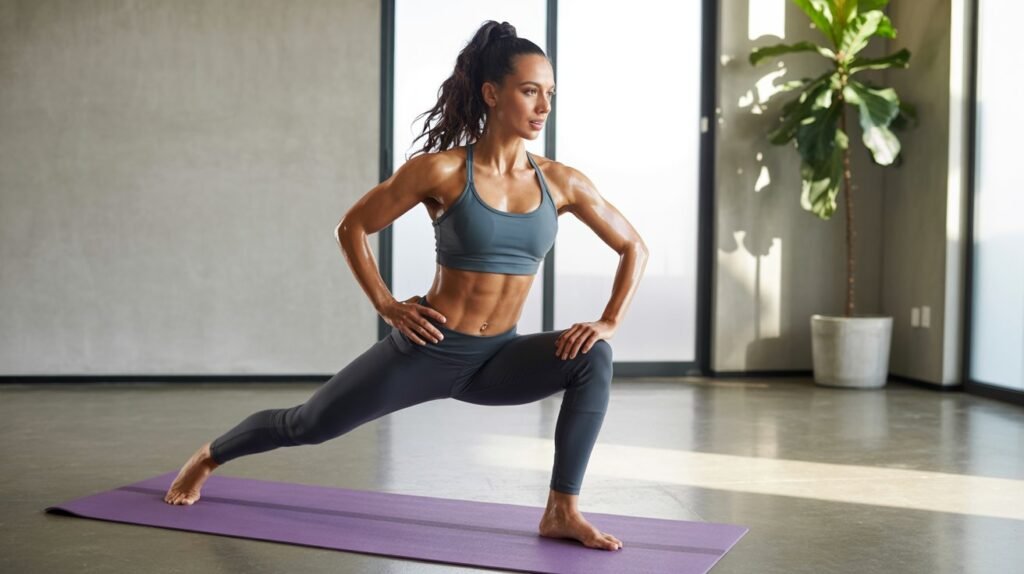
6. Plank Hold (30–60 seconds)
- Get into a forearm plank, keeping your body in a straight line.
- Engage your core, glutes, and shoulders.
- This activates your deep abdominal muscles and reinforces proper alignment.
Pro Tip: If you’re short on time, even just cat-cow, bird-dog, and plank can give you a quick posture reset in under 3 minutes.
Doing this routine daily not only warms up your muscles but also re-trains your body to stay aligned throughout the day — whether you’re working at a desk, lifting weights, or just standing in line at the store.
5. 8 Best Posture and Core Exercises at Home
Improving posture and strengthening your core go hand in hand.
A strong core doesn’t just give you toned abs — it stabilizes your entire body, supports your spine, and makes everyday movements easier.
Good posture, on the other hand, prevents pain, helps you breathe better, boosts confidence, and even makes you look slimmer and taller.
The best part? You don’t need a gym membership or bulky equipment to work on your posture and core.
With just your bodyweight (and maybe a wall, chair, or mat), you can do highly effective moves at home that deliver noticeable results in a matter of weeks.
Here’s a step-by-step breakdown of the 8 best posture and core exercises you can do at home, complete with reps, benefits, and pro tips.
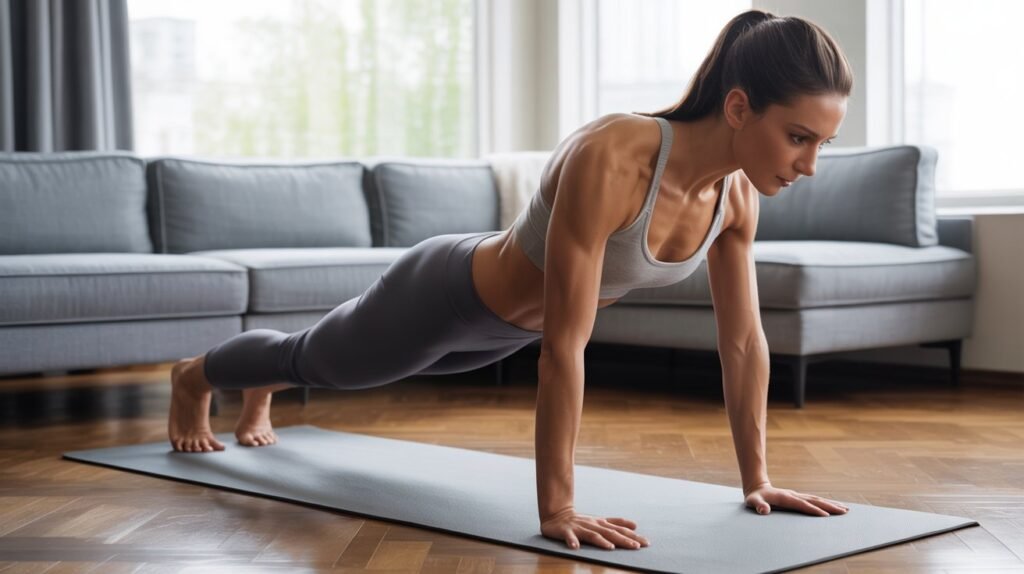
1. Plank (Hold: 20–60 seconds)
- How to do it: Start in a push-up position on your forearms or hands. Keep your body straight from head to heels, abs pulled in, glutes squeezed.
- Muscles worked: Deep core muscles, shoulders, glutes.
- Why it helps: Teaches your body to hold proper alignment, strengthens stabilizers, and prevents slouching.
- Pro Tip: Don’t let your hips sag — imagine pulling your belly button toward your spine. Beginners can modify by dropping knees to the floor.
2. Dead Bug (10–12 reps each side)
- How to do it: Lie on your back, arms above your chest, knees bent at 90 degrees. Slowly lower your right arm and left leg toward the ground, keeping your back flat. Return to start and switch sides.
- Muscles worked: Core stabilizers, hip flexors, lower back.
- Why it helps: Prevents arching of the lower back and teaches stability during movement.
- Pro Tip: If your lower back lifts off the ground, limit your range of motion until strength improves.
3. Bird-Dog (10–12 reps each side)
- How to do it: Begin on all fours, shoulders stacked over wrists, hips over knees. Extend one arm forward and the opposite leg back. Keep hips level, core engaged.
- Muscles worked: Lower back, glutes, abs, shoulders.
- Why it helps: Builds balance and coordination while training the body to resist twisting and tipping.
- Pro Tip: Place a water bottle on your lower back while performing — if it tips over, your hips are shifting too much.
4. Glute Bridge (12–15 reps)
- How to do it: Lie on your back with knees bent and feet flat. Press through your heels to lift hips, squeezing glutes at the top. Lower with control.
- Muscles worked: Glutes, hamstrings, lower back, core.
- Why it helps: Strengthens the posterior chain (backside muscles), which counteracts slouching and pelvic tilt from sitting too long.
- Pro Tip: Add a mini-band around your thighs or hold a weight on your hips for extra challenge.
5. Superman (10–15 reps)
- How to do it: Lie face-down with arms extended. Lift your arms, chest, and legs off the ground simultaneously. Hold briefly, then lower.
- Muscles worked: Spinal erectors, glutes, upper back.
- Why it helps: Strengthens the back extensors that keep you upright, fighting rounded shoulders and “computer back.”
- Pro Tip: If lifting arms and legs together feels too hard, try raising just arms or just legs first.
6. Wall Angels (10–12 reps)
- How to do it: Stand with your back flat against a wall, feet a few inches away. Press your lower back into the wall. Slowly raise and lower your arms like you’re making a snow angel.
- Muscles worked: Upper back, shoulders, rotator cuff muscles.
- Why it helps: Stretches tight chest muscles while strengthening the mid-back, opening up posture.
- Pro Tip: If your arms can’t touch the wall, that’s okay — go as far as your mobility allows and improve over time.
7. Side Plank (Hold: 15–45 seconds each side)
- How to do it: Lie on your side with elbow under shoulder. Lift hips off the floor, keeping your body in a straight line. Hold position while engaging obliques.
- Muscles worked: Obliques, deep core, shoulders.
- Why it helps: Builds lateral stability and keeps the spine from collapsing forward or sideways.
- Pro Tip: Beginners can keep knees bent on the ground for more support.
8. Chin Tucks (10–15 reps)
- How to do it: Sit or stand tall. Slowly draw your chin straight back as if you’re making a double chin. Hold for 2–3 seconds, then release.
- Muscles worked: Deep neck flexors, upper spine stabilizers.
- Why it helps: Corrects forward head posture (common with phone/laptop use).
- Pro Tip: Do this throughout the day — even at your desk — to reverse tech-neck habits.
How to Use This Routine
- Beginners: Choose 4–5 moves and do 2 rounds (about 10–15 minutes).
- Intermediate/Advanced: Perform all 8 moves for 3–4 rounds (20–30 minutes).
- Schedule: Aim for 3–4 sessions per week for noticeable improvements in posture and core stability.
Why this matters: By consistently practicing these exercises, you’ll strengthen weak muscles, release tension, and retrain your body to maintain good alignment throughout the day.
Over time, you’ll notice less back and neck pain, improved balance, and even enhanced athletic performance.
6. Simple Lifestyle Changes for Better Posture
Improving posture doesn’t always mean spending hours in the gym or mastering advanced exercises.
In fact, many posture issues come from everyday habits like how you sit, stand, sleep, or even use your phone.
The good news is that with a few small, consistent lifestyle adjustments, you can dramatically improve the way your body aligns — and prevent aches, fatigue, and long-term spinal problems.
Here are some simple but powerful lifestyle changes you can make today for better posture:

1. Adjust Your Workstation
Most people spend hours sitting at a desk or computer, which often leads to slouching.
- Keep your monitor at eye level so you aren’t looking down.
- Use a chair that supports the natural curve of your spine.
- Place your feet flat on the floor (or use a footrest).
- Keep your keyboard and mouse close to avoid reaching forward.
Tip: Consider a standing desk or alternate between sitting and standing throughout the day.
2. Be Mindful of Phone Use (“Text Neck”)
Looking down at your phone repeatedly strains your neck and upper back.
- Hold your phone at eye level whenever possible.
- Take short breaks after 15–20 minutes of phone use.
- Try chin tucks throughout the day to counteract forward head posture.
3. Sit With Support
Slouching while sitting can create long-term back pain.
- Sit back fully in your chair with shoulders relaxed but not hunched.
- Use a small pillow or lumbar cushion for extra lower-back support.
- Avoid sitting for longer than 45–60 minutes at a stretch — stand up, stretch, or walk around.
4. Sleep Smarter
The way you sleep has a direct effect on your posture.
- Use a medium-firm mattress that supports your spine.
- If you sleep on your back, place a pillow under your knees to reduce lower-back strain.
- If you sleep on your side, place a pillow between your knees to keep hips aligned.
- Avoid sleeping on your stomach, as it often twists the spine unnaturally.
5. Carry Bags the Right Way
Heavy bags can throw off alignment and cause shoulder or back pain.
- Use a backpack with two straps instead of a single-strap bag.
- If you carry a handbag, switch sides frequently to avoid uneven muscle strain.
- Keep loads light — your bag should ideally weigh less than 10% of your body weight.
6. Move More Throughout the Day
A sedentary lifestyle is one of the biggest posture killers.
- Stand up every hour and walk for a few minutes.
- Stretch your chest and shoulders often if you sit for long periods.
- Take stairs instead of elevators and include short walks after meals.
- Add posture-friendly exercises like planks or wall angels into your daily routine.
7. Practice Awareness
Sometimes, simply paying attention to how you sit or stand can make the biggest difference.
- Set phone reminders to “check your posture.”
- Place sticky notes on your desk as gentle nudges.
- Stand tall when walking, keeping shoulders relaxed and head aligned over your spine.
Bottom Line: Posture correction isn’t only about workouts — it’s about building healthier everyday habits.
By making these small changes to your workspace, sleeping setup, movement routine, and even how you carry your phone or bag, you’ll retrain your body to stay aligned naturally.
Over time, these small habits will add up to big improvements in comfort, confidence, and long-term health.
7. Tracking Your Posture Progress
Correcting posture doesn’t happen overnight. It takes weeks — sometimes months — of consistent effort before you start to feel and see noticeable changes.
Because progress is gradual, many people underestimate how far they’ve come.
This is where tracking your posture improvements becomes incredibly valuable.
By monitoring your progress, you’ll not only stay motivated but also have tangible proof that your hard work is paying off.
Think of posture tracking like keeping a fitness journal — it’s a way to measure success, adjust routines, and stay accountable.
Below are some of the most effective methods to track posture progress, along with tips to make the process easy and sustainable.
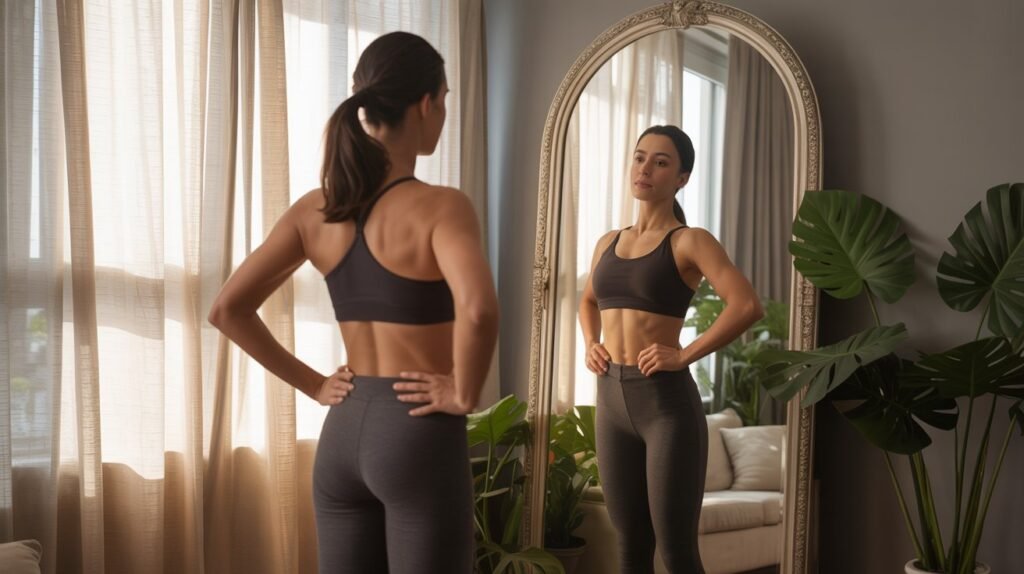
1. Take Weekly Photos and Side-by-Side Comparisons
One of the simplest yet most powerful methods is taking photos.
- How to do it: Stand naturally against a plain wall. Capture photos from the front, side, and back once a week at the same time of day.
- Why it works: Over time, you’ll notice subtle differences, such as shoulders being more even, your head sitting directly above your spine, or a reduced forward lean.
- Pro Tip: Use an app or computer folder to place your pictures side-by-side. When compared month to month, the improvements are often more dramatic than you realize.
2. Record Short Posture Videos
Photos are helpful, but posture is dynamic — it changes when you sit, walk, or lift objects.
- Take 30–60 second videos of yourself sitting at a desk, walking, or doing posture exercises.
- Review how you move compared to a month earlier — are you sitting taller, moving more smoothly, or slouching less?
- Video feedback is also great for catching habits like crossing legs, leaning on one side, or craning your neck forward.
3. Use Posture Apps and Wearable Devices
Technology has made posture tracking easier than ever.
- Posture apps: Many free and paid apps use your phone’s sensors or camera to detect slouching. They send reminders when your alignment drifts.
- Wearable devices: Small gadgets attach to your upper back or clothing and vibrate gently when you hunch.
- Why it helps: Real-time feedback builds awareness, and consistency is key to retraining your muscles.
- If you spend long hours at a desk, this tool can be a game-changer.
4. Monitor Pain, Tension, and Discomfort
Pain is one of the clearest signals that posture is improving or worsening.
- Keep a simple pain journal where you note stiffness, soreness, or headaches. Record the time, intensity, and triggers.
- Over time, you should see fewer entries or lower intensity scores — proof your alignment is improving.
- Example: “Before posture training, I had daily neck pain. After 4 weeks of exercises, pain is now only once a week.”
5. Test Core Strength and Flexibility
Stronger muscles mean better posture support. Tracking fitness benchmarks shows progress too.
- Plank test: Time how long you can hold a plank each week.
- Wall angel test: Notice how easy or hard it feels to keep your arms against the wall.
- Balance test: Try standing on one leg for 30 seconds without tipping. Good posture makes balance easier.
Seeing improvements in these areas is a direct sign your posture-supporting muscles are getting stronger.
6. Check Your Breathing Capacity
Posture directly affects lung expansion. Slouching compresses your chest, while standing tall allows fuller breathing.
- Try deep breathing when slouched versus standing tall.
- Track how much easier and fuller your breaths feel over time.
- If you notice reduced shortness of breath and better stamina, your alignment is likely improving.
7. Use Everyday Cues as Feedback
Small reminders can keep you on track.
- Place sticky notes on your monitor with words like “Sit tall” or “Check posture.”
- Set phone alarms to remind you to stretch or reset your posture every hour.
- At week’s end, reflect: Did you catch yourself slouching less often? Do corrections feel more natural?
8. Celebrate Small Wins
Tracking posture isn’t only about spotting flaws — it’s about acknowledging progress.
- Notice when you sit taller without effort.
- Celebrate being able to hold a side plank longer or experiencing fewer tension headaches.
- These small wins fuel motivation and make you less likely to give up.
Bottom Line: Tracking posture progress is about building awareness and consistency.
Whether you use photos, apps, pain journals, or fitness benchmarks, the goal is the same: to recognize the small improvements that add up to big results over time.
Remember, posture isn’t fixed in a week — but by measuring changes regularly, you’ll see just how much stronger, taller, and more aligned you’re becoming.
8. Posture Myths That Hold You Back
When it comes to posture, a lot of well-meaning advice circulates—but not all of it is accurate.
Believing in common posture myths can actually keep you from making progress, or worse, lead to habits that harm your body in the long run.
Let’s break down some of the most widespread misconceptions and uncover the truth behind them.
Myth 1: Good posture means standing perfectly straight all the time.
Truth: Posture isn’t about being rigid. Standing like a soldier with stiff shoulders and a locked back isn’t sustainable or healthy.
Good posture is about balance—your spine should maintain its natural curves (neck, mid-back, and lower back).
Instead of trying to stand “stick straight,” think about keeping your body relaxed, with your head stacked over your shoulders, shoulders over hips, and weight evenly distributed.
Myth 2: Posture is only about your back.
Truth: While your spine plays a major role, posture involves your entire body. Your core, glutes, hips, neck, and even feet contribute to alignment.
Weak core muscles or tight hip flexors can pull your body out of position, which is why strengthening and stretching multiple areas is key to improving posture.
Myth 3: Sitting up straight all day fixes posture.
Truth: Constantly forcing yourself upright in a chair can lead to fatigue and strain.
The real solution is movement—switching positions, standing up regularly, and engaging your core when sitting.
Using ergonomic chairs or lumbar supports can also help, but no chair alone will “fix” posture.
Myth 4: Posture correctors are the ultimate solution.
Truth: Posture braces and gadgets may help for short-term reminders, but they won’t strengthen your muscles.
Relying on them too much can even cause your core and back muscles to weaken.
Instead, focus on exercises that build strength and awareness—posture correctors should be a tool, not a permanent fix.
Myth 5: Poor posture is permanent.
Truth: It’s never too late to improve. While years of slouching or sitting may create ingrained habits, your body is adaptable.
With consistent strengthening, stretching, and mindful awareness, you can retrain your muscles and improve alignment—at any age.
Myth 6: Good posture means you won’t feel any discomfort.
Truth: When you first start correcting your posture, you may feel sore or fatigued.
This is normal—your muscles are adjusting and working in new ways. Over time, the discomfort fades and is replaced with strength, stability, and less chronic pain.
Bottom line: Don’t let myths keep you from working on better posture.
It’s not about being stiff, buying gadgets, or chasing perfection.
Real posture improvement comes from strengthening your body, building awareness, and making small, consistent changes every day.
9. Best Tools & Accessories for Posture Support
Improving posture doesn’t always require expensive equipment—but the right tools and accessories can make the journey easier, faster, and more sustainable.
Whether you spend long hours at a desk, work on your feet, or train at home, these posture-friendly tools can help support your spine, strengthen your core, and keep your body aligned.
1. Ergonomic Office Chair
A good chair is one of the most important investments you can make if you sit for long periods.
Look for one with lumbar support, adjustable height, and a backrest that follows the natural curve of your spine.
Chairs with breathable mesh and adjustable armrests can also reduce strain.
2. Lumbar Support Cushions
If replacing your chair isn’t an option, a lumbar cushion can provide immediate support for your lower back.
These portable cushions encourage proper spinal alignment and reduce slouching.
They’re perfect for office chairs, car seats, and even couches.
3. Standing Desk or Desk Converter
Prolonged sitting is one of the biggest posture killers.
A standing desk (or a desk converter you place on top of your current desk) allows you to alternate between sitting and standing throughout the day, reducing stress on your spine and encouraging natural posture.
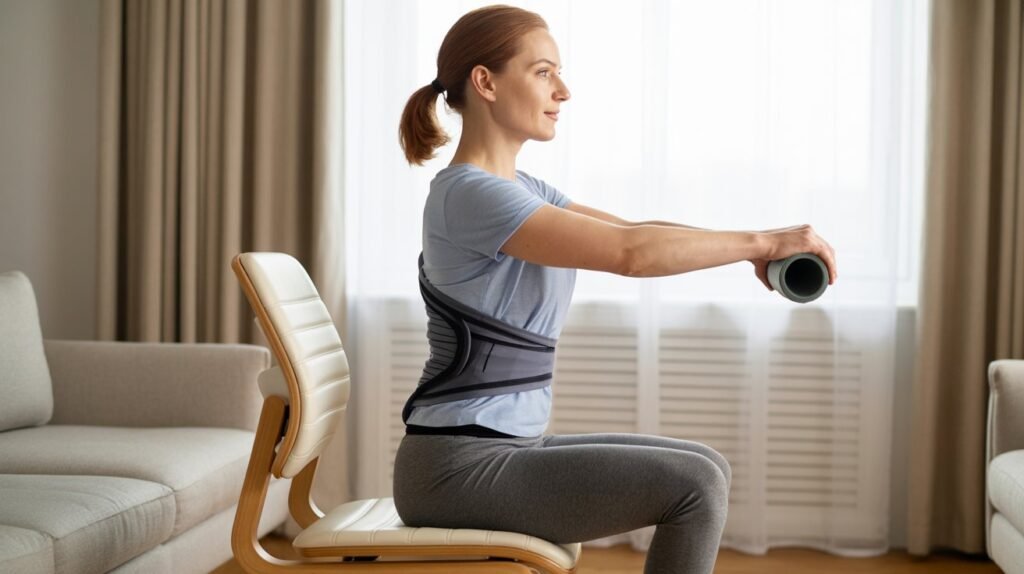
4. Posture Corrector Braces (Use With Caution)
Lightweight posture braces can provide gentle reminders to keep your shoulders back and chest open. However, they should be used sparingly as a training tool, not a crutch. Overreliance can weaken muscles, so combine them with strengthening exercises for lasting results.
5. Foam Roller
Foam rolling helps release tension in tight muscles (like your chest, lats, and hip flexors) that contribute to slouching. Regular rolling improves mobility and complements posture training by freeing up muscles that may restrict alignment.
6. Resistance Bands
Resistance bands are excellent for posture-correcting exercises, especially those that strengthen your upper back, shoulders, and core. They’re affordable, portable, and effective for improving muscle balance that supports good posture.
7. Balance Ball Chair or Stability Ball
Sitting on a stability ball engages your core and encourages active sitting.
Balance ball chairs combine the benefits of a stability ball with back support, helping improve posture while you work. (Pro tip: use for short intervals—too long can cause fatigue.)
8. Monitor Stands & Laptop Risers
One of the simplest posture fixes is elevating your screen to eye level. This prevents hunching forward and straining your neck.
A monitor stand, laptop riser, or even a stack of books can instantly improve your workstation ergonomics.
9. Massage Tools & Percussion Guns
Tight muscles often pull your posture out of alignment. Massage balls, handheld rollers, or percussion massage guns can loosen stiff areas (like the upper back and traps), making it easier to maintain proper form.
10. Yoga Blocks & Straps
These tools help you stretch more effectively, especially if you’re working on opening up tight shoulders or hips.
They support safe alignment during stretches and make flexibility work accessible for all fitness levels.
Key Takeaway: Tools can support better posture, but they’re not magic fixes.
The most effective results come from combining these accessories with consistent exercises, movement breaks, and mindful body awareness throughout the day.
Frequently Asked Questions (FAQs)
1. How long does it take to see results from posture exercises?
Most people start noticing small improvements—like reduced stiffness or less back pain—within 2 to 4 weeks of consistent posture and core training.
Visible changes in alignment and muscle tone usually take 6 to 8 weeks, depending on consistency and overall fitness level.
2. Can poor posture really cause long-term health problems?
Yes. Slouching or misaligned posture puts extra pressure on your spine, shoulders, and hips.
Over time, this can lead to chronic back pain, muscle imbalances, reduced flexibility, and even headaches.
Maintaining good posture helps prevent these long-term issues.
3. Do I need special equipment to fix my posture?
Not necessarily. Many posture-improving exercises rely only on bodyweight movements like planks, bridges, and wall angels.
However, posture correctors, resistance bands, or stability balls can provide extra support and variety if you prefer using tools.
4. Is yoga good for improving posture?
Absolutely. Yoga focuses on flexibility, balance, and core strength, all of which are essential for good posture.
Poses like mountain pose, downward dog, and plank variations are particularly effective for alignment.
5. How often should I do posture and core exercises?
For best results, aim for at least 3 to 5 sessions per week. Even short 10–15 minute routines can make a big difference over time.
The key is consistency—a little bit every day is better than one long workout once in a while.
6. Can sitting too much ruin my posture even if I exercise?
Yes. Even with regular workouts, sitting for hours without breaks can cause muscle tightness and weaken your core.
Try to stand up, stretch, or walk every 30–60 minutes to balance out the negative effects of prolonged sitting.
7. Are posture correctors effective?
Posture correctors can be helpful as a temporary reminder to sit or stand straighter, but they shouldn’t replace strengthening exercises.
Overreliance may cause your muscles to become dependent on the device rather than building natural support.
8. Does age affect posture correction?
While younger people may see faster changes, posture improvement is possible at any age.
In fact, core strengthening and posture exercises are especially important for older adults to reduce the risk of falls, back pain, and mobility issues.
9. Can better posture really boost confidence?
Yes! Standing tall with your shoulders back doesn’t just make you look taller and more confident—it also influences how others perceive you.
Studies suggest that good posture can improve mood, energy, and self-esteem.
10. Final Thoughts:

At the end of the day, your core is the foundation of your posture. Strong abs,
obliques, and lower back muscles don’t just make you look fit—they hold your spine in alignment, reduce pressure on your joints, and help you move with balance and confidence.
Good posture isn’t about forcing yourself to sit up straight for hours; it’s about creating a body that naturally supports proper alignment.
When your core muscles are strong, and your daily habits encourage movement, your posture improves effortlessly.
Remember, progress doesn’t happen overnight. Just like building strength in the gym, better posture is the result of consistent training, mindful lifestyle changes, and smart use of supportive tools.
A few minutes each day of core exercises, stretching, and posture awareness can transform how you stand, sit, and carry yourself.
Key takeaway: If you want lasting posture improvement, focus on strengthening your core and making posture-friendly choices in your everyday life.
When your core is strong, your posture follows—and with it comes less pain, more energy, and greater confidence.