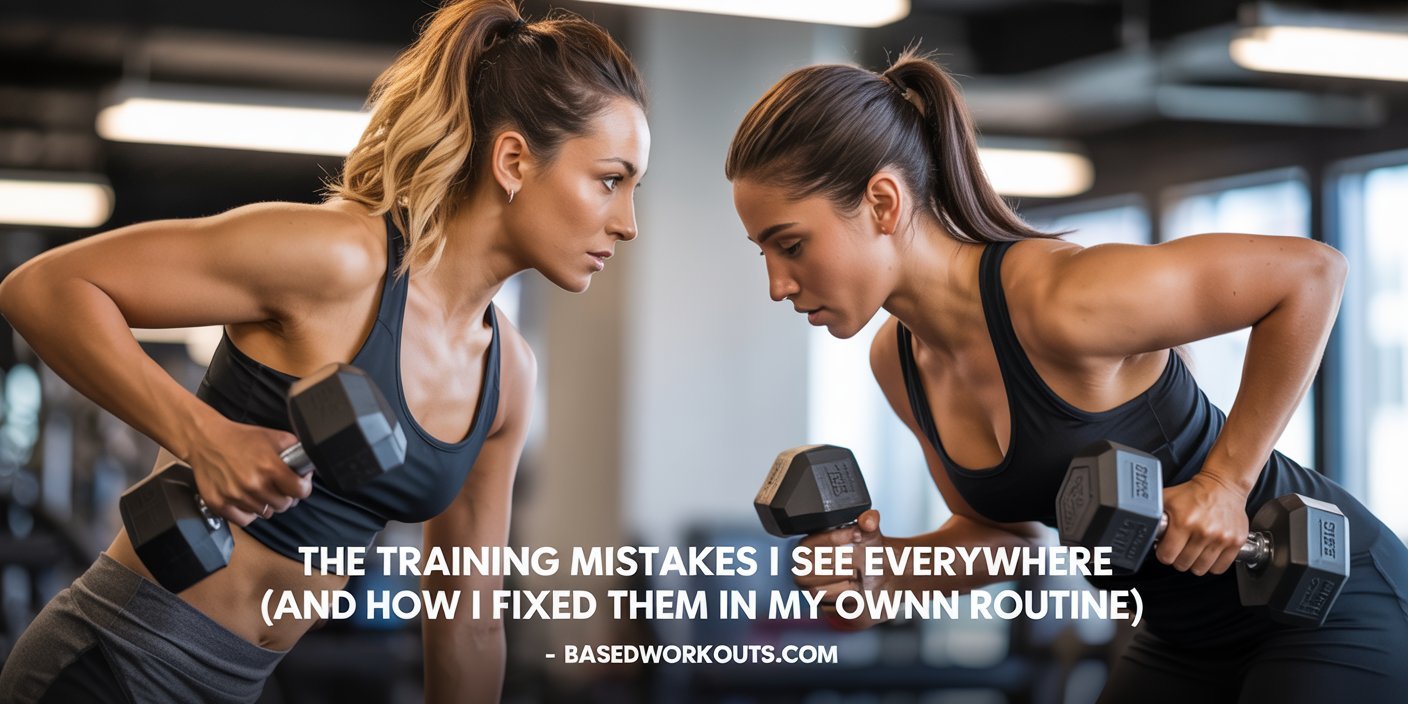
Whenever I talk about building real muscle as a natural lifter, I always feel the need to start with honesty. Sometimes the mistakes we make in the gym aren’t small.
They’re big enough to stall our progress for months. I know because I’ve made most of them myself, and I’ve watched countless people fall into the exact same traps.
What I want to do here is walk you through the mistakes that quietly hold you back without you even realizing it.

These are the habits that make you feel like you’re training hard, while your body is barely changing.
And once I removed these mistakes from my own routine, everything started to click. My progress became measurable, consistent, and finally worth the time I was putting in.
This breakdown is detailed, beginner-friendly, and written from my own experience so you can follow along and adjust your training immediately.
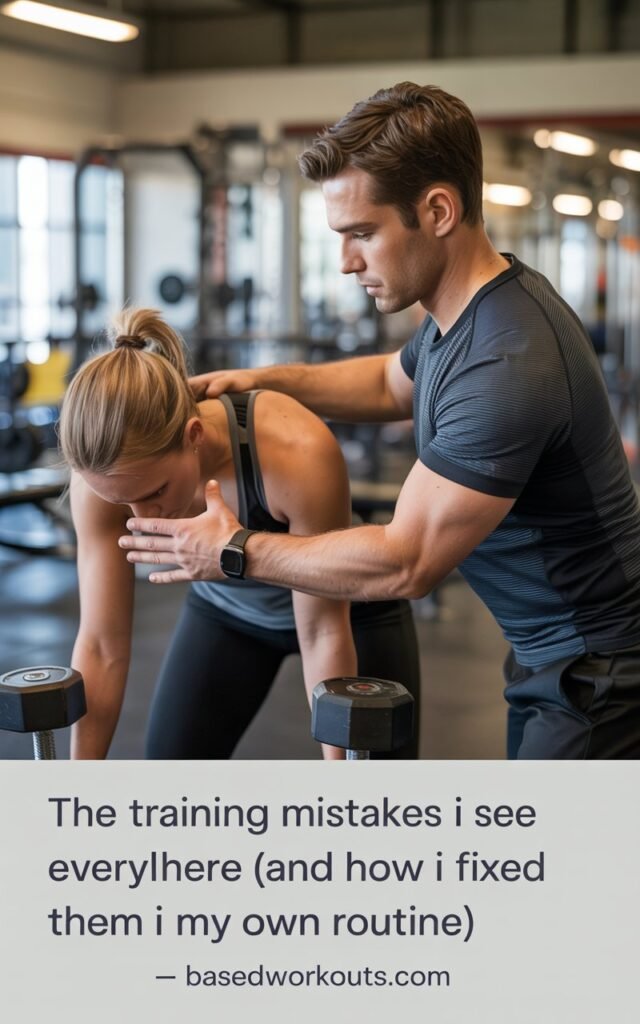
Amazon Gear to Fix Workout Mistakes & Boost Results I Recommend
Want to Fix Common Workout Mistakes and Start Seeing Real Results?
Even small form errors or poor recovery habits can hold back your progress.
The right tools can improve your posture, protect your joints, and help you train more efficiently.
Below are my top Amazon picks that help correct common workout mistakes and maximize every session — at home or in the gym.
| Product | Why You’ll Love It | Shop Now |
|---|---|---|
| Adjustable Dumbbells (Ergonomic Grip) | Helps improve exercise balance and range of motion while saving space. | Check Price on Amazon |
| Workout Mirror or Smart Fitness Tracker | Monitors your form, reps, and posture to prevent overtraining and poor technique. | View on Amazon |
| Foam Roller (Deep Tissue Massage) | Speeds up recovery and prevents muscle tightness that leads to improper form. | Shop Now |
| Weightlifting Belt (Back Support) | Reduces risk of injury and promotes proper lifting posture during squats or deadlifts. | Buy on Amazon |
| Knee & Elbow Sleeves (Compression Support) | Improves stability and reduces joint strain during strength training. | See Details |
The Trap of Training for the Pump

I used to leave my workouts feeling proud because the pump was insane. My arms felt tight, my chest felt full, and I convinced myself that meant I was growing.
But eventually I had to be honest with myself. The pump wasn’t translating into real progress.
A pump is simply a temporary increase in blood flow. You can flex your muscles repeatedly or pick up extremely light weights and still create a strong pump without stimulating real growth.
Once I stopped chasing the sensation and started chasing true mechanical tension, the quality of my training improved almost instantly. I still enjoy the pump when it happens, but I no longer treat it like proof that the workout was effective.
Fatigue Doesn’t Equal Progress

There were days when I walked out of the gym completely drained. I thought being exhausted automatically meant I trained well. It took me a long time to learn that fatigue is one of the worst indicators of progress.
You can be tired from bad pacing. You can be tired from poor exercise selection. You can be tired from doing way too much unnecessary volume. None of that means you stimulated your muscles in a meaningful way.
Now I focus on productive stress, not random exhaustion. And that shift alone saved me from years of wasted effort.
Soreness Became a Tool Instead of a Goal

Feeling sore used to be my badge of honor. If I wasn’t sore the next day, I assumed the workout wasn’t good enough.
Over time, I realized soreness is unpredictable. It’s strongest when you do something new, when you come back from a break, or when you simply change an exercise.
Extreme soreness doesn’t mean you stimulated growth. And not being sore doesn’t mean you didn’t.
I still pay attention to where I feel soreness because it can reveal whether I’m activating the right muscle. But I don’t build my training around chasing that feeling anymore. It’s information, not validation.
The Real Driver of Muscle Growth: Mechanical Tension

Once I removed pump, fatigue, and soreness from my list of “progress indicators,” I had to understand what truly matters.
Everything comes back to mechanical tension. This is the force your muscle fibers experience when you perform a rep under load.
To grow, you need to expose your muscles to enough tension, and that tension has to be close to your maximum capability. That means taking your sets near muscular failure.
When you start pushing your sets to the point where you can barely complete the final reps with proper form, that’s when your body adapts.
You’re Probably Not Training as Hard as You Think

This was the most uncomfortable truth I had to confront. For a long time, I genuinely believed I was training hard.
But when I started recording how many reps I truly had left in the tank at the end of each set, I realized I was stopping too early almost every time.
If you never feel nervous before a heavy set, you’re probably not close to failure often enough.
If you never have those moments where you’re fighting through a rep with everything you have, you’re leaving progress behind.
Most of your working sets should finish with one or two reps left in the tank. And occasionally, pushing a set all the way to failure can create a powerful stimulus your body must adapt to.
Tracking My Workouts Changed Everything

Once I started tracking every set, rep, and load, I realized how much progress I was actually missing.
I could see exactly where I was stagnating and exactly what was improving. This made it easier to push myself because I knew what I needed to beat each week.
Even a single extra rep on one exercise is a measurable win. A few weeks later, that small improvement adds up.
My logbook became the most honest tool in my entire program. It showed me whether I was actually progressing or just convincing myself that I was.
Constantly Switching Workouts Was Holding Me Back

I used to jump from one routine to another every time I saw a new exercise or trending training method online.
But the truth is simple. You can’t progressively overload a movement if you’re only doing it randomly.
You need consistency.
Your muscles don’t get bored. They respond to tension, not novelty. Once I committed to repeating and mastering a set list of exercises,
I finally gave myself the chance to actually get stronger at them. The more familiar I became with each movement, the better I could apply tension, control, and effort.
That’s when my body started changing.
Choosing the Right Exercises Matters More Than Most People Realize

I never needed to become an anatomy expert, but learning the basic functions of each major muscle made a huge difference.
Good exercise selection means you’re actually training the muscles you think you’re training.
For example:
If you want wider lats, overhand pull-ups aren’t your best friend. If you want full triceps development, you need movements that target the long head. If you want stronger, fuller hamstrings, you need more than just squats.
Understanding this made my training far more effective. I stopped guessing and started selecting exercises with intention.
Overemphasizing Certain Muscle Groups Created Imbalances

Most people have a favorite muscle group. For me, it used to be chest and arms. I trained them with far more intensity and frequency than my legs or back.
The result was predictable. I grew unevenly, and parts of my physique lagged behind.
Once I started giving every major muscle group consistent attention, everything balanced out. I looked better, I felt better, and my lifts improved across the board because my body was no longer fighting against its own weaknesses.
Poor Form Was Limiting My Growth More Than I Realized

For a long time, I believed good form just meant avoiding injury. I didn’t understand how much it actually affects muscle activation.
The better your technique, the more tension you put onto the target muscle instead of wasting effort on momentum or stabilizers.
I slowed down my reps. I improved my range of motion. I focused on controlling the weight instead of just lifting it. And immediately, my training felt more productive.
I Used Way Too Much Weight Too Soon

Ego lifting is one of the easiest traps to fall into, especially early on. I used to load the bar with weights I had no business using.
My reps were sloppy. My sets were inconsistent. And the muscles I wanted to grow weren’t doing most of the work.
Once I dropped the weight, cleaned up my form, and rebuilt my lifts properly, I grew faster than ever before.
I Was Resting Too Little Between Sets

I used to rush my workouts because I thought shorter rest times meant better results. But building muscle is not cardio. When you cut rest too short, you drastically reduce your strength on the next set.
Longer rest equals better performance. Better performance equals more tension. More tension equals growth.
Now I rest long enough to regain my strength, especially on compound lifts.
I Didn’t Eat Enough to Support Growth

Even though this post is focused on training mistakes, I can’t ignore the role nutrition plays. For years, I trained hard without giving my body the fuel it needed.
When I finally increased my protein intake and ate consistently, my results improved immediately.
You can train perfectly, but if you’re under-eating, your body has no reason to grow.
I Expected Too Much Too Soon

The last mistake might be the most important. I used to expect noticeable results every few weeks. When that didn’t happen,
I assumed something was wrong. The truth is that muscle growth is slow. It’s measured in months and years, not days and weeks.
Once I accepted that, training became more enjoyable and less stressful. I stopped chasing overnight progress and started focusing on consistent improvement.
Final Thoughts
If you correct even a few of these mistakes, you’ll put yourself miles ahead of where most people are in the gym.
Natural muscle growth comes from understanding what actually drives progress and refusing to waste energy on things that don’t matter.
Dial in your effort. Track your sessions. Choose effective exercises. Train with intention. Give your body enough fuel. Commit long enough to see the results.
When you finally align those things, everything becomes easier.