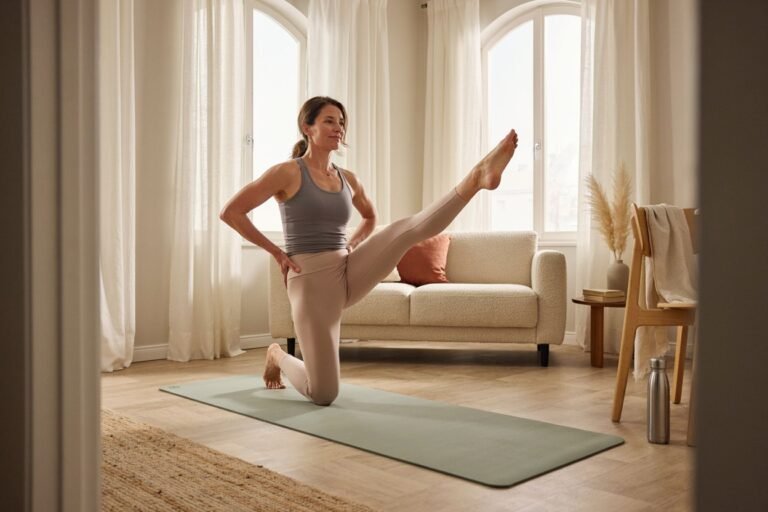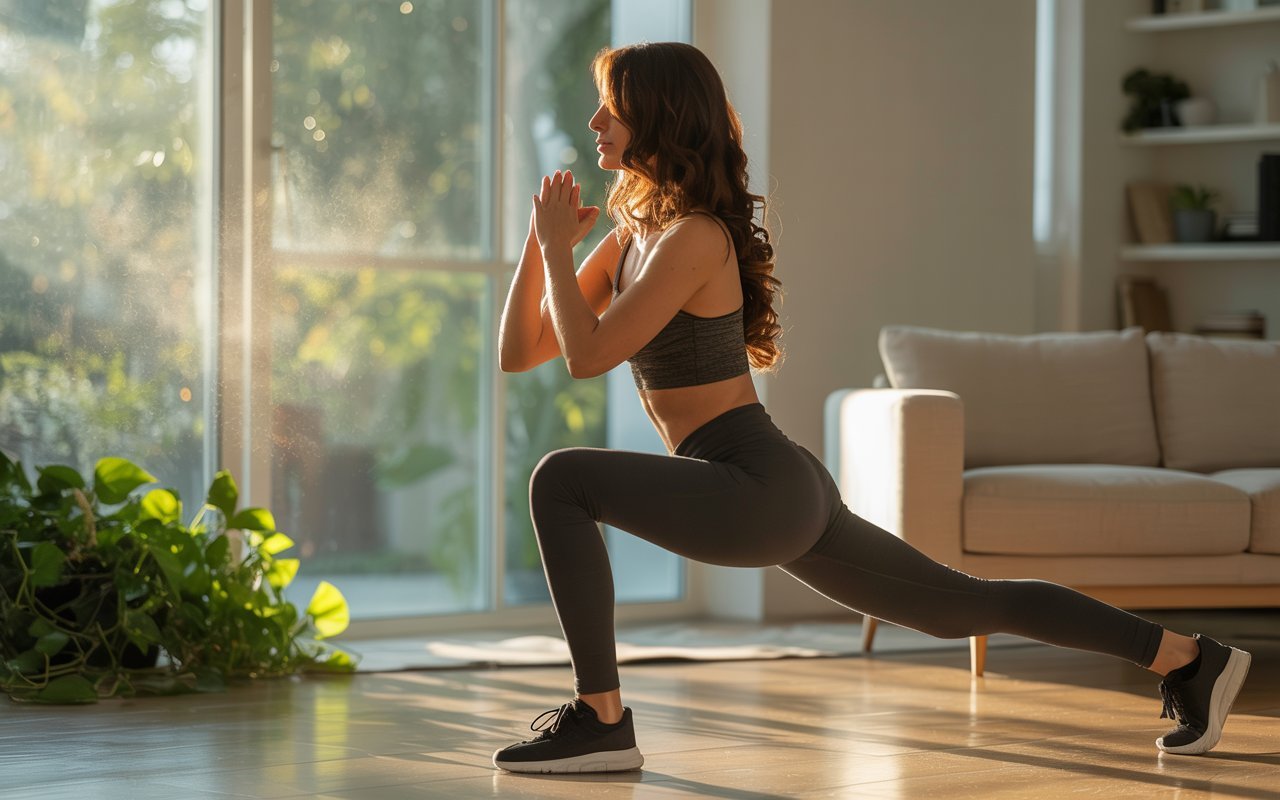
One of the biggest misconceptions in fitness is that results only happen inside a gym. In reality, your living room, backyard, or even a small apartment corner can become a powerful training ground when you know how to move with purpose.
The modern lifestyle has made at-home workouts more relevant than ever — they’re flexible, cost-effective, and can be just as challenging as any gym routine.
For many people, finding time to commute to a fitness center is difficult, and expensive memberships can be discouraging.
But the truth is, your body doesn’t need a building filled with machines to get stronger, leaner, and healthier.
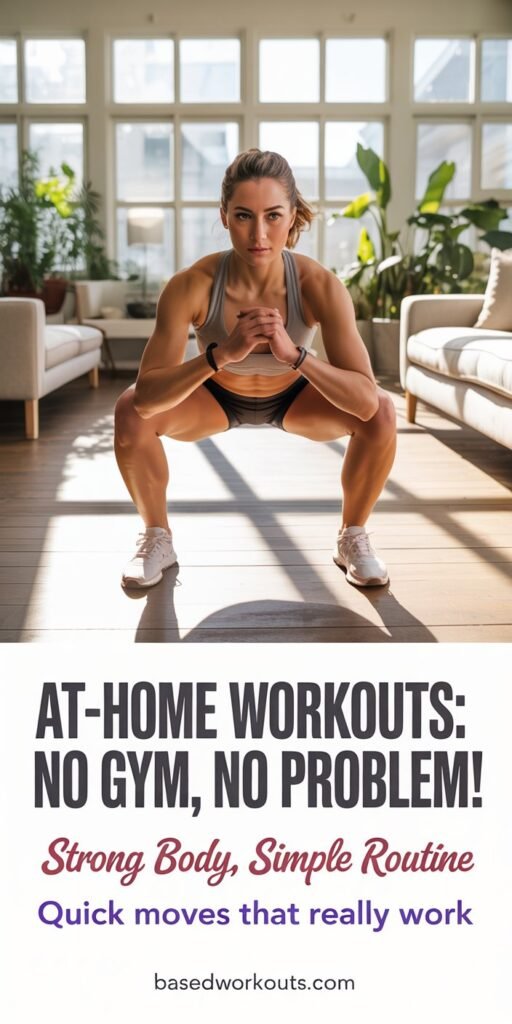
With the right plan and consistency, you can achieve full-body results using minimal or no equipment.
This guide will show you how to build strength, endurance, and balance — right where you are.
You’ll learn the best at-home workout methods, how to structure your training days, and what essentials to keep on hand.
Whether you’re a beginner or returning to exercise after a long break, these routines will help you stay consistent, energized, and motivated.
Section 1: Why At-Home Workouts Work So Well
Why It Matters
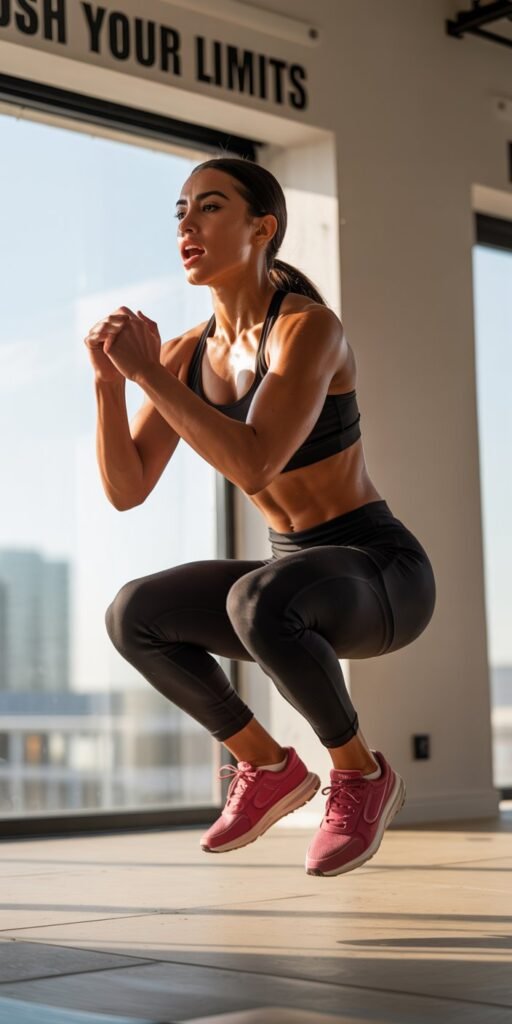
At-home workouts are more than a convenience — they are a gateway to consistency. Without travel time or gym crowds, you can focus on what truly matters: movement and progress.
Exercising at home also eliminates many of the mental barriers that prevent people from starting or sticking to a routine.
It’s a space you control, which means no intimidation, no excuses, and no waiting for equipment.
Even without gym machines, you can effectively train every major muscle group. Your bodyweight provides natural resistance, and simple tools like resistance bands or dumbbells can amplify your efforts.
With just a few square feet of space and a structured plan, you can strengthen muscles, improve flexibility, and boost cardiovascular health.
How To Make It Work
- Create a dedicated workout space: Clear an open area where you can move freely without distractions.
- Set a fixed workout schedule: Treat your sessions like appointments. Consistency builds habit.
- Use bodyweight resistance: Exercises like push-ups, squats, and planks require no equipment and deliver powerful results.
- Focus on form: Move slowly and with intention to protect joints and maximize engagement.
- Mix it up: Rotate between strength, cardio, and mobility training to prevent boredom and plateaus.
What You’ll Need
Towel for sweat and grip
Exercise mat or rug for comfort and stability
Resistance bands or light dumbbells (optional but helpful)
Water bottle to stay hydrated
Music playlist or timer app for focus and motivation
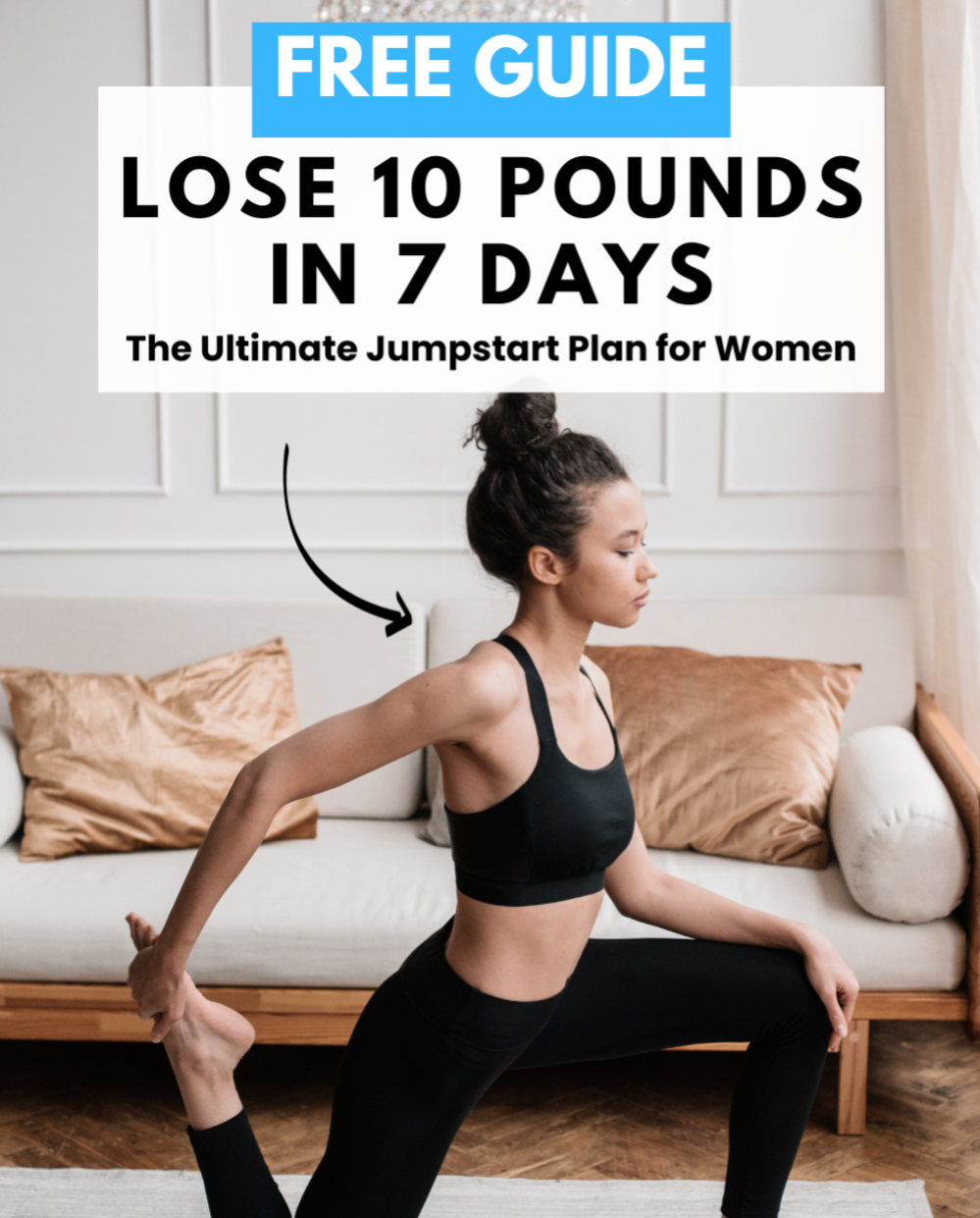
Amazon Gear: For Home Workouts I Recommend
Want to Stay Fit, Strong, and Consistent Without Leaving Home?
You don’t need a gym to reach your fitness goals — just the right tools to create powerful full-body workouts anytime, anywhere.
Here are my top Amazon picks for effective and enjoyable at-home training:
| Product | Why You’ll Love It | Shop Now |
|---|---|---|
| Resistance Bands Set (with Handles & Door Anchor) | Perfect for full-body workouts, muscle toning, and mobility training. | Check Price on Amazon |
| Adjustable Dumbbells (Space-Saving Design) | Ideal for progressive resistance workouts without bulky equipment. | View on Amazon |
| Yoga Mat (Thick & Non-Slip) | Keeps your workouts comfortable and stable — perfect for HIIT, core, or stretching. | Shop Now |
| Kettlebell Set (Vinyl-Coated) | Great for fat-burning, cardio-strength combos like squats and swings. | Buy on Amazon |
| Jump Rope (Weighted or Speed Rope) | Simple, portable, and burns major calories in minutes. | See Details |
| Core Sliders (Dual-Sided) | Engage your abs, glutes, and legs — works on any floor type. | Shop Now |
| Pull-Up Bar (Adjustable Door Frame) | Build upper body and core strength — no drilling required. | View on Amazon |
| Ankle Weights (Adjustable) | Add resistance to lower-body and toning workouts. | Check Price on Amazon |
| Foam Roller (Muscle Recovery Tool) | Helps prevent soreness and improves flexibility post-workout. | View on Amazon |
| Smart Fitness Tracker / Watch | Monitors calories, heart rate, and daily activity for motivation. | Shop Now |
These Amazon fitness essentials help you build a strong, lean body from home — no gym, no excuses, just results.
The Benefits of At-Home Workouts
Working out at home isn’t just convenient — it offers a wide range of benefits that make it an effective and sustainable approach to fitness and weight loss.
Whether you’re a beginner or an experienced athlete, here’s why you should consider making at-home workouts a core part of your routine.
1. Convenience and Flexibility
One of the biggest advantages of exercising at home is the ability to work out anytime you want. You’re no longer restricted by gym hours, crowded classes, or travel time.
Morning, afternoon, or evening — your schedule is completely flexible, allowing you to fit workouts around work, family, or other commitments.
2. Cost-Effective Fitness
Gym memberships, classes, and personal trainers can be expensive. At-home workouts can be just as effective — and often cheaper.
Bodyweight exercises like squats, lunges, push-ups, and planks require no equipment at all, and even a small investment in resistance bands, dumbbells, or a yoga mat can create a full-body workout.
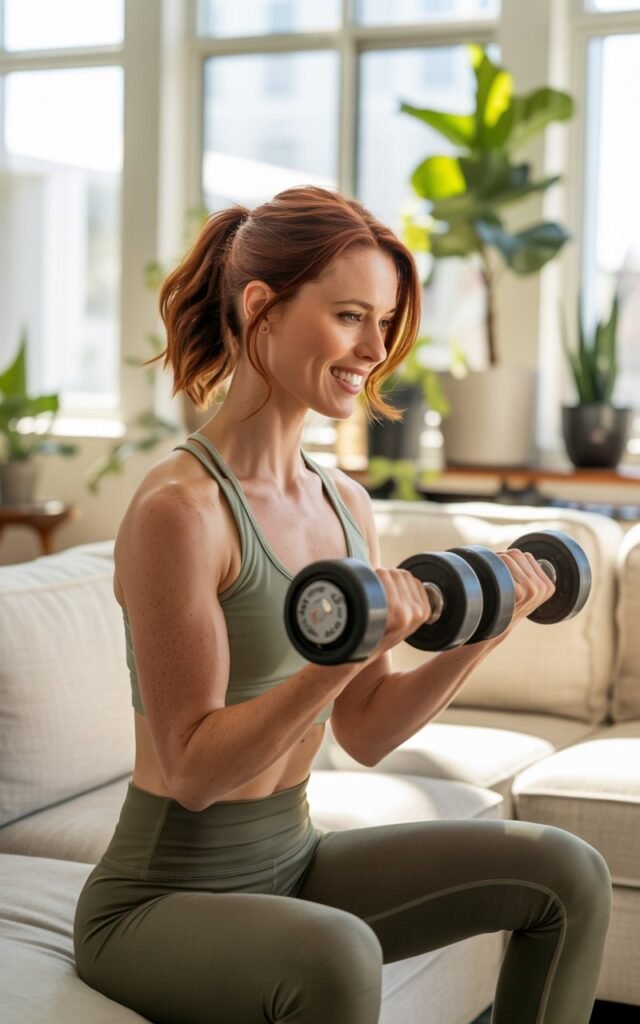
3. Privacy and Comfort
Many people feel self-conscious at gyms, especially when trying new exercises.
Working out at home gives you privacy and comfort, allowing you to move freely and focus entirely on your progress without worrying about others.
This makes it easier to experiment with new workouts and stay consistent.
4. Full Control Over Your Routine
At home, you can design your workouts exactly how you like them.
You decide the intensity, duration, and type of exercises — whether it’s strength training, cardio, yoga, or HIIT.
This personalization helps prevent boredom and keeps you motivated to stick with your routine.
5. Improved Consistency
Without the need to commute to a gym or wait for equipment, you’re more likely to stay consistent with your workouts.
Even short 15–20 minute sessions can be extremely effective if done regularly. Consistency is key to seeing long-term results in weight loss and fitness.
6. Builds Healthy Habits
Exercising at home encourages a holistic approach to health.
You’re more likely to combine workouts with better nutrition, stretching, and mindfulness practices, creating sustainable lifestyle habits that go beyond the scale.
7. Stress Reduction and Mental Health Benefits
Home workouts aren’t just about physical health — they also support mental well-being. Exercise releases endorphins, reduces stress, improves mood, and enhances sleep quality.
Doing this in the comfort of your own home can make it a relaxing and empowering experience.
Best At-Home Workouts with No Gym Required
Now that we’ve covered the benefits, let’s dive into some of the best at-home exercises that require no gym membership or fancy equipment.
These exercises will help you build strength, improve endurance, and achieve your fitness goals.
1. Bodyweight Exercises
Bodyweight exercises are an excellent way to stay fit without needing any equipment.
These exercises rely on the weight of your own body to provide resistance, making them highly effective for building strength and toning muscles.
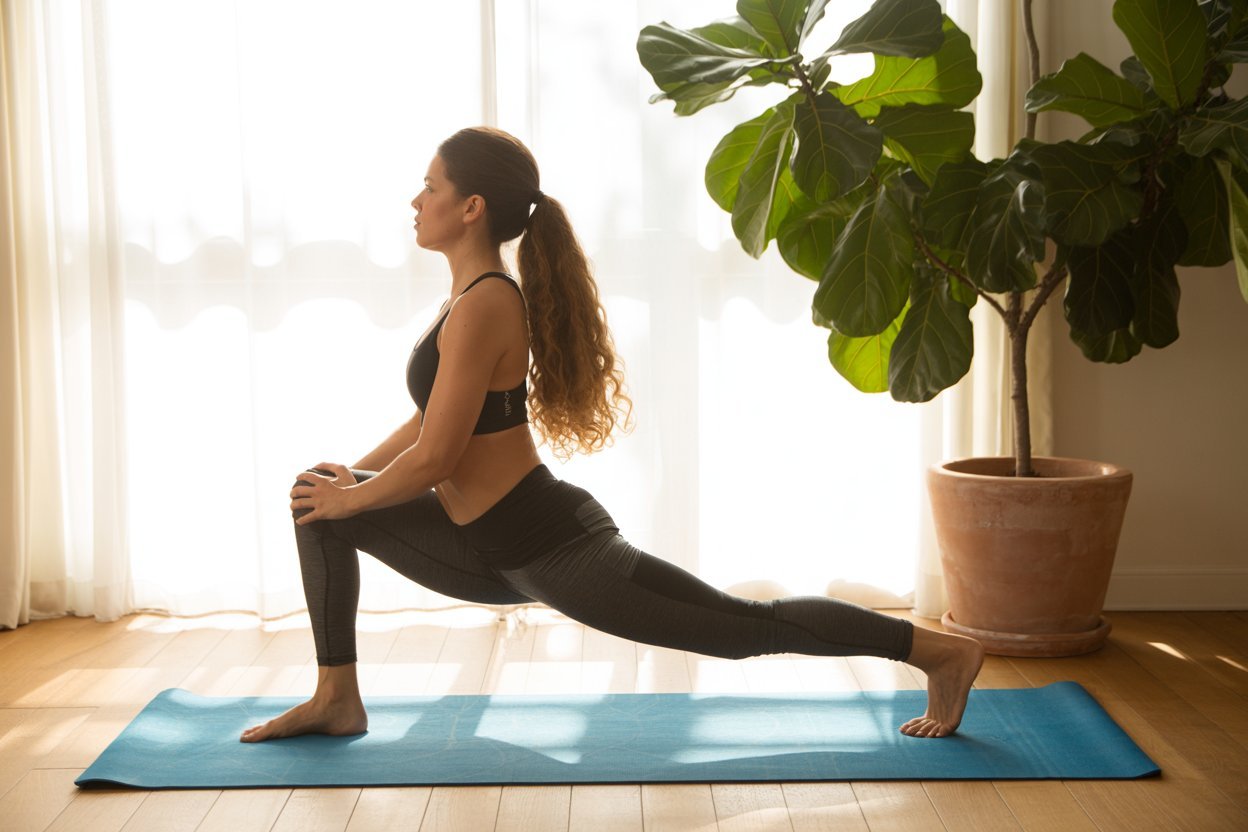
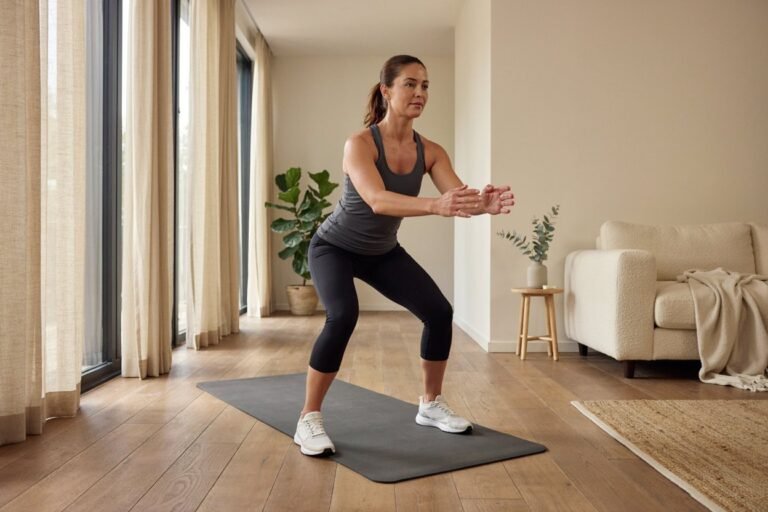
Squats
Squats are one of the most effective lower body exercises, targeting the thighs, hips, and buttocks. They also engage your core for balance.
How to do squats:
- Stand with your feet shoulder-width apart and toes slightly pointed outward.
- Keep your chest up and back straight as you bend your knees and lower your body as if you were sitting back into a chair.
- Lower your body until your thighs are parallel to the ground, or as low as you can comfortably go.
- Push through your heels to stand back up to the starting position.
Push-Ups
Push-ups are great for building upper body strength, particularly in the chest, shoulders, and triceps.
How to do push-ups:
- Start in a plank position with your hands placed slightly wider than shoulder-width apart.
- Lower your body towards the floor by bending your elbows.
- Once your chest almost touches the ground, push back up to the starting position.
- Keep your body in a straight line throughout the movement.
Planks
Planks are a simple yet powerful exercise for strengthening the core, back, and shoulders.
How to do planks:
- Start in a forearm plank position with your elbows directly below your shoulders.
- Keep your body in a straight line from your head to your heels.
- Engage your core and hold the position for as long as you can.
2. HIIT Workouts (High-Intensity Interval Training)
If you’re looking to burn fat and improve cardiovascular health, High-Intensity Interval Training (HIIT) is a great option.
HIIT workouts involve short bursts of intense exercise followed by brief periods of rest. These workouts can be done with bodyweight exercises and require little to no equipment.
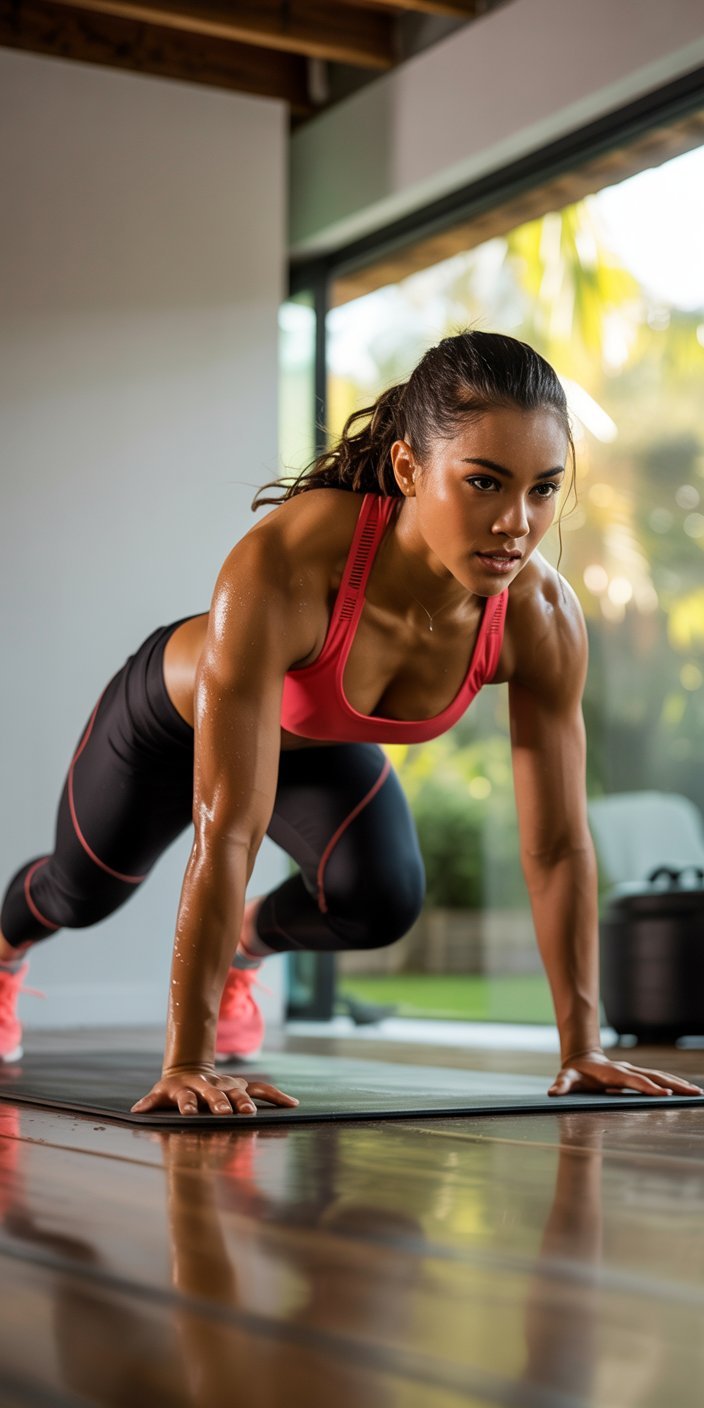
Sample HIIT Workout:
- 30 seconds of jumping jacks
- 30 seconds of rest
- 30 seconds of high knees
- 30 seconds of rest
- 30 seconds of mountain climbers
- 30 seconds of rest
- 30 seconds of burpees
- 30 seconds of rest
Repeat this circuit for 20-30 minutes for an effective fat-burning workout.
3. Yoga
Yoga is an excellent workout option that enhances flexibility, strength, and mental clarity. Many yoga poses can be performed at home with minimal space and no equipment.
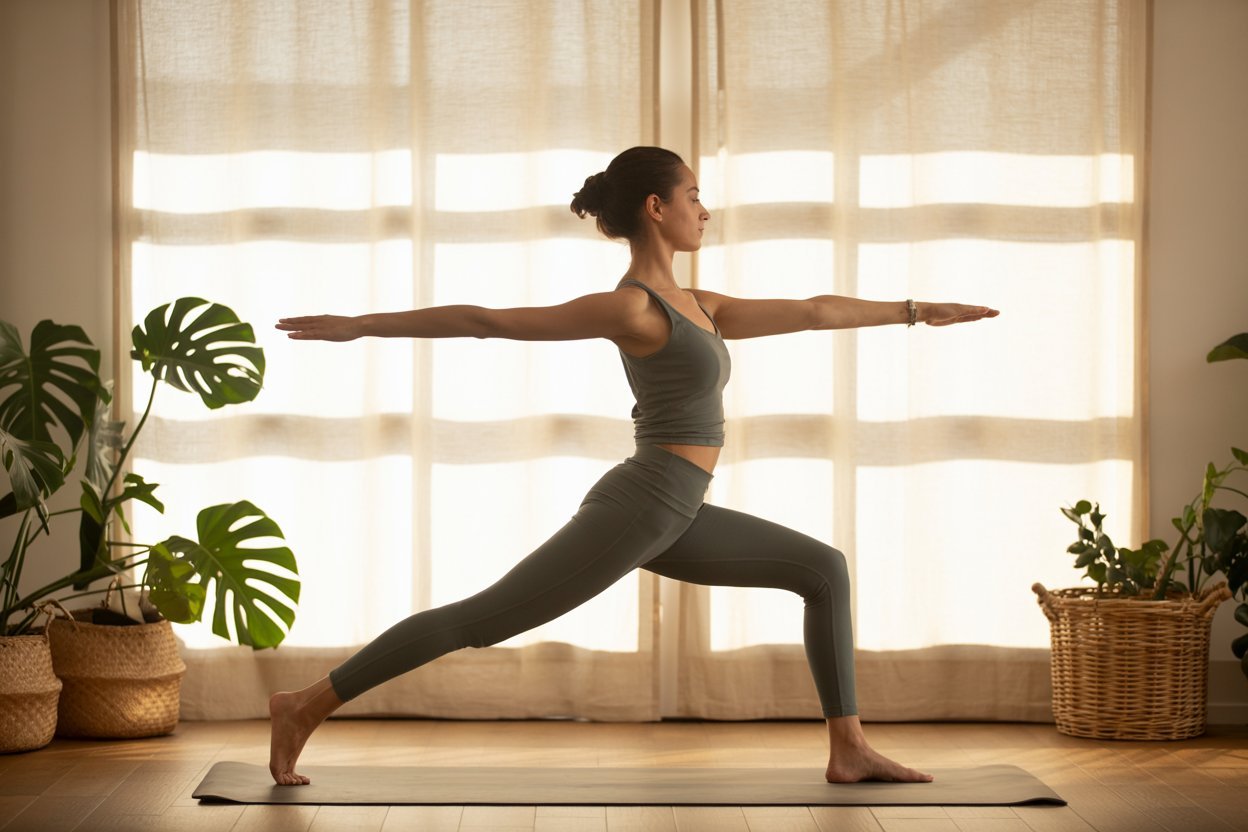
Downward Dog
This pose stretches the hamstrings and calves while strengthening the shoulders, arms, and core.
How to do downward dog:
- Start on your hands and knees, with your wrists directly below your shoulders and your knees below your hips.
- Lift your hips towards the ceiling, forming an upside-down “V” shape.
- Keep your feet flat on the floor and your arms extended.
- Hold the position for 30 seconds to 1 minute.
Child’s Pose
This is a great resting pose that stretches the back and helps to relieve tension.
How to do child’s pose:
- Start on your hands and knees, then sit your hips back towards your heels.
- Stretch your arms out in front of you, lowering your forehead to the floor.
- Breathe deeply and hold for 1-2 minutes.
4. Strength Training
You don’t need a gym to build muscle. You can perform strength training exercises using just your body weight, or if you have access to simple equipment like dumbbells or resistance bands, you can further challenge your muscles.

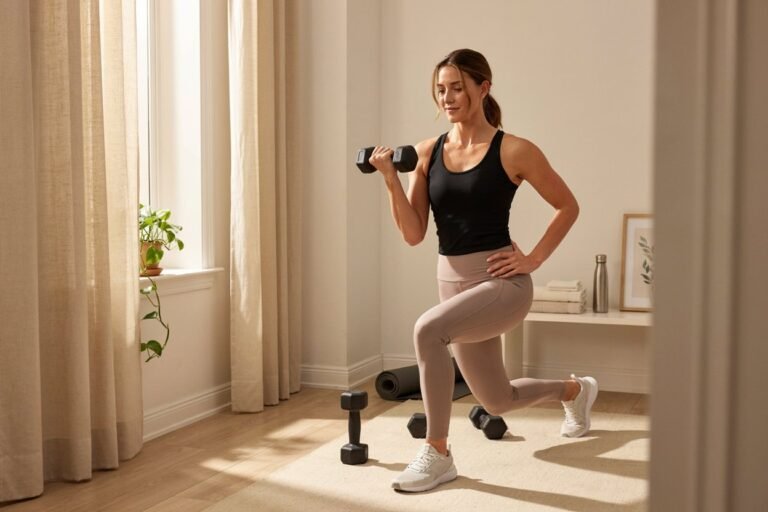
Lunges
Lunges target the legs and glutes, making them a great exercise for strengthening the lower body.
How to do lunges:
- Start by standing with your feet together.
- Step forward with one leg and lower your body until both knees are bent at about 90 degrees.
- Push through your front heel to return to the starting position.
- Repeat on the other leg.
Glute Bridges
This exercise targets the glutes and hamstrings, helping to strengthen the lower body.
How to do glute bridges:
- Lie on your back with your knees bent and feet flat on the floor.
- Lift your hips towards the ceiling, squeezing your glutes as you lift.
- Lower your hips back down to the floor and repeat.
5. Stretching and Mobility Work
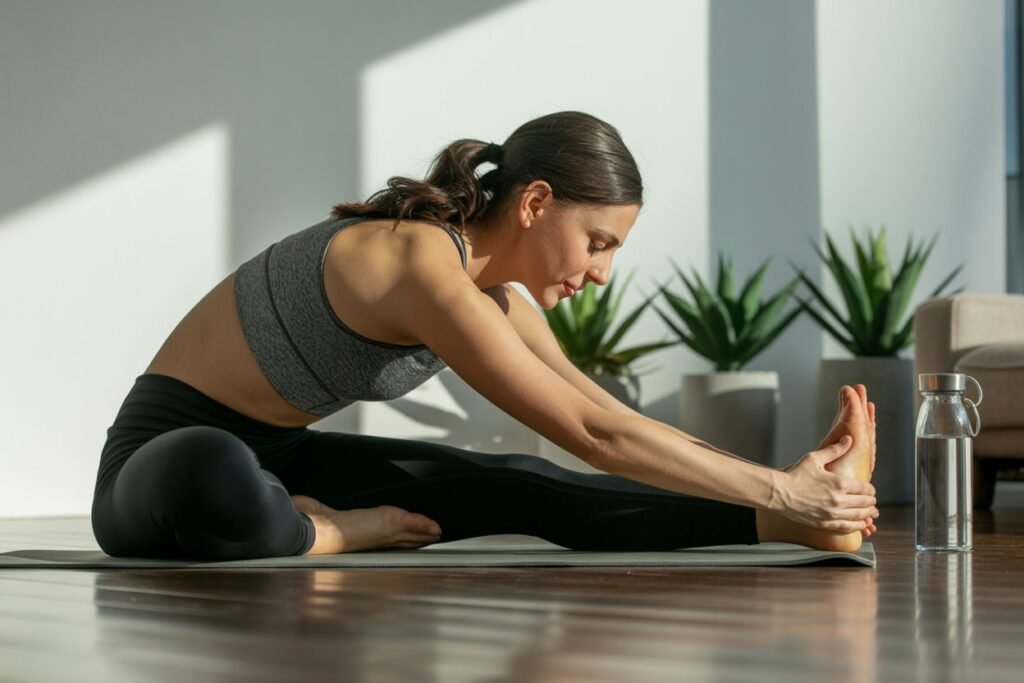
Flexibility and mobility exercises are essential for overall health and can help prevent injury. Regular stretching improves joint flexibility, enhances muscle recovery, and promotes relaxation.
Hamstring Stretch
Stretching the hamstrings can help improve flexibility and reduce tightness in the lower body.
How to do a hamstring stretch:
- Sit on the floor with one leg extended straight and the other leg bent with the sole of your foot touching your inner thigh.
- Reach forward with both hands toward the toes of your extended leg, keeping your back straight.
- Hold for 20-30 seconds and switch legs.
Cat-Cow Stretch
This stretch helps improve spinal mobility and relieves tension in the back.
How to do cat-cow:
- Start on your hands and knees with your wrists directly under your shoulders and knees under your hips.
- Inhale as you arch your back, lifting your head and tailbone toward the ceiling (cow pose).
- Exhale as you round your back, tucking your chin to your chest (cat pose).
- Repeat for 10-15 reps.
Creating a Routine
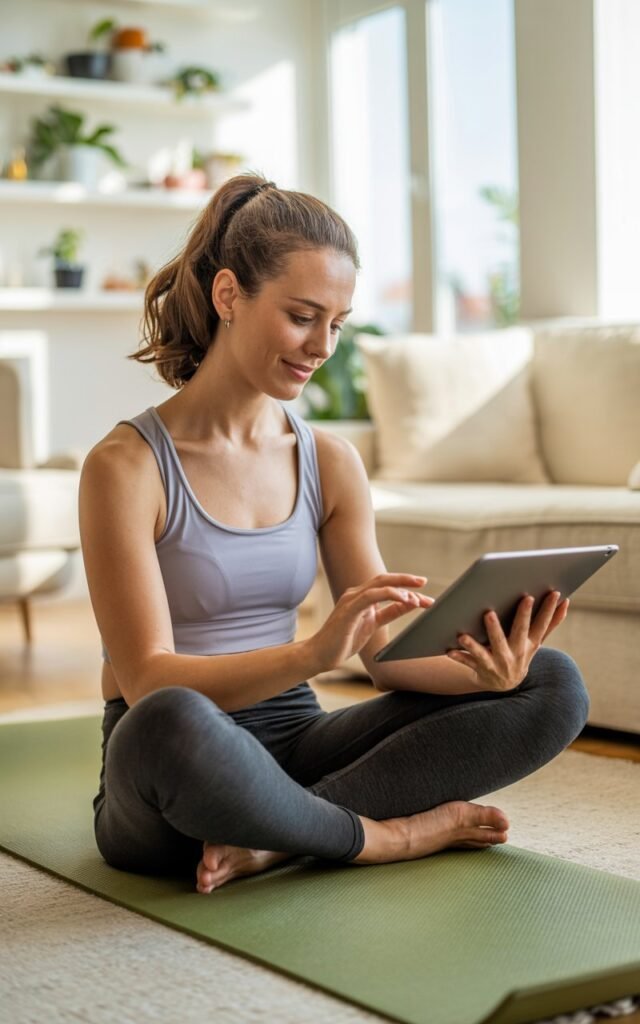
Now that you’ve learned about different types of at-home workouts, it’s time to create a routine that suits your goals. Here’s a sample weekly workout plan:
- Monday: Full-body bodyweight workout (squats, push-ups, lunges, planks)
- Tuesday: HIIT workout (jumping jacks, mountain climbers, burpees)
- Wednesday: Yoga or stretching routine
- Thursday: Lower body strength (lunges, glute bridges, squats)
- Friday: Upper body strength (push-ups, planks, triceps dips)
- Saturday: Active recovery (light yoga or stretching)
- Sunday: Rest day
By mixing bodyweight exercises, strength training, HIIT, and yoga, you’ll maintain a well-rounded fitness routine that targets all muscle groups and promotes overall health.
FAQ
Q1: Can I really lose weight just by working out at home?
Yes! At-home workouts can be just as effective as gym workouts if you are consistent and pair them with a healthy diet.
Exercises like bodyweight squats, lunges, push-ups, planks, and HIIT routines can burn calories, build muscle, and improve metabolism.
The key is consistency over intensity — even short daily workouts add up over time.
Q2: Do I need any equipment to get results?
Not at all. Many effective exercises rely solely on your body weight.
That said, simple tools like resistance bands, dumbbells, kettlebells, or a yoga mat can add variety and intensity, helping you target different muscle groups more efficiently.
Start simple and upgrade your equipment as you progress.
Q3: How long should an at-home workout session be?
Workout length depends on your fitness level and goals:
- Beginners: 15–30 minutes per session is enough to start building strength and endurance.
- Intermediate: 30–45 minutes with a mix of cardio and strength training can accelerate fat loss.
- Advanced: 45–60 minutes, including HIIT, strength circuits, and core work, is ideal for faster results.
Remember, short but consistent workouts often outperform longer but irregular sessions.
Q4: How many days per week should I exercise at home?
For optimal results, aim for 4–6 days per week:
- Strength Training: 2–3 days per week targeting major muscle groups.
- Cardio/HIIT: 2–3 days per week to burn calories and improve cardiovascular fitness.
- Flexibility/Recovery: Include 1–2 days of yoga, stretching, or active recovery.
Rest days are crucial to prevent injury and allow muscles to rebuild.
Q5: Can at-home workouts help me tone my body, or will I only lose weight?
At-home workouts can both burn fat and tone muscles.
Strength training exercises like squats, push-ups, lunges, and resistance band routines increase muscle mass.
Muscle burns more calories even at rest, which accelerates fat loss and helps you achieve a lean, sculpted look.
Q6: How do I stay motivated when working out alone?
Staying motivated at home can be challenging, but these strategies help:
- Set clear, measurable goals and track your progress.
- Create a workout schedule and treat it like an important appointment.
- Mix up exercises to prevent boredom (HIIT one day, strength the next, yoga another).
- Join online classes or communities for guidance and accountability.
- Reward yourself for small milestones — new workout gear, a massage, or a self-care day.
Q7: Is warming up and stretching really necessary at home?
Absolutely. Skipping warm-ups and stretches can increase the risk of injury and decrease workout effectiveness.
- Warm-up: 5–10 minutes of light cardio or dynamic stretches to prepare muscles and joints.
- Cool-down: 5–10 minutes of static stretches after your workout improves flexibility, reduces soreness, and promotes recovery.
Q8: Can I combine at-home workouts with a diet plan for better results?
Yes! Exercise alone won’t produce optimal weight loss without a balanced diet.
Pair your workouts with high-protein meals, fiber-rich foods, and proper hydration. This combination helps reduce hunger, preserve muscle mass, and speed up fat loss.
Q9: How soon will I see results from home workouts?
Results vary depending on your consistency, intensity, diet, and metabolism. Most people notice:
- 2–4 weeks: Improved energy, better sleep, and increased stamina.
- 4–8 weeks: Visible changes in muscle tone and some fat loss.
- 8–12 weeks: Noticeable weight loss, stronger muscles, and improved overall fitness.
Remember, sustainable results take time — avoid quick-fix methods.
Q10: What common mistakes should I avoid when working out at home?
- Skipping warm-ups or cool-downs.
- Overtraining without allowing for recovery.
- Relying solely on cardio without strength training.
- Ignoring nutrition — weight loss is 70–80% diet.
- Doing exercises with poor form, which can cause injury.
Q11: Can I lose belly fat specifically with at-home workouts?
Spot reduction is a myth — you cannot target fat loss in a specific area.
Core exercises like planks and leg raises strengthen and tone the abdominal muscles, but overall fat loss comes from a combination of cardio, strength training, and a calorie-controlled diet.
Q12: Are there any supplements I should take while doing home workouts?
Supplements aren’t required, but some can support your goals:
- Protein powder to meet daily protein requirements.
- Multivitamins to fill nutritional gaps.
- Omega-3 or fish oil for heart and joint health.
Always consult a healthcare professional before starting any supplement regimen.
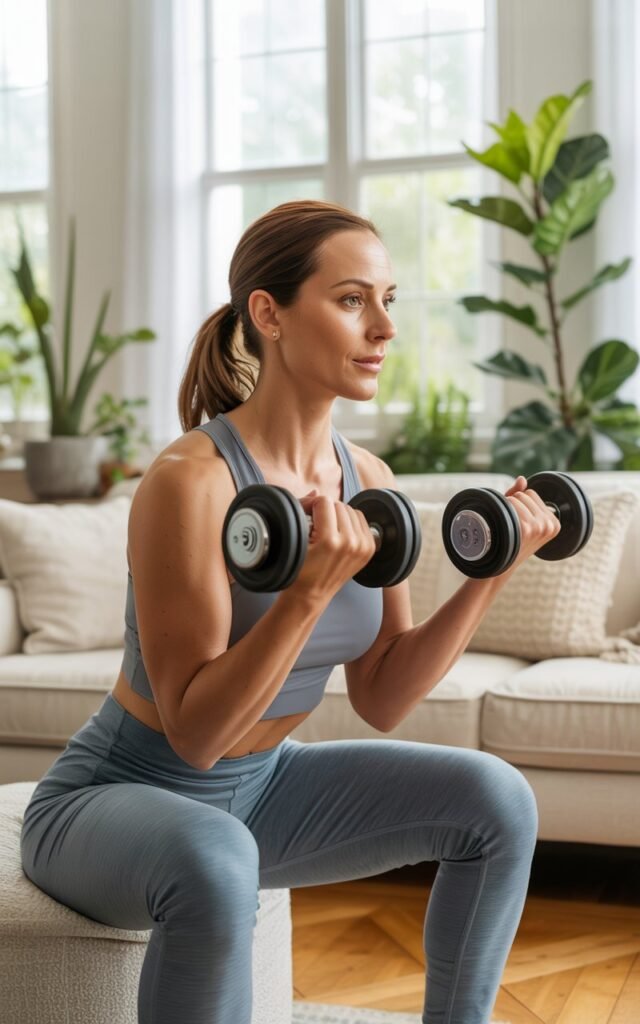
Conclusion
At-home workouts are one of the most accessible, effective, and sustainable ways to lose weight, tone your body, and improve overall health.
With no need for a gym membership, expensive equipment, or strict schedules, you can take full control of your fitness journey from the comfort of your own home.
The key to success lies in a combination of consistent exercise, balanced nutrition, and a positive mindset.
Cardio and HIIT routines burn calories and improve endurance, strength training builds muscle and boosts metabolism, and yoga or stretching improves flexibility while reducing stress.
Pairing these with a nutrient-rich diet ensures that your body has the fuel it needs to perform, recover, and transform.
Remember that progress takes time, and small, consistent actions compound into meaningful results.
Tracking your goals, celebrating milestones, and staying motivated are just as important as the workouts themselves.
Avoid comparing yourself to others — focus on your own journey and improvements.
Bottom Line: You don’t need a gym to achieve your fitness goals.
With determination, proper guidance, and a sustainable routine, at-home workouts can help you lose weight, build strength, enhance flexibility, and create a healthier lifestyle that lasts a lifetime.
Start today, stay consistent, and trust the process — your future self will thank you.