If you are a woman thinking about starting strength training, I want you to hear this first.
You are not going to “get bulky” overnight. You are not going to turn into a bodybuilder by accident.
What you will do is build strength, confidence, and a body that feels powerful in everyday life.
When I first stepped into a weight section at the gym, I remember feeling like I didn’t belong there.
Most of the weights looked “too heavy,” and I wasn’t sure where to start. I stuck to cardio for a long time because it felt safer and more familiar.
But once I finally started strength training properly, everything changed.
My energy improved, my body felt tighter in a healthy way, and I stopped feeling intimidated in the gym.
This guide is designed to help you skip that confusion and start correctly from day one.
Why Strength Training Matters for Women
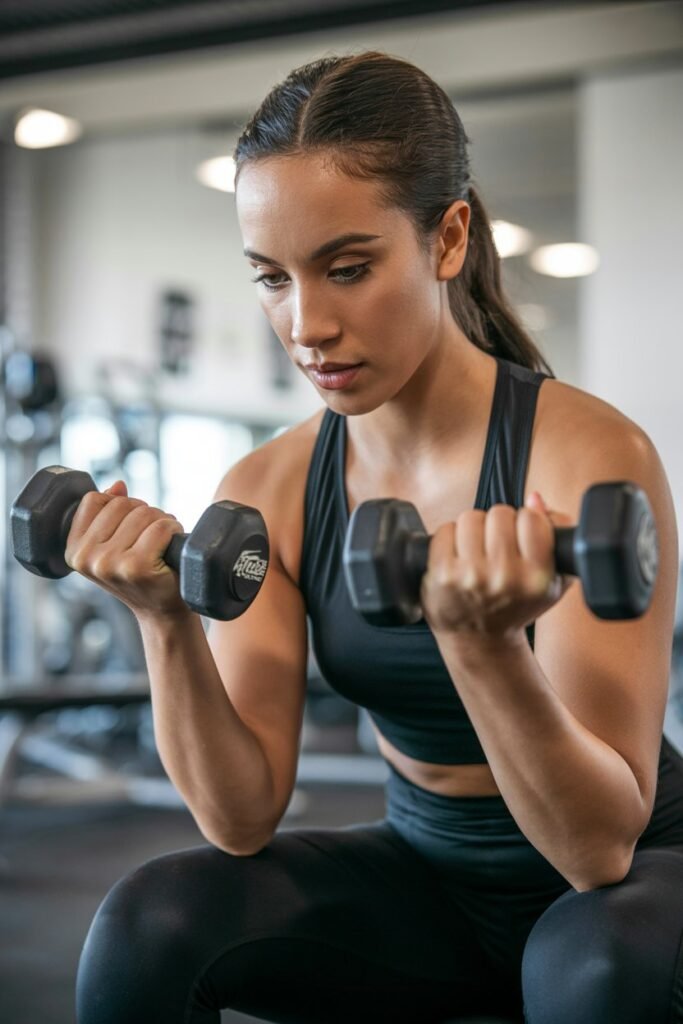
Strength training is not just about appearance. It is about how your body functions every single day.
Here is what it actually does for you:
- Builds lean muscle tone
- Improves metabolism and fat burning
- Strengthens bones and joints
- Improves posture and reduces back pain
- Boosts confidence and energy levels
Muscle mass increase improves resting metabolic rate, helping the body burn more calories at rest
The more muscle you build, the more efficient your body becomes at burning energy, even when you are resting.
Common Myths About Women and Weights
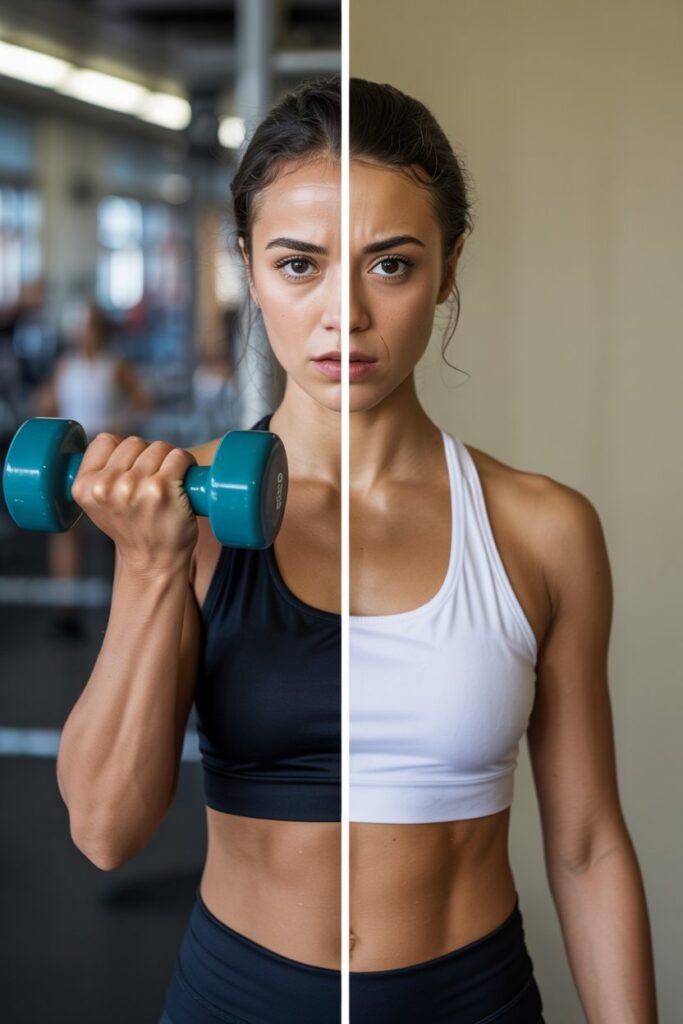
Before you even pick up a dumbbell, let’s clear up some of the biggest myths that stop women from training properly.
Myth 1: “Weights will make me bulky”
This is the most common fear. In reality, building large muscle mass takes years of specific training and nutrition. Strength training for women typically creates a lean, toned look.
Myth 2: “Cardio is better for fat loss”
Cardio burns calories during the workout. Strength training builds muscle, which helps your body burn more calories all day long.
Myth 3: “I need machines, not free weights”
Machines are helpful, but free weights like dumbbells and barbells teach your body better control and stability.
How Strength Training Actually Works
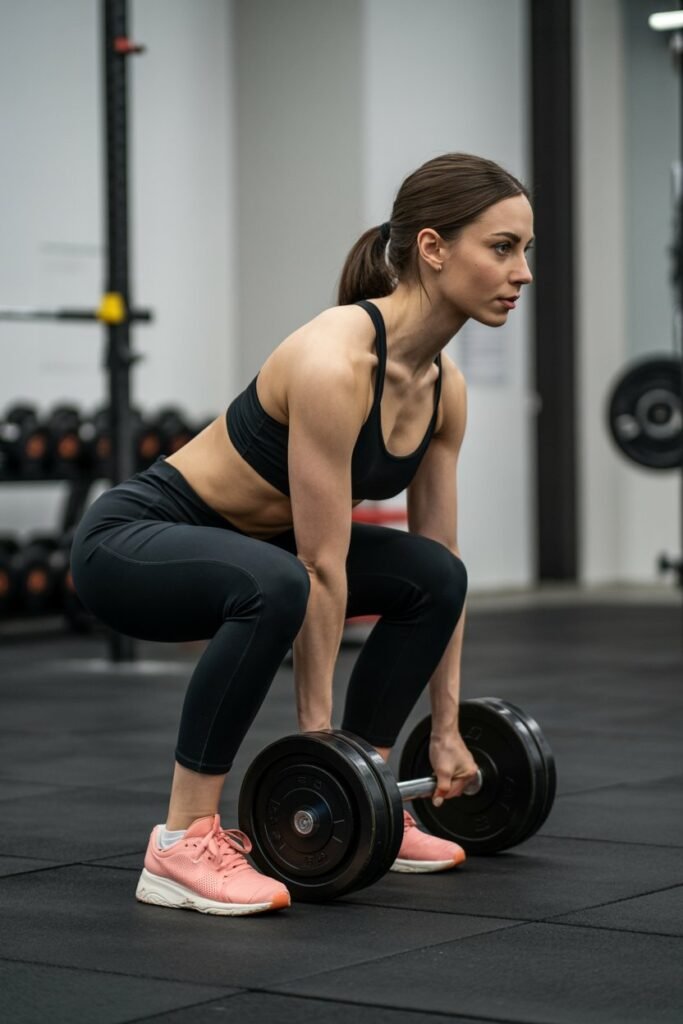
Strength training is simple in principle:
You challenge your muscles, your body adapts, and you come back stronger.
Strength Gain = Progressive overload + Recovery + Consistency
This means:
- You gradually increase resistance
- You allow time for recovery
- You stay consistent over time
Most beginners focus only on “working out harder,” but the real results come from repeating the process consistently.
Best Beginner Strength Training Split for Women

If you are just starting out, you do NOT need a complicated split routine.
Here is a simple and effective structure:
Option 1: Full Body (Best for beginners)
- 3 days per week
- Train whole body each session
Option 2: Upper / Lower Split
- 4 days per week
- Upper body one day, lower body next
If you are unsure, start with full body training. It gives the fastest results and is easier to stick to.
Essential Strength Training Exercises Every Woman Should Learn
Before we go into routines, these are the foundation movements you should understand:
Lower Body
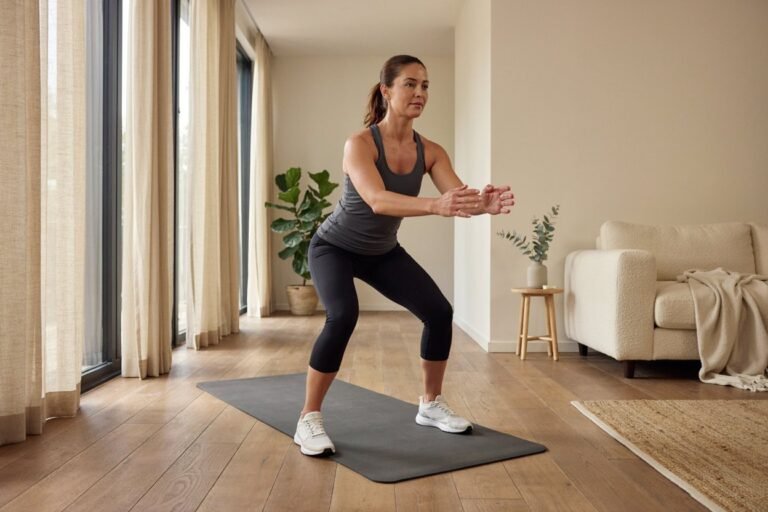
- Squats
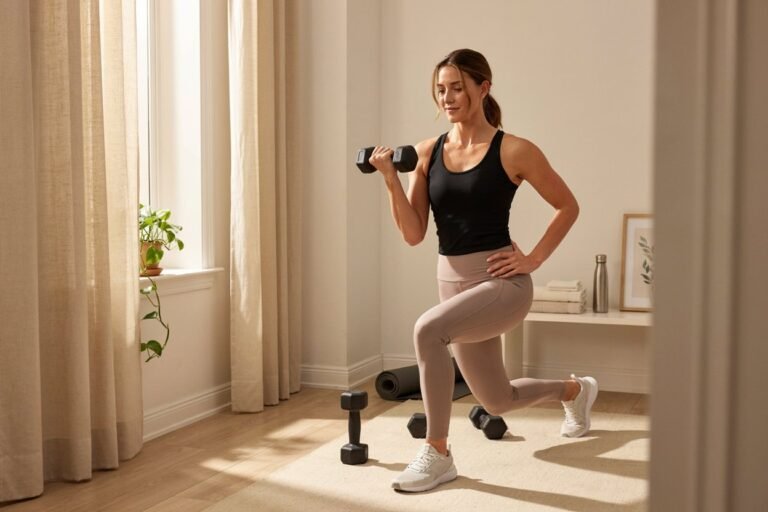
- Lunges
- Hip thrusts
- Deadlifts
Upper Body
- Dumbbell presses
- Rows
- Shoulder presses
- Bicep curls
Core
- Planks
- Russian twists
- Leg raises
These movements form the base of almost every effective gym program.
Beginner Full Body Strength Training Workout (Gym Version)
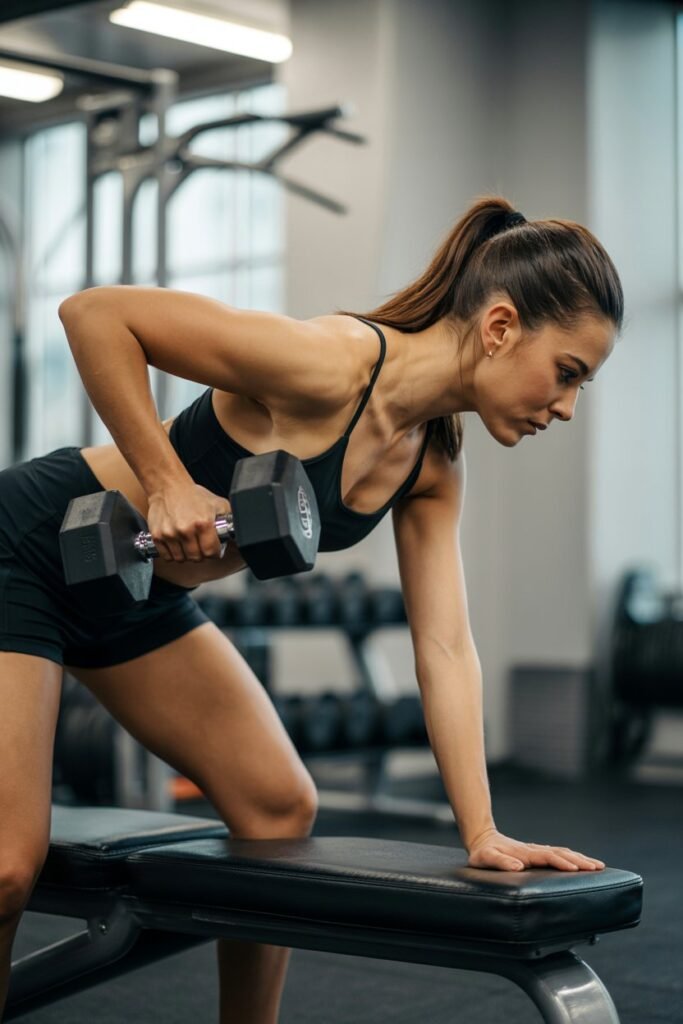
Here is a simple routine you can follow 3 times per week:
1. Dumbbell Squats
- 3 sets of 10 to 12 reps
- Focus on depth and control
2. Dumbbell Romanian Deadlifts
- 3 sets of 10 reps
- Feel stretch in hamstrings
3. Dumbbell Bench Press
- 3 sets of 8 to 12 reps
- Keep movement slow and controlled
4. One-Arm Dumbbell Row
- 3 sets of 10 reps each side
- Focus on squeezing your back
5. Dumbbell Shoulder Press
- 3 sets of 8 to 12 reps
- Keep core tight
6. Glute Bridges or Hip Thrusts
- 3 sets of 12 reps
- Squeeze glutes at the top
How Heavy Should You Lift as a Beginner?
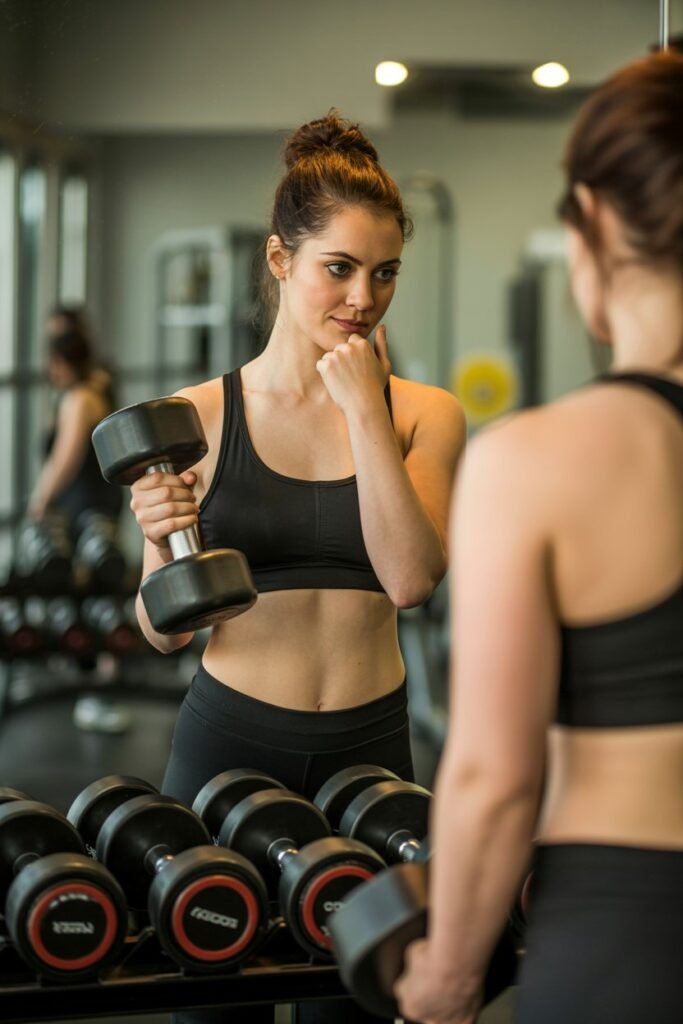
This is where most women overthink things.
You do not need heavy weights to start. You need the right weight.
A simple rule:
- The last 2 reps should feel challenging
- But your form should still be clean
If your body is swinging or losing control, the weight is too heavy.
What You Should Expect in the First Few Weeks
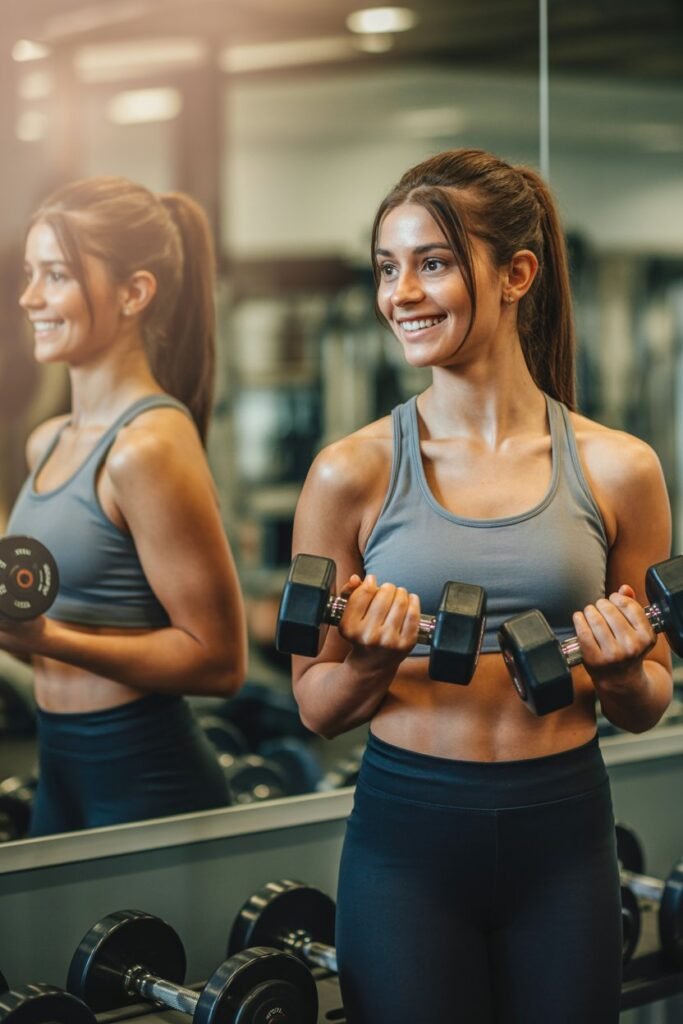
Do not expect instant transformation. Instead, expect small but important changes:
- You feel stronger in daily activities
- Your posture improves
- You recover faster after workouts
- Your confidence in the gym increases
Real physical changes usually start showing after 4 to 8 weeks of consistency.
Why Most Women Quit Strength Training Too Early

I’ve seen this happen many times, and I almost did it myself.
The main reasons are:
- Expecting fast results
- Feeling intimidated in the gym
- Not having a clear plan
- Changing routines too often
The solution is simple: follow a structured plan and repeat it long enough to see results.
How to Progress in Strength Training (This Is Where Results Really Happen)
Most women start strength training but never see long-term results because they repeat the same weights and routines without progression.
Your body only changes when you slowly challenge it over time.
Progressive Overload = Gradually increasing weight, reps, or training difficulty over time
You do not need drastic changes. Small improvements are enough.
Simple ways to progress:
- Add 1 to 2 extra reps each week
- Increase weight slightly when form feels easy
- Slow down your movements for more tension
- Add an extra set after a few weeks
- Improve your range of motion
Even tiny improvements lead to visible changes over time.
Fat Loss vs Muscle Tone: What You Should Focus On
Many women start strength training with the goal of “toning up,” but it helps to understand what that actually means.
If your goal is fat loss:
- Maintain a small calorie deficit
- Keep protein intake high
- Add light cardio 2 to 3 times per week
- Stay consistent with strength training
If your goal is muscle tone:
- Focus on progressive overload
- Eat enough protein daily
- Avoid skipping workouts
- Prioritize recovery and sleep
The truth is, strength training helps with both. Your nutrition just adjusts the outcome.
Common Strength Training Mistakes Women Make
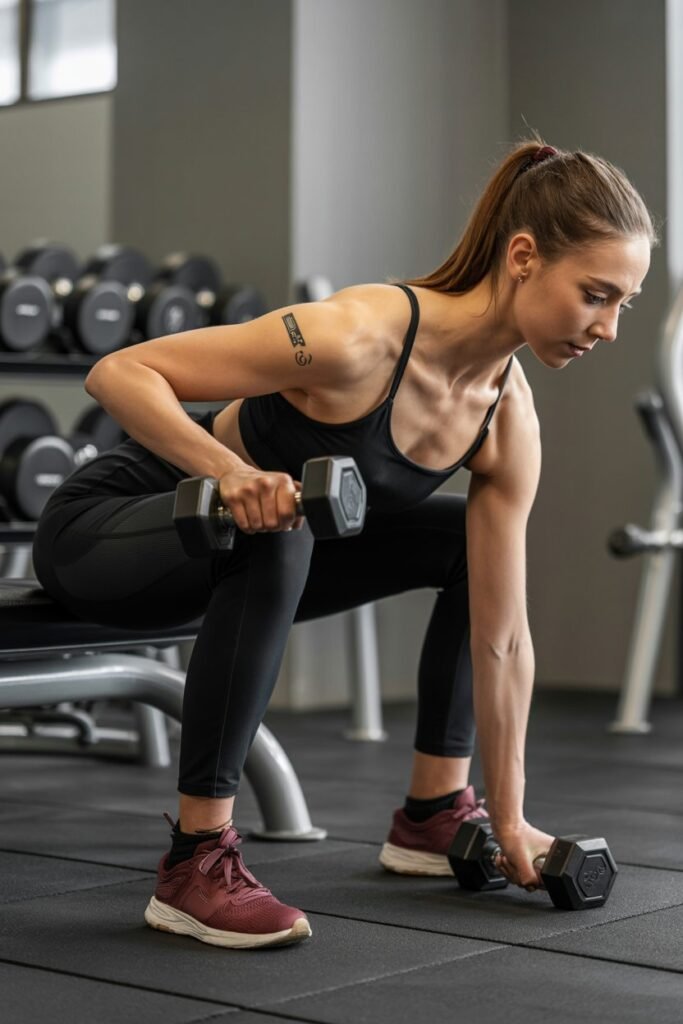
When I look back at my early gym days, I made several of these mistakes. Avoiding them will speed up your results.
1. Using very light weights forever
Light weights help you start, but you must increase resistance over time.
2. Copying random workouts every day
Consistency beats variety when you are a beginner.
3. Skipping lower body training
Leg and glute training is essential for full body results.
4. Doing too much cardio and not enough strength training
Cardio is helpful, but strength training is what shapes your body.
5. Not resting enough
Muscles grow during recovery, not during workouts.
How Often Should Women Strength Train?
For beginners, the best schedule is:
- 3 days per week (full body)
- OR 4 days per week (upper/lower split)
Example weekly plan:
- Monday: Strength training
- Wednesday: Strength training
- Friday: Strength training
Rest days are just as important as training days.
How to Know You Are Making Progress
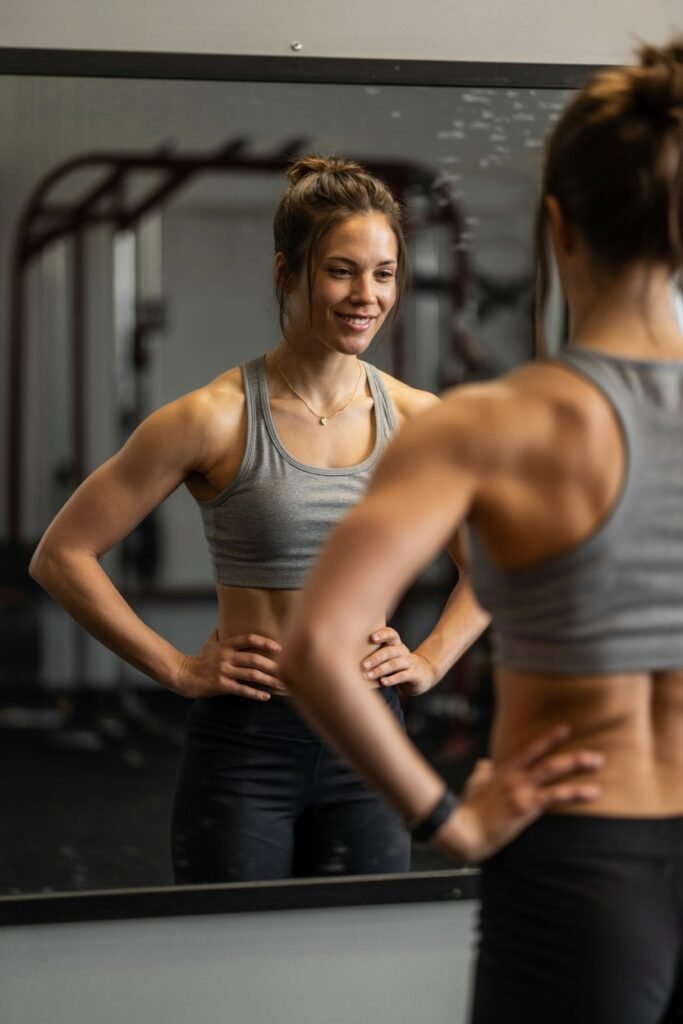
Progress is not only about how you look. It shows up in many ways:
- You lift heavier weights than before
- You recover faster after workouts
- Your posture improves
- You feel stronger in daily life
- Your confidence increases in the gym
When I started noticing these changes, I realized progress was already happening before I saw physical transformation.
FAQ (Quick Answers)
How many days should women strength train?
3 to 4 times per week is ideal for beginners.
Will lifting weights make me bulky?
No. It builds lean, toned muscle, not bulky size.
When will I see results?
Strength improves in 1 to 2 weeks, visible changes in 4 to 8 weeks.
Do I need cardio with strength training?
Yes, but keep it light and optional. Strength training is the priority.
What is the best beginner workout?
A full body dumbbell workout done 3 times per week.
Final Thoughts
Starting strength training can feel intimidating at first, especially if you are new to the gym or unsure where to begin. I felt the same way when I started.
But once you follow a simple plan and stay consistent, everything becomes easier. You stop guessing, you stop overthinking, and you start seeing real progress.
Strength training is not about being perfect. It is about showing up, getting a little stronger each week, and building confidence over time.
If you stick with this guide, you will not only see physical changes but also feel stronger, more capable, and more confident in your everyday life.
That is the real transformation.