A Complete Beginner-Friendly Guide to Building Stronger, Healthier Arms at Home
Weak arms can make everyday life feel more difficult than it should.
Simple tasks like carrying groceries, lifting bags, pushing doors, holding children, or even typing for long hours can leave your arms feeling tired and sore.
Many people struggle with arm weakness due to inactivity, aging, poor posture, lack of exercise, injury recovery, or muscle loss from long periods of sitting.
The good news is that you do not need expensive gym equipment or intense workouts to build stronger arms.
With the right exercises, consistency, and proper technique, you can gradually improve arm strength, increase endurance, and feel more confident in your body.
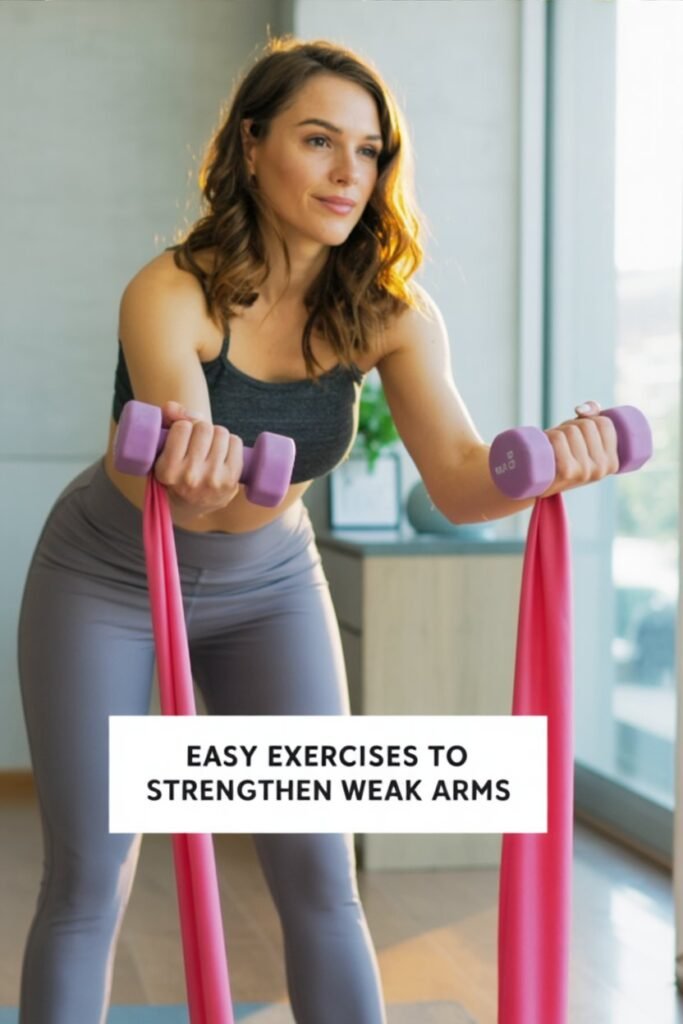
Whether you are a beginner, a senior, someone returning to fitness after a break, or simply looking for gentle ways to strengthen weak arms, this guide will help you start safely and effectively.
In this article, you will learn:
- Why arm weakness happens
- The benefits of strengthening your arms
- The best easy arm exercises for beginners
- Home workout routines
- Tips for faster progress
- Common mistakes to avoid
- Nutrition tips for muscle support
- Frequently asked questions
By the end of this guide, you will have everything you need to start building stronger arms from the comfort of your home.
Why Do Arms Become Weak?

Before jumping into exercises, it helps to understand what causes weak arms in the first place.
There are several common reasons people lose arm strength:
1. Lack of Physical Activity
One of the biggest causes of weak arms is inactivity. When muscles are not used regularly, they gradually become smaller and weaker over time.
Long hours of sitting, desk jobs, and sedentary lifestyles can all contribute to muscle weakness.
2. Aging
As we age, the body naturally loses muscle mass. This process can begin as early as your 30s and becomes more noticeable later in life.
Without strength training, arm muscles may weaken significantly over time.
3. Poor Nutrition
Muscles need proper nutrients to stay healthy and strong. A diet low in protein, vitamins, and minerals can contribute to muscle weakness and fatigue.
4. Injury or Surgery Recovery
After injuries or surgeries, arm muscles may weaken due to reduced movement and activity.
Gentle strengthening exercises can help rebuild lost muscle strength gradually.
5. Medical Conditions
Certain health conditions can contribute to muscle weakness, including arthritis, nerve problems, diabetes, and chronic fatigue.
If you experience severe weakness or pain, consult a healthcare professional before starting exercise.
Benefits of Strengthening Weak Arms

Improving arm strength offers much more than better appearance. Stronger arms improve daily life in many ways.
Easier Everyday Activities
Stronger arms make it easier to:
- Carry groceries
- Lift objects
- Open jars
- Push and pull doors
- Hold children or pets
- Perform household chores
Better Posture
Arm exercises strengthen supporting muscles around the shoulders and upper back, helping improve posture and reduce slouching.
Reduced Injury Risk
Strong muscles help protect joints and reduce the risk of strains and injuries.
Improved Independence
For older adults especially, maintaining arm strength supports independence and mobility.
Increased Confidence
Feeling physically stronger often boosts confidence, energy, and motivation.
Tips Before Starting Arm Exercises

Before beginning any workout routine, keep these important tips in mind.
Start Slowly
If your arms are very weak, begin with light movements and short sessions.
Even 5–10 minutes daily can make a difference.
Focus on Proper Form
Good form matters more than speed or heavy weights.
Controlled movements help prevent injuries and improve results.
Warm Up First
Warming up increases blood flow and prepares muscles for movement.
Simple arm circles and shoulder rolls work well.
Rest When Needed
Muscles need time to recover and grow stronger.
Avoid overtraining weak muscles.
Stay Consistent
Consistency is the secret to progress.
Small daily efforts add up over time.
Best Easy Exercises to Strengthen Weak Arms
These beginner-friendly exercises are simple, effective, and can be done at home with little or no equipment.
1. Wall Push-Ups

Wall push-ups are perfect for beginners because they place less pressure on the arms than regular push-ups.
How to Do It
- Stand facing a wall
- Place your hands flat against the wall at shoulder height
- Step back slightly
- Bend your elbows slowly and lean toward the wall
- Push yourself back to the starting position
Repetitions
Start with:
- 2 sets of 10 repetitions
Benefits
- Strengthens chest, shoulders, and arms
- Improves upper body endurance
- Gentle on joints
2. Arm Circles

Arm circles may look simple, but they are excellent for improving shoulder stability and arm endurance.
How to Do It
- Extend your arms out to the sides
- Make small forward circles
- Continue for 20–30 seconds
- Reverse the direction
Repetitions
- 2–3 rounds
Benefits
- Warms up the shoulders
- Improves mobility
- Builds endurance
3. Seated Dumbbell Curls

Bicep curls strengthen the front of the upper arm.
You can use light dumbbells, water bottles, or canned foods.
How to Do It
- Sit comfortably with arms at your sides
- Hold light weights
- Bend your elbows and lift the weights toward your shoulders
- Lower slowly
Repetitions
- 2 sets of 10–12 reps
Benefits
- Builds arm strength gradually
- Improves lifting ability
- Beginner friendly
4. Chair Dips

Chair dips target the triceps, which are the muscles at the back of the arms.
How to Do It
- Sit on the edge of a sturdy chair
- Place your hands beside your hips
- Slide forward slightly
- Bend your elbows and lower yourself gently
- Push back upward
Repetitions
- 1–2 sets of 8 reps
Benefits
- Strengthens triceps
- Improves pushing strength
- Builds upper body stability
5. Resistance Band Pulls

Resistance bands are excellent for beginners because they provide gentle, adjustable tension.
How to Do It
- Hold the band with both hands
- Stretch your arms forward
- Pull the band apart slowly
- Return carefully
Repetitions
- 2 sets of 10–15 reps
Benefits
- Strengthens shoulders and arms
- Improves posture
- Low impact exercise
6. Overhead Press

This exercise builds shoulder and arm strength.
How to Do It
- Hold light weights near your shoulders
- Push upward slowly
- Lower carefully
Repetitions
- 2 sets of 8–10 reps
Benefits
- Strengthens shoulders
- Improves lifting ability
- Builds stability
7. Modified Push-Ups

Modified push-ups are easier than traditional push-ups.
How to Do It
- Kneel on the floor
- Place hands shoulder-width apart
- Lower your chest slowly
- Push upward carefully
Repetitions
- 1–2 sets of 5–10 reps
Benefits
- Strengthens entire upper body
- Improves endurance
- Builds functional strength
8. Wrist Curls

Weak wrists can contribute to weak arms overall.
How to Do It
- Hold a light weight
- Rest your forearm on your thigh
- Curl your wrist upward
- Lower slowly
Repetitions
- 2 sets of 12 reps
Benefits
- Strengthens wrists and forearms
- Improves grip strength
9. Plank Hold

Planks strengthen the arms, shoulders, and core.
How to Do It
- Place forearms on the floor
- Keep your body straight
- Hold the position
Duration
- Start with 15–20 seconds
Benefits
- Builds stability
- Strengthens shoulders and arms
- Improves posture
10. Towel Squeezes

This is a simple exercise for grip and forearm strength.
How to Do It
- Roll up a towel
- Squeeze tightly for 5 seconds
- Release slowly
Repetitions
- 10 squeezes per hand
Benefits
- Improves grip strength
- Strengthens forearms
- Easy for seniors and beginners
Simple Weekly Arm Strength Routine
Here is a beginner-friendly weekly plan.
Monday
- Wall push-ups
- Arm circles
- Dumbbell curls
Tuesday
- Light stretching
- Walking
Wednesday
- Chair dips
- Resistance band pulls
- Wrist curls
Thursday
- Rest or gentle stretching
Friday
- Modified push-ups
- Overhead press
- Plank hold
Saturday
- Light cardio
- Arm mobility exercises
Sunday
- Full rest day
How Long Does It Take to Strengthen Weak Arms?
Results vary depending on consistency, age, fitness level, and nutrition.
Most beginners notice improvements within:
- 2–4 weeks for better endurance
- 6–8 weeks for noticeable strength gains
- 2–3 months for visible muscle tone
The key is patience and consistency.
Nutrition Tips for Stronger Arms

Exercise alone is not enough. Muscles need proper nutrition to recover and grow stronger.
Eat Enough Protein
Protein supports muscle repair and growth.
Good protein sources include:
- Eggs
- Fish
- Chicken
- Greek yogurt
- Beans
- Lentils
- Nuts
- Tofu
Stay Hydrated
Dehydration can contribute to muscle fatigue.
Drink enough water daily.
Eat Healthy Carbohydrates
Carbohydrates provide energy for workouts.
Choose:
- Oats
- Brown rice
- Fruits
- Sweet potatoes
- Whole grains
Include Healthy Fats
Healthy fats support overall body health.
Sources include:
- Avocados
- Olive oil
- Nuts
- Seeds
Common Mistakes to Avoid

Many beginners unknowingly slow their progress by making simple mistakes.
Doing Too Much Too Soon
Overworking weak muscles can lead to soreness and injury.
Start gradually.
Using Heavy Weights Immediately
Heavy weights can strain joints and muscles.
Begin light and increase slowly.
Poor Form
Incorrect technique reduces effectiveness and increases injury risk.
Focus on controlled movement.
Skipping Rest Days
Muscles need recovery time to grow stronger.
Inconsistency
Doing exercises occasionally will not produce lasting results.
Stay committed to a routine.
Best Tips for Faster Progress

Track Your Workouts
Keeping a simple journal helps you stay motivated and measure progress.
Increase Repetitions Gradually
Add more reps slowly as your strength improves.
Combine Strength and Cardio
Walking and light cardio improve circulation and endurance.
Stretch Regularly
Stretching improves flexibility and reduces stiffness.
Stay Patient
Real strength takes time to build.
Small improvements matter.
Arm Exercises for Seniors

Older adults can safely improve arm strength with gentle movements.
Good exercises include:
- Wall push-ups
- Arm circles
- Resistance bands
- Towel squeezes
- Seated curls
Always move slowly and stop if pain occurs.
Signs Your Arms Are Getting Stronger

You may notice:
- Less fatigue during daily tasks
- Better grip strength
- Easier lifting
- Improved posture
- Increased endurance
- More muscle tone
These small changes are signs of progress.
When to See a Doctor

Seek medical advice if you experience:
- Severe pain
- Sudden weakness
- Numbness
- Swelling
- Loss of movement
Exercise should never cause sharp or intense pain.
Frequently Asked Questions
Can weak arms become strong again?
Yes. With consistent exercise and proper nutrition, weak arms can gradually become stronger over time.
How often should I exercise my arms?
Beginners should aim for 2–3 strength sessions weekly with rest days in between.
Do I need weights?
No. Many effective arm exercises use body weight only.
Are resistance bands good for weak arms?
Yes. Resistance bands are gentle, safe, and excellent for beginners.
Can seniors strengthen weak arms?
Absolutely. Gentle exercises can improve mobility, strength, and independence in older adults.
How long should workouts last?
Begin with 10–20 minutes and increase gradually.
Final Thoughts
Weak arms are common, but they do not have to stay that way.
With simple exercises, consistent effort, and proper care, you can rebuild strength, improve mobility, and feel more capable in daily life.
The most important thing is to start where you are. You do not need perfection, expensive equipment, or intense workouts.
Small steps done consistently can lead to powerful results over time.
Choose a few beginner-friendly exercises from this guide, stay patient with yourself, and celebrate every bit of progress along the way.
Your arms can become stronger, healthier, and more capable one workout at a time.