
Losing 20 pounds can feel like a huge goal when you are looking at the entire number instead of the small choices that make it possible. I wanted to lose 20 pounds sustainably, without spending every day hungry or building a routine I could not maintain.
What made the biggest difference for me was learning to take strength training and workouts seriously while making realistic changes to the way I ate and moved throughout the day.
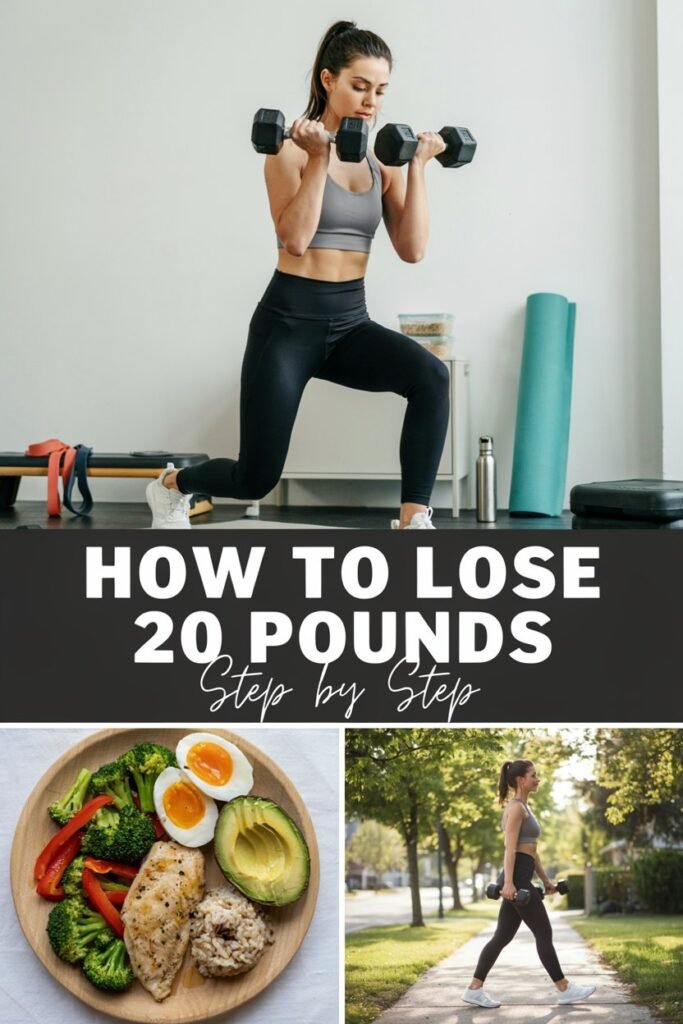
I realized weight loss was not about having perfect weeks. Some days were busy, workouts were shorter than planned, and meals did not always look the way I expected. What mattered was getting back to my routine instead of deciding that one difficult day had ruined everything.
In this guide, I am sharing the approach that helped me think about losing 20 pounds in a sustainable way. You will learn how to set a realistic target, build satisfying meals, add effective workouts, track your progress, and stay consistent when motivation starts to fade.
Start With a Realistic 20 Pound Weight Loss Goal

When I decided that I wanted to lose 20 pounds, I knew I needed to stop thinking about the entire amount at once.
Twenty pounds sounds much more intimidating when you look at it as one large number. Instead, I started looking at the process as a collection of smaller goals. That made it easier to focus on what I could actually do each day.
I also did not want to lose weight by following an extreme diet that would leave me exhausted and frustrated. My goal was to lose the weight sustainably and build habits that would still make sense once I reached my goal.
A realistic approach is important because weight loss does not happen at exactly the same rate every week. Your weight can move up and down because of water retention, food intake, sodium, hormones, digestion, activity, and other normal changes.
This is why I would not judge your progress based on one morning on the scale.
Instead, look at the overall trend.
You may have a week where the scale barely changes even though you have been eating well and exercising consistently. That does not automatically mean your efforts are failing.
The goal is to create a routine that you can repeat.
Step 1: Focus on Your Daily Habits First

One of the biggest changes in my approach was learning to focus less on the final number and more on what I was doing every day.
It is easy to say, “I need to lose 20 pounds.”
It is much more useful to ask:
What am I eating today?
Did I get enough protein?
Did I move my body?
Did I complete my workout?
Did I get enough sleep?
Did I drink enough water?
Did I make choices that support my goal?
These questions gave me something practical to work on instead of constantly worrying about how far I still had to go.
I found that consistency became much easier when I stopped expecting myself to be perfect.
If I had a busy day and could not complete my usual workout, that did not mean I had to abandon the entire week. I could simply return to my normal routine the next day.
That mindset is especially important when your goal is losing 20 pounds because it can take time.
Your routine needs to survive birthdays, weekends, family meals, busy workdays, travel, tired evenings, and days when motivation is nowhere to be found.
Step 2: Build Your Meals Around Protein
Food was obviously an important part of my weight loss journey, but I did not want to spend my days eating tiny portions and feeling hungry.
One of the simplest changes was paying more attention to protein.
Protein can help make meals more satisfying, and it also works well alongside strength training. Since workouts became an important part of my routine, I wanted my meals to support that effort rather than treating food and exercise as completely separate things.
Some of the foods I like to build meals around include eggs, chicken, fish, Greek yogurt, cottage cheese, lean meat, beans, and other protein rich foods.
I also try to think about the whole meal instead of obsessing over one ingredient.
A simple meal might include a protein source, vegetables or fruit, a filling carbohydrate, and a small amount of healthy fat.
For example, breakfast could be eggs with whole grain toast and fruit.
Lunch could be a chicken wrap with vegetables and a piece of fruit.
Dinner could be grilled chicken or fish with potatoes and roasted vegetables.
The point is not to eat these exact meals every day. The point is to create meals that are satisfying enough to make your calorie deficit easier to maintain.
Step 3: Pay Attention to Portions
Healthy food can still contribute a lot of calories if the portions become much larger than you realize.
I learned that I did not need to remove foods I enjoyed completely. I simply needed to become more aware of how much I was actually eating.
This made a big difference because some foods are surprisingly easy to overeat.
Things like nuts, oils, dressings, cheese, peanut butter, sauces, snacks, and desserts can add calories quickly even when the rest of your meal looks healthy.
That does not mean these foods are bad.
It simply means portions matter.
Instead of trying to make every meal extremely low calorie, I found it more realistic to build meals that I genuinely enjoyed while keeping portions reasonable.
This approach also helped me avoid the cycle of restricting foods during the week and then overeating them later because I felt deprived.
Step 4: Make Strength Training Part of Your Routine
Strength training was one of the biggest parts of my approach to losing 20 pounds.
I did not want my entire weight loss routine to revolve around eating less and watching the number on the scale. I wanted to become stronger and feel better physically at the same time.
Strength workouts also gave me something else to focus on besides weight.
I could notice that I was getting stronger, completing more repetitions, improving my form, or handling an exercise more comfortably.
Those improvements made the process feel much more rewarding.
A beginner strength routine does not need to be complicated.
You can build a simple workout around movements such as:
• Squats
• Glute bridges
• Lunges
• Push ups
• Rows
• Shoulder presses
• Dead bugs
The goal is not to destroy yourself during every workout.
The goal is to create a routine that you can perform consistently and gradually improve.
If you are new to strength training, start with an amount of exercise that feels manageable. You can increase the difficulty as your fitness improves.
Step 5: Do Not Ignore Walking and Everyday Movement
Strength training became a major part of my routine, but I also learned that everyday movement matters.
You do not have to spend hours in the gym to become more active.
Walking is one of the easiest ways to add movement to your day. You can take a walk after a meal, walk while listening to something you enjoy, take short movement breaks during the day, or simply look for opportunities to move more.
I prefer thinking about movement as something that belongs in my normal day rather than something I have to force myself to do.
If you currently take very few steps, you do not need to suddenly aim for an extremely high number.
Start with your current routine and gradually increase your movement.
A little more activity each day can become a meaningful part of your overall routine when you stay consistent.
Step 6: Create a Workout Schedule You Can Actually Follow
A common mistake is creating an exercise plan that looks impressive on paper but does not fit your actual life.
I learned that a realistic workout schedule is much more useful than an ambitious one that lasts for a week.
For example, a simple weekly routine could look like this:
Monday
Strength training with a focus on the lower body
Tuesday
Walking and light movement
Wednesday
Strength training with a focus on the upper body
Thursday
Walking or another enjoyable activity
Friday
Full body strength training
Saturday
Longer walk or active outdoor activity
Sunday
Rest and recovery
This is only an example. Your schedule should fit your fitness level, responsibilities, available time, and personal preferences.
You also do not need to complete a long workout every time.
A shorter workout that you actually complete is more useful than a perfect workout that you keep postponing.
Step 7: Stop Expecting Motivation to Do the Work
Motivation is helpful, but I would not build your entire weight loss plan around it.
There will be mornings when you feel excited about exercising.
There will also be days when you would rather stay in bed, order takeout, skip the workout, or tell yourself that you will start again tomorrow.
That is normal.
What helped me was creating routines that did not require me to make a completely new decision every day.
When workouts became part of my normal schedule, I did not have to constantly debate whether I was going to exercise.
The same thing applies to food.
Keeping simple meals available makes it easier to make a good choice when you are hungry and tired.
The more decisions you can make ahead of time, the less you have to depend on motivation.
Step 8: Measure Progress Beyond the Scale
The scale is useful, but it should not be the only way you judge your progress.
During a weight loss journey, I think it is helpful to pay attention to other changes too.
Your clothes may start fitting differently.
Your waist measurement may change.
You may notice that workouts feel easier.
You may be able to lift more weight.
Your energy may improve.
You may feel more comfortable taking photos.
You may simply feel more confident in your daily routine.
These changes matter because losing 20 pounds is not only about seeing a smaller number.
It is also about becoming stronger, developing better habits, and creating a lifestyle that you can continue after reaching your goal.
What Matters Most in Part 1
If you take nothing else from the beginning of this plan, focus on consistency.
You do not need to completely change your life overnight.
Start by setting a realistic goal, improving your meals, paying attention to portions, adding strength training, and finding ways to move more throughout the day.
Most importantly, give yourself room to have imperfect days.
The routine you can follow repeatedly will always be more useful than the plan that looks perfect but becomes impossible to maintain.
Step 9: Make Your Food Work With Your Goal
Once I had my workouts becoming a regular part of my routine, I started paying closer attention to what I was eating throughout the day.
This was not about making every meal perfect.
I wanted food to support my goal without making me feel like I was constantly dieting. That meant finding meals I actually enjoyed, learning which foods kept me full, and becoming more aware of portions.
One thing I learned quickly is that eating healthy and eating for weight loss are not always exactly the same thing.
Foods such as nuts, avocado, olive oil, cheese, granola, and nut butter can all be part of a healthy diet, but portions can add up quickly. I did not want to remove foods like these completely. I simply became more intentional about how much I was eating.
That small change made my meals feel much more manageable.
Step 10: Build Filling Meals Instead of Tiny Meals
One of the easiest ways to make weight loss harder is to eat a very small meal and then spend the next few hours thinking about food.
I found that meals with protein, fiber, and enough volume were much easier to stick with.
A simple formula I like is to start with a protein source, add vegetables or fruit, include a satisfying carbohydrate, and then add a reasonable amount of fat.
For example, instead of having a very small salad for lunch and feeling hungry an hour later, I would rather have a salad with chicken, vegetables, beans or potatoes, and a measured dressing.
That type of meal feels like real food.
You can also use this approach for breakfast and dinner.
A filling breakfast could be eggs with vegetables and whole grain toast.
A simple lunch could be chicken, rice, and vegetables.
Dinner could be salmon with potatoes and a large serving of roasted vegetables.
You do not need complicated recipes to lose weight.
In fact, some of the meals that helped me stay consistent were the simplest ones.
Step 11: Eat More Protein Throughout the Day
Protein became especially important for me because strength training was such a big part of my routine.
Rather than trying to eat most of my protein at dinner, I found it easier to include a protein source in each main meal.
Some practical options include:
Eggs
Greek yogurt
Chicken
Turkey
Fish
Lean beef
Cottage cheese
Beans
Lentils
Tofu
The exact foods you choose will depend on what you enjoy and what fits your usual meals.
I also found that having convenient protein options available made healthy eating much easier on busy days.
If I had Greek yogurt, eggs, cooked chicken, or another simple option ready to eat, I was less likely to reach for whatever happened to be easiest when I was hungry.
Step 12: Increase Fiber Without Making Food Boring
Fiber is another part of my meals that I pay more attention to now.
Vegetables, fruits, beans, lentils, whole grains, potatoes, oats, and other plant foods can make meals more filling while adding variety.
I do not think vegetables need to mean a plate of plain steamed broccoli every night.
Roasting vegetables with herbs and spices can make them much more enjoyable. You can also add vegetables to soups, wraps, rice bowls, omelets, pasta dishes, and stir fries.
Fruit is another easy option.
I like keeping fruit available because it gives me something naturally sweet when I want a snack.
Apples, oranges, bananas, berries, grapes, and melon can all fit into a weight loss diet.
The goal is not to eat as little as possible.
The goal is to make the food you eat satisfying enough that you can continue your routine.
Step 13: Be Careful With Liquid Calories
This was one of those areas where small changes could make a difference without making meals feel restrictive.
It is easy to drink calories without feeling as satisfied as you would from eating food.
Sugary sodas, sweetened coffee drinks, energy drinks, juice, creamy drinks, and alcohol can contribute calories that are easy to overlook.
I do not believe you have to eliminate every drink you enjoy.
Instead, look at what you are drinking regularly.
If a sugary drink is part of your routine several times a day, reducing how often you have it can be a simple place to start.
Water is the obvious choice for most of the day, but unsweetened tea, sparkling water, and other lower calorie options can also make it easier to stay hydrated without constantly adding calories.
Step 14: Give Yourself a Simple Grocery List
One thing that makes healthy eating much easier is having the right foods available before you get hungry.
I prefer grocery shopping with a basic plan rather than filling the cart with random foods and trying to figure out what to eat later.
My basic grocery list would include a few protein sources, several fruits and vegetables, filling carbohydrates, and ingredients for quick meals.
For example:
Eggs
Chicken
Fish
Greek yogurt
Oats
Rice
Potatoes
Whole grain bread or wraps
Beans
Lentils
Fresh or frozen vegetables
Fruit
Nuts or seeds
Healthy cooking oils
Herbs and spices
You do not need to buy everything on this list.
The idea is simply to have ingredients that can be combined into several easy meals.
Frozen vegetables can also be extremely useful when fresh produce is not convenient. They save preparation time and make it easier to add vegetables to a quick dinner.
Step 15: Prepare Food Without Turning Your Kitchen Into a Meal Prep Factory
I used to think meal preparation had to mean spending several hours cooking containers of identical food.
It does not.
Even preparing a few basic ingredients can make the rest of the week easier.
You might cook several portions of chicken, prepare rice or potatoes, wash fruit, chop some vegetables, and keep a few easy snacks available.
Then you can combine those ingredients differently throughout the week.
For example, cooked chicken can become a wrap one day, a rice bowl another day, and a salad later in the week.
This approach gives you structure without making every meal feel repetitive.
I also think it is helpful to have a few meals that require almost no preparation.
There will always be days when you are tired, busy, or simply do not feel like cooking.
Having a few reliable options prevents one difficult evening from turning into an entire weekend of eating whatever is easiest.
Step 16: Learn How to Handle Cravings
Cravings were something I had to learn how to manage instead of pretending they would disappear completely.
Trying to tell yourself that you can never eat chocolate, pizza, dessert, or your favorite snack can sometimes make the food even more tempting.
I found it more realistic to make room for foods I genuinely enjoy while keeping portions reasonable.
If I want something sweet, I would rather have a sensible portion and enjoy it than spend hours trying to ignore the craving and eventually eat far more than I originally wanted.
There is also a difference between being physically hungry and simply wanting something because it is available.
Before grabbing a snack, it can help to pause and ask yourself whether you are actually hungry.
If you are hungry, have something that will satisfy you.
If you simply want a particular food, you can decide whether it is worth having and then move on without turning it into a big event.
Step 17: Stop Trying to Make Weekends Perfect
Weekends can completely change your normal routine.
You may eat at restaurants, meet friends, attend family gatherings, order takeout, or have foods that you do not normally keep at home.
I learned that trying to eat perfectly throughout the weekend was not realistic for me.
Instead, I focused on keeping some structure.
I could enjoy a restaurant meal without turning the entire day into a free for all.
I could have dessert without deciding that I had ruined my progress.
I could enjoy a family meal and simply return to my normal eating pattern afterward.
This is one of the biggest mindset changes I would recommend to anyone trying to lose 20 pounds.
One meal does not determine your results.
What you do consistently matters much more.
Step 18: Do Not Try to Compensate for an Indulgent Meal
If I had a larger meal than planned, I did not want to respond by starving myself the following day or trying to exercise for hours to compensate.
That approach can create an exhausting cycle.
You eat more than planned.
You feel guilty.
You restrict food.
You become extremely hungry.
You overeat again.
Then the cycle starts over.
A better response is much simpler.
Return to your normal routine.
Have your usual breakfast.
Drink water.
Eat balanced meals.
Complete your planned workout if you have one.
Move on.
You do not need to punish yourself for eating something enjoyable.
Step 19: Learn to Recognize Your Usual Problem Foods
Everyone has certain foods that are harder to eat in moderation.
For me, I think it is more useful to identify those foods honestly rather than pretending they do not exist.
If there is a snack that I can easily eat straight from the package without noticing how much I have had, I know that portioning it before eating is a better approach.
That does not make the food bad.
It simply means I understand my own habits.
You can do the same thing with your favorite foods.
Notice which foods leave you satisfied after a small serving and which ones make you want to keep eating.
That information can help you build an eating routine that actually fits you.
Step 20: Track Your Food If It Helps You
Food tracking can be useful, but I do not think everyone has to track every bite forever.
For some people, recording meals for a period of time can make portion sizes and calorie intake much easier to understand.
It can also reveal things that are easy to overlook.
Maybe your breakfast is larger than you realized.
Maybe your weekend meals are much higher in calories than your weekday meals.
Maybe the small snacks throughout the afternoon are adding up.
Tracking can provide that information.
But if tracking makes you anxious or overly focused on food, you can use other methods.
You could focus on consistent meal portions, protein at each meal, vegetables and fruit, regular movement, and monitoring your overall progress.
The method matters less than whether it helps you create sustainable habits.
Step 21: Give Your Body Time to Respond
This is probably one of the hardest parts of losing 20 pounds.
You can do everything you planned and still have days when the scale does not cooperate.
I learned that I needed to stop expecting the scale to reward me immediately after every workout or healthy meal.
Your body does not work on a simple daily equation where every good choice creates an immediate drop in weight.
There will be fluctuations.
There may even be periods where your weight stays around the same number before moving again.
Instead of reacting to every small change, look at your progress over several weeks.
If your overall trend is moving in the direction you want and your habits are consistent, you have useful information.
If progress has genuinely stopped for a longer period, then you can look at your food intake, activity, sleep, portions, and consistency and decide what needs adjusting.
Step 22: Make Your Routine Flexible Enough for Real Life
The more realistic my routine became, the easier it was to stay consistent.
I did not need to eat the exact same breakfast every morning.
I did not need to complete the same workout every week.
I did not need to avoid restaurants.
I did not need to refuse every dessert.
I needed a structure that could bend without completely breaking.
That is an important distinction.
A sustainable weight loss routine should have room for normal life.
If your plan only works when everything goes perfectly, it is probably too restrictive.
Your goal is to build habits that can survive busy weeks, social events, tired evenings, holidays, and unexpected changes in your schedule.
A Simple Day of Eating for Weight Loss
When I want to keep things straightforward, I think about meals rather than trying to follow an elaborate diet.
A typical day could look something like this.
Breakfast
Eggs with whole grain toast and fruit.
Lunch
Chicken with rice, vegetables, and a simple dressing or sauce.
Snack
Greek yogurt with berries or an apple with a small serving of nut butter.
Dinner
Fish or chicken with potatoes and roasted vegetables.
Optional snack
A protein rich snack if I am genuinely hungry.
This is not a prescribed meal plan and there is no requirement to eat these foods.
The important part is the structure.
Each meal provides something filling, portions are reasonable, and there is enough flexibility to make the routine enjoyable.
The Goal Is Not to Eat Perfectly
The more I worked on losing 20 pounds, the more I realized that perfection was not necessary.
There were meals I enjoyed simply because they tasted good.
There were days when my schedule was too busy for the workout I had planned.
There were weekends when I ate more than usual.
None of those things had to become a reason to quit.
The real skill is learning how to return to your normal habits.
That is what makes a sustainable approach different from a short term diet.
You are not trying to prove how disciplined you can be for two weeks.
You are building a routine you can continue for months and eventually maintain after reaching your goal.
Step 23: Do Not Panic When the Scale Stops Moving
One of the most frustrating parts of losing weight is reaching a point where the scale seems to stop cooperating.
You can be eating consistently, completing your workouts, walking regularly, and still wake up several mornings without seeing the number you hoped for.
I learned not to react too quickly.
A few days of no change does not necessarily mean you have reached a true plateau. Body weight naturally moves around from day to day, and things such as water retention, sodium, digestion, stress, sleep, and changes in activity can affect what you see on the scale.
This is why I prefer looking at the bigger picture.
If your weight has stayed around the same range for a couple of days, keep going.
If there has been little or no progress for several weeks despite being genuinely consistent, then it makes sense to look more closely at your routine.
Before making major changes, I would review the basics.
Are portions larger than they used to be?
Have snacks gradually increased?
Are weekends very different from weekdays?
Has your daily movement decreased?
Are you completing your workouts consistently?
Have your meals become more calorie dense?
Sometimes the answer is not that your body suddenly stopped responding. Your routine may simply have changed without you noticing.
Step 24: Keep Strength Training in Your Routine
Strength training remained important to me throughout my weight loss journey because I wanted to focus on becoming stronger rather than simply becoming lighter.
When your main goal is losing weight, it can be tempting to spend all of your attention on cardio and calories.
I prefer having a combination of strength training and everyday movement.
A simple strength routine can include exercises that train your major muscle groups.
You could structure a workout around:
Squats
Lunges
Glute bridges
Rows
Push ups
Shoulder presses
Dead bugs
You can start with bodyweight exercises and gradually add resistance as your strength improves.
The goal is progressive improvement.
That might mean adding a little resistance, performing another repetition, improving your form, or becoming more comfortable with an exercise.
You do not need to train at maximum intensity every time.
Consistency matters much more than trying to make every workout exhausting.
Step 25: Give Yourself Recovery Days
Working harder is not always the answer when weight loss slows down.
Recovery is part of a sustainable exercise routine.
I learned to appreciate rest days because they allowed me to come back to my workouts feeling ready instead of constantly feeling worn out.
A recovery day does not necessarily mean lying on the couch all day.
You can still walk, stretch, do gentle mobility work, or simply enjoy a normal day without a structured workout.
Your body needs time to recover from training, especially when you are increasing the amount of exercise you do.
If you are constantly exhausted, sore, or dreading every workout, it may be worth looking at whether your routine is too demanding.
Step 26: Use More Than One Way to Track Progress
The scale is useful, but it is only one measurement.
I like having several ways to see whether my efforts are working.
You can take progress photos every few weeks under similar conditions.
You can measure your waist or other areas if measurements are useful to you.
You can pay attention to how your clothes fit.
You can record your workouts and notice when exercises become easier or stronger.
You can also pay attention to how you feel during everyday activities.
Sometimes the scale changes slowly while your body composition and fitness are changing in ways that are not immediately obvious from your weight.
That is why I would not let one number decide whether your entire routine is working.
Step 27: Weigh Yourself Without Becoming Obsessed With the Scale
There is nothing wrong with weighing yourself regularly if it helps you understand your progress.
The important thing is learning how to interpret the number.
If you weigh yourself today and see a higher number than yesterday, it does not automatically mean you gained body fat.
Your body weight can change from water, food, sodium, digestion, exercise, and other normal factors.
This is why looking at a longer trend can be more useful than reacting emotionally to individual weigh ins.
For some people, weighing several times a week works well.
For others, once a week feels more comfortable.
Choose a method that gives you useful information without making you feel like you are constantly being judged by the scale.
Step 28: Pay Attention to Sleep
Sleep became something I appreciated much more once I started taking my overall routine seriously.
When you are tired, everything can feel harder.
You may have less energy for exercise.
You may be less interested in preparing a healthy meal.
You may find yourself reaching for convenient foods because you simply do not feel like cooking.
Instead of treating sleep as something separate from weight loss, I think of it as part of the routine.
Try to create a consistent bedtime when possible.
Keep your bedroom comfortable and quiet.
Give yourself some time to wind down before bed.
And if your schedule allows it, aim for enough sleep that you feel reasonably rested the next day.
You do not need a perfect nighttime routine.
Even improving your sleep habits gradually can make the rest of your routine easier to manage.
Step 29: Learn How to Get Back on Track After a Difficult Day
There will be days when things do not go according to plan.
Maybe you skip your workout.
Maybe you order takeout.
Maybe you eat more dessert than you intended.
Maybe you spend most of the day sitting because you are busy.
I do not see these days as failures.
The mistake would be turning one difficult day into a difficult week.
When something like this happens, I simply return to my normal routine.
There is no need to wait until Monday.
There is no need for a punishment workout.
There is no need to skip meals the next day.
Just return to your usual breakfast, get your normal movement, drink water, complete your next planned workout, and continue.
That ability to recover quickly is one of the most useful skills you can develop during a weight loss journey.
Step 30: Make Exercise Something You Actually Enjoy
Exercise does not have to mean spending hours doing a workout you hate.
Strength training became a bigger part of my routine because I enjoyed seeing myself get stronger.
That made it easier to stay consistent.
You might enjoy walking, cycling, swimming, dancing, hiking, running, group classes, home workouts, or another activity.
There is no single exercise that everyone has to do.
The best routine is one that fits your body, your schedule, your fitness level, and your interests.
If you hate your workout, it becomes much harder to maintain it.
Try different activities until you find something that feels manageable and rewarding.
Step 31: Create Small Rules That Make Healthy Choices Easier
I found that simple personal rules were often more useful than complicated diet plans.
For example, you might decide that most meals will include a protein source.
You might make a habit of walking after dinner.
You might keep fruit available for snacks.
You might prepare some food before a busy week.
You might schedule your strength workouts at specific times.
These small decisions reduce the amount of thinking required every day.
Instead of asking yourself whether you should exercise, your workout already has a place in your schedule.
Instead of wondering what to eat when you are hungry, you have ingredients available for a simple meal.
These systems may seem small, but they can make consistency much easier.
Step 32: Stop Thinking in Terms of Being On or Off a Diet
One of the biggest mindset changes for me was moving away from the idea that I was either dieting or not dieting.
That way of thinking can make one indulgent meal feel like the end of the entire plan.
I prefer thinking about my normal eating habits.
Most of my meals can support my goals while still leaving room for foods I enjoy.
That means I do not have to start over every time I eat something that was not part of my original plan.
A sustainable approach should give you enough flexibility to live your normal life.
Step 33: Be Patient With the Last Few Pounds
The closer you get to your goal, the more tempting it can be to become impatient.
You may start thinking that you need to exercise more, eat less, or make your diet stricter because you are only a few pounds away.
I would resist that urge.
The last part of a weight loss journey can require patience.
Continue focusing on the habits that helped you make progress.
Keep your meals consistent.
Continue strength training.
Keep moving.
Get enough sleep.
Monitor your progress.
Give your body time.
You do not need to turn the final few pounds into an emergency.
Step 34: Think About What Happens After You Lose the 20 Pounds
Reaching your goal is exciting, but I think the maintenance phase deserves just as much attention as the weight loss itself.
I did not want to spend months creating habits that I would immediately abandon once I reached my goal.
Instead, the goal was to create a lifestyle I could continue.
That means continuing to exercise, eating balanced meals, keeping portions reasonable, and staying active.
You may eventually increase your food intake slightly as you move from weight loss into maintenance, depending on your individual needs and activity level.
The important thing is not to go from strict dieting to completely unrestricted eating overnight.
Keep the habits that worked.
Step 35: Expect Your Weight to Fluctuate After Reaching Your Goal
Even after losing 20 pounds, your weight will not stay exactly the same every morning.
That is normal.
You might see a few pounds of movement depending on hydration, food, sodium, digestion, activity, and other factors.
I would rather have a comfortable maintenance range than become obsessed with reaching one exact number every single day.
If your weight starts trending upward consistently, that gives you an opportunity to look at your habits early.
You can make small adjustments before a small change becomes a much larger one.
Step 36: Keep the Habits That Made You Stronger
For me, strength training was not just something I used to lose weight.
It became one of the habits I wanted to keep.
That is important because reaching a goal should not mean giving up the things that helped you feel better.
Continue challenging yourself in the gym or at home.
Continue walking.
Continue eating meals that keep you satisfied.
Continue making time for yourself.
The number on the scale may have been the reason you started, but it does not have to remain the only reason you continue.
My Biggest Lessons From Losing 20 Pounds
Looking back at the process, I think the biggest lesson was that I did not need a perfect plan.
I needed a plan I could actually follow.
Strength training helped me become more consistent with exercise because I could see progress beyond the scale.
Eating balanced meals helped me avoid feeling like I was constantly starving.
Paying attention to portions gave me more awareness without requiring me to completely eliminate foods I enjoyed.
Walking gave me another simple way to stay active.
And learning how to recover from difficult days prevented small setbacks from becoming reasons to quit.
Most importantly, I stopped expecting weight loss to happen in a perfectly straight line.
There were easier weeks and harder weeks.
There were days when I felt motivated and days when I did not.
The difference was continuing anyway.
A Simple 20 Pound Weight Loss Checklist
If you want to keep the process simple, focus on these habits:
Eat meals built around protein.
Include fruits and vegetables regularly.
Pay attention to portions.
Drink mostly low calorie beverages.
Walk and stay active throughout the day.
Complete regular strength workouts.
Get enough sleep.
Plan meals before busy days.
Allow yourself flexibility.
Track your progress over time.
Do not panic over normal scale fluctuations.
Return to your routine after difficult days.
Focus on sustainable habits instead of quick results.
Frequently Asked Questions
How long does it take to lose 20 pounds?
There is no single timeline that applies to everyone. Weight loss depends on factors such as your starting weight, calorie intake, activity level, health, sleep, and consistency. A gradual approach is generally more realistic than trying to lose 20 pounds as quickly as possible.
Can I lose 20 pounds without exercising?
It is possible to lose weight without formal exercise because food intake plays a major role in creating a calorie deficit. However, I personally found strength training and regular movement valuable because they helped me become stronger and made physical activity part of my lifestyle.
Is strength training good for weight loss?
Strength training can be a useful part of a weight loss routine. It helps you build and maintain strength and gives you another way to measure progress besides the number on the scale.
Do I need to count calories to lose 20 pounds?
Not necessarily. Calorie tracking can help some people understand portions and food intake, but others prefer using consistent meal portions and focusing on protein, fiber, nutritious foods, and regular activity.
What should I do if my weight stops decreasing?
First, give yourself enough time to determine whether it is actually a plateau. Review your food portions, snacks, weekend eating, activity, workouts, sleep, and overall consistency. Avoid making extreme changes based on a few days of scale fluctuations.
Can I eat dessert while trying to lose 20 pounds?
Yes. A sustainable approach can include foods you enjoy. The key is portion size and how those foods fit into your overall eating pattern. One dessert does not determine the success or failure of your weight loss journey.
What if I overeat one day?
Do not punish yourself the next day. Return to your normal meals, drink water, continue your usual activity, and move forward. Consistency over time matters much more than one meal or one day.
How can I keep the weight off after losing 20 pounds?
Continue the habits that helped you reach your goal. Keep exercising, stay active, eat balanced meals, pay attention to portions, and monitor your weight or other progress markers occasionally so you can notice meaningful changes early.
Final Thoughts
Losing 20 pounds does not have to mean completely changing who you are or living on a strict diet.
For me, the biggest difference came from building habits that could fit into normal life. Strength training became a regular part of my week. I became more intentional about my meals and portions. I walked more. I paid attention to my progress without allowing the scale to control my mood.
There were certainly days when everything did not go according to plan, but I learned that those days did not matter nearly as much as what I did afterward.
If you are working toward losing 20 pounds, give yourself enough time to build the habits instead of constantly looking for the fastest possible result.
Focus on getting a little better at the things you can control.
Prepare meals that keep you satisfied.
Move your body regularly.
Lift weights if strength training works for you.
Get enough rest.
Keep going after imperfect days.
And when you eventually reach your goal, do not think of it as the end of the journey. Think of it as the point where the habits you built become your normal way of living.