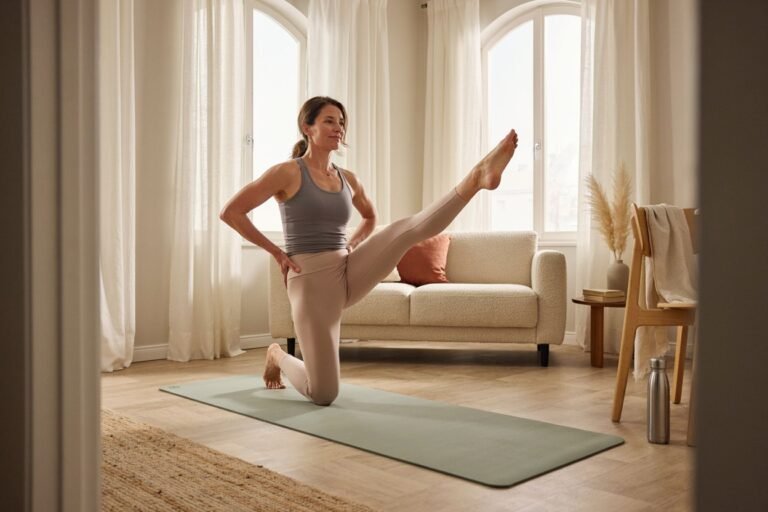
Building lean muscle in your legs is something I became more intentional about after realizing how much lower body strength affects almost every movement throughout the day.
Whether I was carrying groceries, climbing stairs, going for long walks, or completing other workouts, I noticed my legs were doing most of the work.
Instead of chasing heavier weights or complicated training plans, I focused on improving my technique, staying consistent, and choosing exercises that worked multiple muscle groups at once.
That simple change made my workouts feel more productive, and I started seeing better muscle definition, improved balance, and greater endurance without feeling like I had to spend hours in the gym.
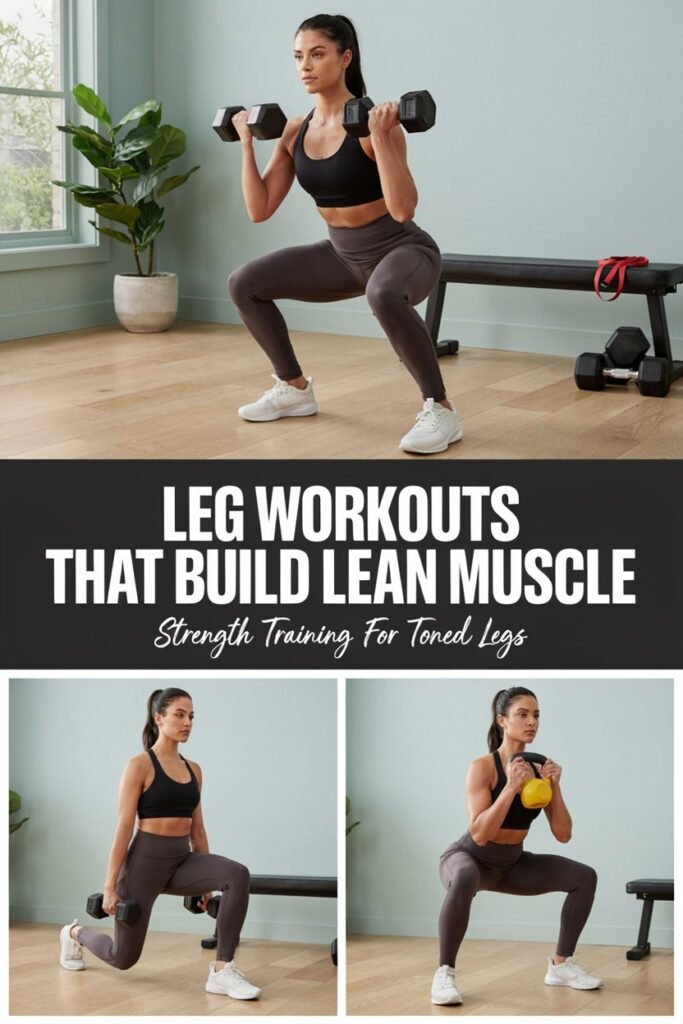
I also learned that building lean muscle is not about trying to make your legs look bigger. It is about developing strength, improving mobility, and creating muscles that support your body during everyday activities.
In this guide, I am sharing the leg workouts that have given me the best results, along with practical tips that helped me train smarter, recover better, and stay motivated.
Whether you are a complete beginner or looking to improve your current routine, these exercises can help you build stronger, more defined legs while supporting your overall fitness goals.
Why Leg Workouts Are Essential for Building Lean Muscle
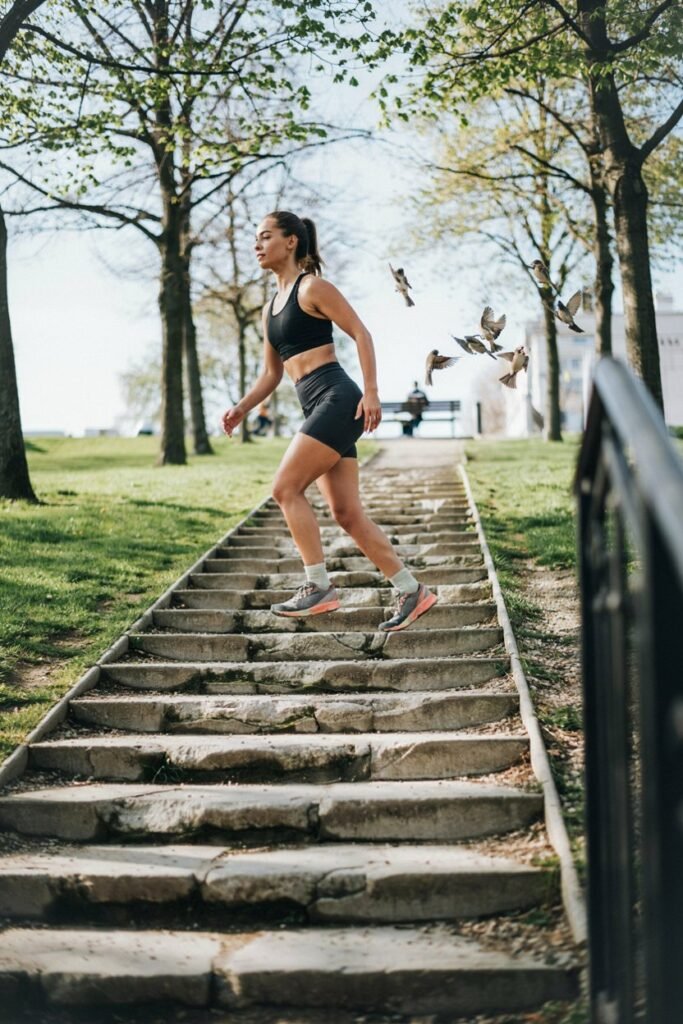
When most people think about strength training, they often picture exercises for the arms, chest, or shoulders.
While upper body workouts certainly have their place, I have found that dedicating time to leg training creates noticeable improvements throughout the entire body.
Your legs contain some of the largest muscle groups, including your quadriceps, hamstrings, glutes, and calves. Training these muscles regularly helps increase overall strength, improve posture, and support better movement during everyday tasks.
One of the biggest benefits I noticed after prioritizing leg workouts was improved endurance. Activities that once felt tiring, such as walking uphill or standing for long periods, became much easier.
Stronger legs also improved my balance, making other exercises feel more stable and controlled.
Regular leg workouts can also help you:
- Build lean muscle throughout the lower body
- Improve overall strength and athletic performance
- Support healthier knees, hips, and ankles
- Increase calorie burn during and after workouts
- Improve balance, coordination, and stability
- Enhance posture by strengthening supporting muscles
- Reduce the risk of common lower body injuries
- Make daily activities feel easier and more comfortable
The key is not simply working harder but training with purpose. Choosing exercises that target multiple muscles while maintaining proper form will deliver better long term results than constantly chasing heavier weights.
What Lean Muscle Really Means
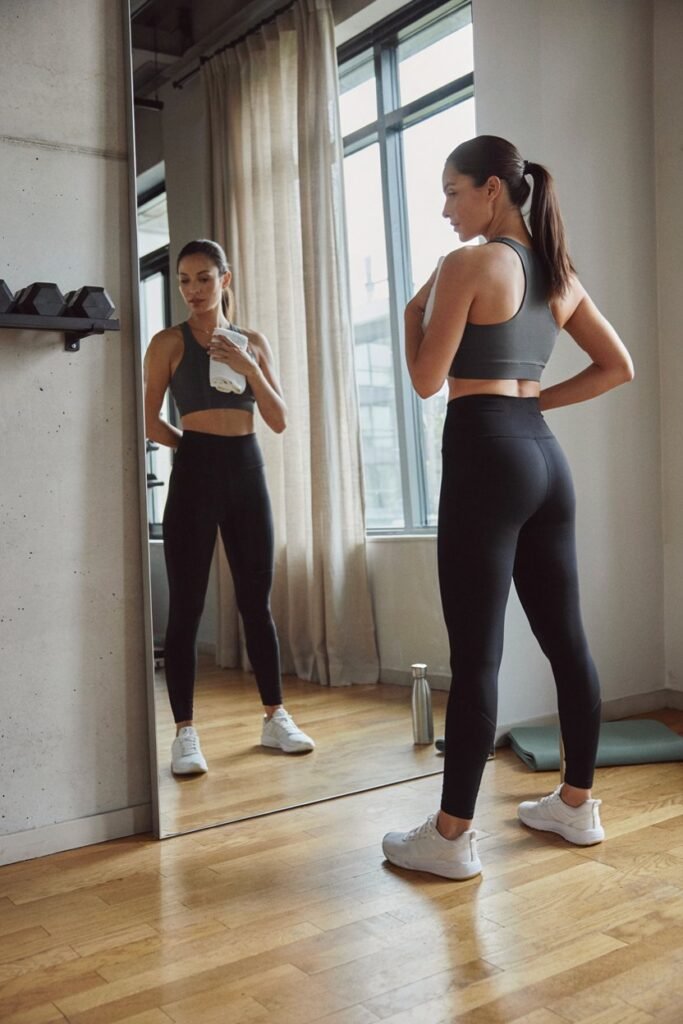
One of the biggest misconceptions I see is the belief that lean muscle and regular muscle are two different things. In reality, muscle tissue is the same.
The difference lies in your body composition. Lean muscle refers to well developed muscles that are visible because they are covered by a lower amount of body fat.
Building lean muscle involves combining resistance training with proper nutrition, recovery, and consistency.
You do not need to perform endless repetitions or spend hours doing cardio. Instead, focus on challenging your muscles with quality movements while giving them enough time to recover and grow.
I also want to point out something that many beginners worry about. Strength training alone will not suddenly make your legs bulky. Building significant muscle size takes years of dedicated training, progressive overload, and a calorie surplus.
For most people, regular leg workouts create stronger, firmer, and more defined legs rather than excessive muscle growth.
Before You Start Your Leg Workout
Before every lower body workout, I spend a few minutes preparing my body instead of jumping straight into heavy exercises.
This small habit has made a noticeable difference in how my workouts feel and how well I recover afterward.
A proper warm up increases blood flow to your muscles, improves joint mobility, and helps reduce the risk of injury.
Even five to ten minutes of preparation can improve your performance during the workout.
Before training your legs, I recommend:
- Walking briskly or cycling for five to ten minutes
- Performing dynamic stretches for the hips and legs
- Activating your glutes with bodyweight exercises
- Practicing bodyweight squats before adding resistance
- Focusing on controlled movement rather than rushing through repetitions
Another lesson I learned was to prioritize proper technique over heavier weights.
Good form allows the correct muscles to do the work while reducing unnecessary strain on your joints.
If your form starts breaking down, reducing the weight is often the smarter choice.
The Best Leg Workouts That Help Build Lean Muscle
1. Squats
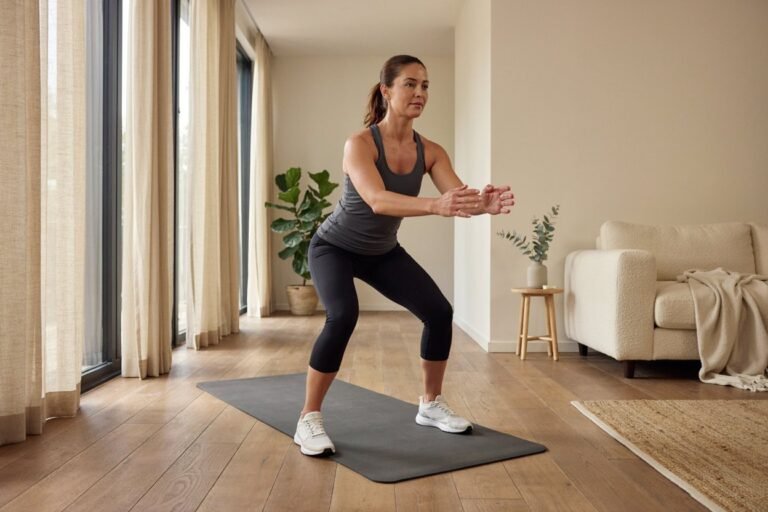
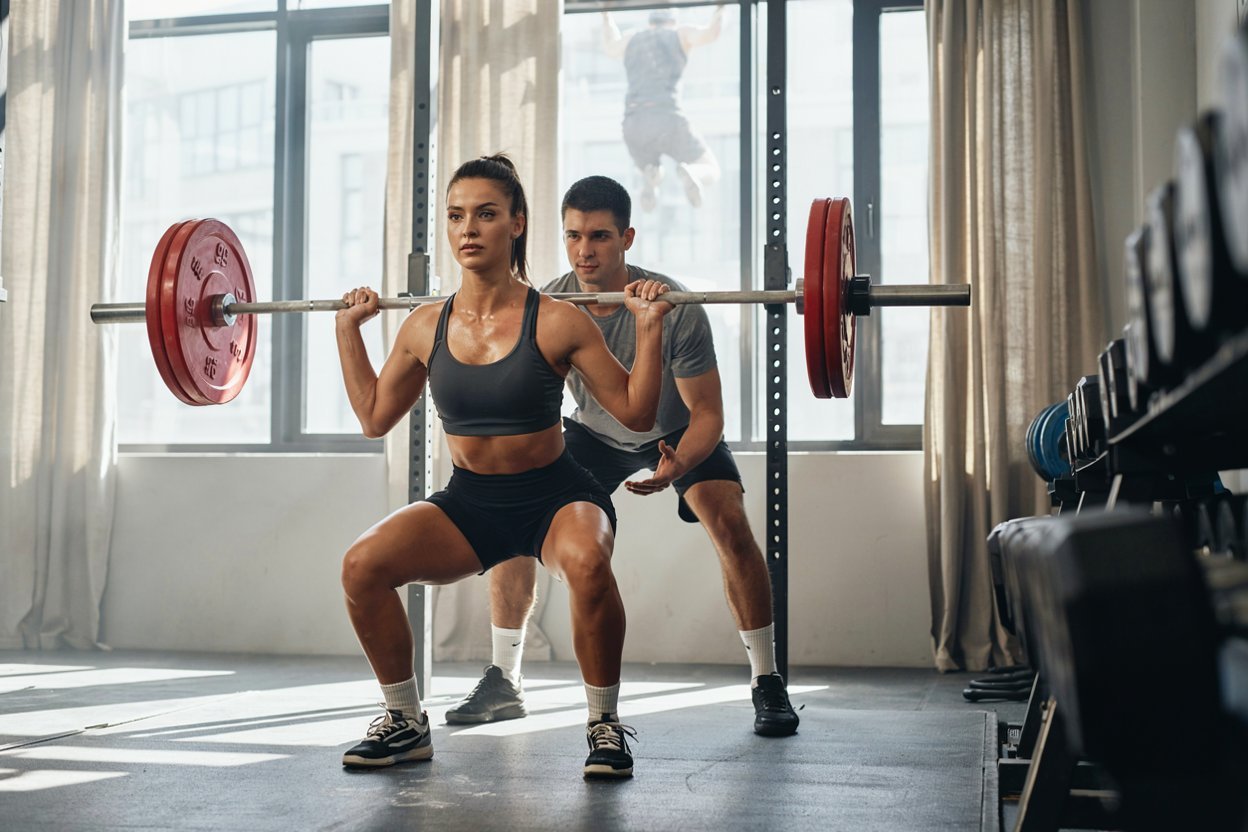
If I had to choose just one lower body exercise, squats would always be at the top of my list.
They challenge multiple muscle groups at the same time, making them one of the most effective exercises for building lean muscle and improving overall strength.
When I first started doing squats, I focused mainly on completing the movement without paying much attention to my technique.
Once I slowed down, improved my depth, and concentrated on maintaining proper posture, I noticed much better muscle engagement in my legs and glutes.
Muscles Worked
- Quadriceps
- Hamstrings
- Glutes
- Core
- Calves
Why Squats Are So Effective
Squats train several large muscle groups at once, making them one of the best compound exercises for increasing strength and muscle definition.
They also improve balance, coordination, and everyday movement patterns like sitting, standing, and lifting.
How to Perform a Proper Squat
- Stand with your feet about shoulder width apart.
- Keep your chest lifted and your core engaged.
- Push your hips back while bending your knees.
- Lower until your thighs are close to parallel with the floor.
- Press through your heels to return to the starting position.
- Repeat using slow and controlled movements.
Common Mistakes to Avoid
- Allowing your knees to collapse inward
- Rounding your lower back
- Lifting your heels off the floor
- Moving too quickly through each repetition
- Cutting the movement short instead of using a comfortable range of motion
Beginner Tip
Start with bodyweight squats until you feel confident with your form. Once the movement feels natural, gradually introduce light dumbbells or a kettlebell while maintaining proper technique.
2. Romanian Deadlifts
Romanian deadlifts completely changed the way I trained my hamstrings and glutes.
Before adding them to my routine, I relied mostly on squats and lunges, but I still felt like the back of my legs was not getting enough attention.
Once I learned the correct hip hinge movement, I noticed better strength, improved flexibility, and more balanced muscle development throughout my lower body.
This exercise is not about lifting the heaviest weight possible.
It is about controlling the movement from start to finish and feeling the stretch through your hamstrings before driving your hips forward to stand.
Muscles Worked
- Hamstrings
- Glutes
- Lower back
- Core
- Forearms
Why Romanian Deadlifts Are Effective
Romanian deadlifts strengthen the entire posterior chain, which is essential for better posture, improved athletic performance, and balanced leg development. They also help support healthy knees by strengthening the muscles surrounding the joint.
How to Perform Romanian Deadlifts
- Stand with your feet hip width apart while holding a pair of dumbbells or a barbell.
- Keep your knees slightly bent throughout the movement.
- Push your hips backward while lowering the weight close to your legs.
- Lower until you feel a comfortable stretch in your hamstrings.
- Drive your hips forward while squeezing your glutes to return to standing.
- Keep your back straight and your core engaged throughout the exercise.
Common Mistakes to Avoid
- Rounding your back
- Bending your knees too much
- Lowering the weight too far
- Looking down instead of keeping your neck neutral
- Rushing through each repetition
Beginner Tip
Practice the hip hinge movement without weights before progressing to dumbbells.
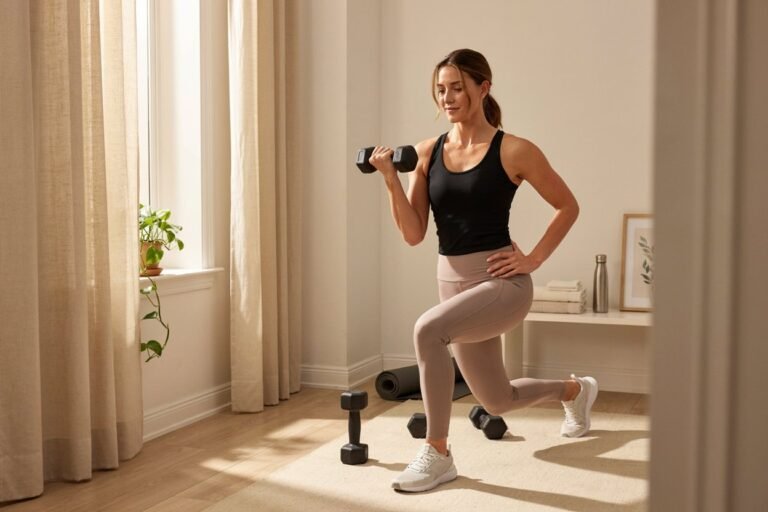
3. Walking Lunges
Walking lunges are one of those exercises that seem simple until you actually perform them correctly.
Every time I include them in my workouts, they challenge my balance, coordination, and leg strength all at once.
They also help correct muscle imbalances because each leg works independently.
I enjoy adding walking lunges toward the middle of my workout when my muscles are already warmed up.
They always leave my legs feeling like they have worked hard without requiring extremely heavy weights.
Muscles Worked
- Quadriceps
- Glutes
- Hamstrings
- Calves
- Core
Why Walking Lunges Are Effective
Walking lunges improve balance while strengthening each leg individually. They also develop coordination and functional strength that carries over into daily activities.
How to Perform Walking Lunges
- Stand tall with your feet together.
- Step forward with one leg.
- Lower until both knees form roughly ninety degree angles.
- Push through your front heel to step forward with the opposite leg.
- Continue alternating sides while maintaining good posture.
Common Mistakes to Avoid
- Taking steps that are too short
- Leaning too far forward
- Allowing the front knee to move excessively inward
- Losing balance by rushing the movement
Beginner Tip
Perform stationary lunges before progressing to walking lunges.
4. Bulgarian Split Squats
I will be honest. Bulgarian split squats have never been my favorite exercise, but they are one of the most effective.
Every time I include them consistently, I notice improvements in strength, stability, and muscle definition.
Since each leg works separately, this exercise quickly highlights strength differences between your left and right side.
Improving those imbalances has helped me feel stronger during squats, deadlifts, and even while walking uphill.
Muscles Worked
- Quadriceps
- Glutes
- Hamstrings
- Core
Why Bulgarian Split Squats Are Effective
This exercise develops single leg strength while improving balance and coordination.
It also places a greater challenge on your stabilizing muscles than many traditional lower body exercises.
How to Perform Bulgarian Split Squats
- Stand a few feet in front of a bench.
- Place one foot behind you on the bench.
- Keep your chest upright.
- Lower your body until your front thigh is almost parallel with the floor.
- Push through your front heel to return to standing.
- Complete all repetitions before switching legs.
Common Mistakes to Avoid
- Standing too close to the bench
- Leaning excessively forward
- Pushing off with the back leg
- Allowing the front knee to collapse inward
Beginner Tip
Use only your body weight until your balance improves.
5. Hip Thrusts
Hip thrusts became one of my favorite exercises because they isolate the glutes more effectively than many traditional leg movements.
I also noticed that stronger glutes improved my posture and made other exercises feel easier.
Instead of rushing through each repetition, I focus on squeezing my glutes at the top of the movement for a second before lowering back down.
Muscles Worked
- Glutes
- Hamstrings
- Core
Why Hip Thrusts Are Effective
Hip thrusts build lower body strength while improving hip stability.
They are especially useful for anyone who spends long hours sitting during the day.
How to Perform Hip Thrusts
- Rest your upper back against a sturdy bench.
- Bend your knees and place your feet flat on the floor.
- Drive through your heels while lifting your hips upward.
- Squeeze your glutes at the top.
- Lower your hips slowly and repeat.
Common Mistakes to Avoid
- Hyperextending your lower back
- Placing your feet too far away
- Dropping your hips too quickly
- Looking upward instead of keeping your neck neutral
Beginner Tip
Master bodyweight hip thrusts before adding resistance.
6. Step Ups
Step ups may not receive as much attention as squats or lunges, but they deserve a place in almost every leg workout.
I often include them when I want to improve balance while strengthening each leg independently.
This movement also feels very practical because it mimics climbing stairs, hiking, and stepping onto elevated surfaces during everyday life.
Muscles Worked
- Quadriceps
- Glutes
- Hamstrings
- Calves
Why Step Ups Are Effective
Step ups improve lower body strength, coordination, and stability while placing less stress on the joints than some heavier compound exercises.
How to Perform Step Ups
- Stand facing a sturdy bench or step.
- Place one foot firmly on the platform.
- Push through your heel to lift your body upward.
- Bring your opposite foot onto the platform.
- Step back down with control.
- Repeat before switching legs.
Common Mistakes to Avoid
- Using momentum instead of leg strength
- Pushing off the floor too much
- Choosing a platform that is too high
- Losing balance by rushing the movement
Beginner Tip
Start with a low platform and focus on slow, controlled repetitions before increasing the height or adding weights.
7. Goblet Squats
Goblet squats are one of the exercises I still come back to, even after trying more advanced variations.
Holding a single dumbbell close to your chest naturally encourages better posture, making this a great option for beginners and experienced lifters alike.
Whenever I feel my squat technique needs a reset, I spend a few weeks incorporating goblet squats into my routine, and they always help me improve my depth and control.
Muscles Worked
- Quadriceps
- Glutes
- Hamstrings
- Core
- Calves
Why Goblet Squats Are Effective
Goblet squats strengthen the entire lower body while improving posture and squat mechanics.
They are easier to learn than barbell squats and still provide an excellent challenge.
How to Perform Goblet Squats
- Hold a dumbbell vertically against your chest.
- Stand with your feet about shoulder width apart.
- Brace your core and keep your chest lifted.
- Lower into a squat until your thighs are close to parallel with the floor.
- Push through your heels to stand back up.
- Repeat using slow, controlled movements.
Common Mistakes to Avoid
- Letting the dumbbell drift away from your chest
- Rounding your back
- Allowing your knees to collapse inward
- Standing up too quickly without control
Beginner Tip
Use a light dumbbell while learning proper technique before gradually increasing the weight.
8. Leg Press
The leg press is an excellent exercise when I want to challenge my legs without placing a heavy load on my back.
Although it should never replace compound movements like squats, it is a valuable addition to a balanced lower body workout.
I like using the leg press near the end of my session because my muscles are already fatigued, allowing me to safely increase training volume without compromising my form.
Muscles Worked
- Quadriceps
- Glutes
- Hamstrings
- Calves
Why the Leg Press Is Effective
The leg press allows you to progressively overload your leg muscles while providing additional stability.
It is especially useful for beginners who are still building confidence with free weight exercises.
How to Perform the Leg Press
- Sit comfortably in the machine with your back supported.
- Position your feet about shoulder width apart on the platform.
- Release the safety handles.
- Lower the platform until your knees reach a comfortable bend.
- Press through your heels to return to the starting position.
- Keep the movement smooth and controlled.
Common Mistakes to Avoid
- Locking your knees completely
- Lowering the platform too far
- Lifting your hips off the seat
- Using excessive weight at the expense of proper form
Beginner Tip
Choose a manageable weight that allows you to complete every repetition with full control.
9. Calf Raises
Calf raises are often overlooked, but I have learned that strong calves contribute to better balance, stability, and overall lower body strength.
They also improve performance during walking, running, hiking, and jumping activities.
Because calf muscles recover fairly quickly, I usually include a few sets at the end of every leg workout.
Muscles Worked
- Gastrocnemius
- Soleus
Why Calf Raises Are Effective
Calf raises strengthen the lower leg while improving ankle stability and supporting better movement during everyday activities and sports.
How to Perform Calf Raises
- Stand with your feet hip width apart.
- Slowly raise your heels until you are standing on your toes.
- Pause briefly at the top.
- Lower your heels with control.
- Repeat without bouncing.
Common Mistakes to Avoid
- Rushing through repetitions
- Using momentum
- Not lowering your heels completely
- Leaning too far forward
Beginner Tip
Hold onto a sturdy surface for balance until you feel comfortable performing the movement independently.
Leg Workout Comparison Table
| Exercise | Primary Muscles Worked | Difficulty | Best For | Equipment Needed | Recommended Reps |
|---|---|---|---|---|---|
| Squats | Quadriceps, Glutes, Hamstrings, Core, Calves | Beginner | Overall leg strength and muscle growth | Bodyweight, Dumbbells, Barbell | 8 to 12 |
| Romanian Deadlifts | Hamstrings, Glutes, Lower Back, Core | Intermediate | Building the posterior chain and improving hip strength | Dumbbells or Barbell | 8 to 12 |
| Walking Lunges | Quadriceps, Glutes, Hamstrings, Calves | Beginner to Intermediate | Improving balance, coordination, and single leg strength | Bodyweight or Dumbbells | 10 to 12 per leg |
| Bulgarian Split Squats | Quadriceps, Glutes, Hamstrings, Core | Intermediate | Correcting muscle imbalances and increasing stability | Bench and Dumbbells | 8 to 10 per leg |
| Hip Thrusts | Glutes, Hamstrings, Core | Beginner | Glute development and hip strength | Bench, Bodyweight, Barbell | 10 to 15 |
| Step Ups | Quadriceps, Glutes, Hamstrings, Calves | Beginner | Functional strength and balance | Sturdy Bench or Box, Optional Dumbbells | 10 to 12 per leg |
| Goblet Squats | Quadriceps, Glutes, Hamstrings, Core | Beginner | Learning proper squat form and full body stability | Dumbbell or Kettlebell | 10 to 15 |
| Leg Press | Quadriceps, Glutes, Hamstrings, Calves | Beginner | Building lower body strength with machine support | Leg Press Machine | 10 to 15 |
| Calf Raises | Gastrocnemius, Soleus | Beginner | Strengthening calves and improving ankle stability | Bodyweight or Dumbbells | 15 to 20 |
Quick Guide to Choosing the Right Exercise
| Goal | Best Exercise |
|---|---|
| Build overall leg muscle | Squats |
| Strengthen hamstrings | Romanian Deadlifts |
| Grow stronger glutes | Hip Thrusts |
| Improve balance | Walking Lunges |
| Correct left and right leg strength differences | Bulgarian Split Squats |
| Learn proper squat technique | Goblet Squats |
| Train with less stress on the back | Leg Press |
| Improve functional everyday strength | Step Ups |
| Build stronger calves | Calf Raises |
Sample Weekly Leg Workout Routine
One thing that has helped me stay consistent is following a simple routine instead of changing exercises every week.
Keeping the same foundation for several weeks makes it much easier to measure progress and improve technique.
Day One
- Squats, 3 sets of 8 to 10 repetitions
- Romanian Deadlifts, 3 sets of 10 repetitions
- Walking Lunges, 3 sets of 12 repetitions per leg
- Calf Raises, 3 sets of 15 repetitions
Day Two
- Bulgarian Split Squats, 3 sets of 10 repetitions per leg
- Hip Thrusts, 3 sets of 12 repetitions
- Goblet Squats, 3 sets of 12 repetitions
- Step Ups, 3 sets of 10 repetitions per leg
Allow at least one or two days between leg workouts so your muscles have enough time to recover.
Nutrition Tips for Building Lean Muscle
Exercise is only part of the process. I noticed better results once I started paying more attention to what I ate after training.
Recovery became easier, my workouts improved, and I felt stronger from week to week.
To support lean muscle growth, focus on:
- Eating enough protein throughout the day
- Including complex carbohydrates for energy
- Choosing healthy fats as part of balanced meals
- Drinking plenty of water before and after workouts
- Eating a nutritious meal within a couple of hours after training
There is no need for complicated diets. Consistency with balanced meals will always have a greater impact than following restrictive eating plans for a short period.
Recovery Matters Just as Much as Training
One lesson I learned was that muscles grow during recovery, not while you are exercising. Giving your body time to repair is just as important as completing your workouts.
I try to prioritize recovery by:
- Sleeping seven to nine hours each night
- Stretching after every workout
- Walking or performing light activity on rest days
- Avoiding training through pain
- Gradually increasing workout intensity instead of rushing progress
These habits have helped me stay consistent while reducing soreness and preventing unnecessary injuries.
Common Mistakes That Can Slow Your Progress
Even a great workout routine will not deliver the best results if a few common mistakes keep getting in the way.
Some of the biggest mistakes include:
- Skipping your warm up
- Using weights that are too heavy
- Sacrificing proper form
- Ignoring recovery days
- Eating too little protein
- Changing your workout routine every week
- Expecting immediate results
- Comparing your progress with others
Progress takes time. Staying patient and consistent will always produce better long term results than trying to rush the process.
Frequently Asked Questions
How many times should I train my legs each week?
For most people, training legs two times each week provides enough stimulus for building lean muscle while allowing adequate recovery.
Can beginners build lean muscle with bodyweight exercises?
Yes. Bodyweight squats, lunges, step ups, and glute bridges are excellent starting points. As your strength improves, you can gradually add resistance.
Will lifting weights make my legs bulky?
Not for most people. Building significant muscle size requires years of dedicated training, progressive overload, and eating in a calorie surplus.
Most people will simply develop stronger, firmer, and more defined legs.
How long does it take to notice results?
Everyone progresses differently, but with consistent workouts, proper nutrition, and adequate recovery, many people begin noticing improvements in strength within a few weeks, while visible muscle definition often develops over several months.
Should I do cardio on leg day?
Yes, but keep it moderate if your main goal is building lean muscle. A short walk, light cycling, or a brief warm up before strength training usually works well.
Final Thoughts
Building lean muscle in your legs does not require complicated workout programs or spending countless hours in the gym.
What has made the biggest difference for me is sticking to the basics, focusing on good form, and staying patient enough to let progress happen over time.
Some workouts feel easier than others, but every session contributes to becoming a little stronger.
If you are just getting started, choose a few of these exercises and perform them consistently instead of trying to master everything at once.
As your strength improves, gradually increase the challenge while continuing to prioritize proper technique and recovery.
Small improvements each week add up, and before long you will notice stronger, more defined legs that support you not only during workouts but in everyday life as well.