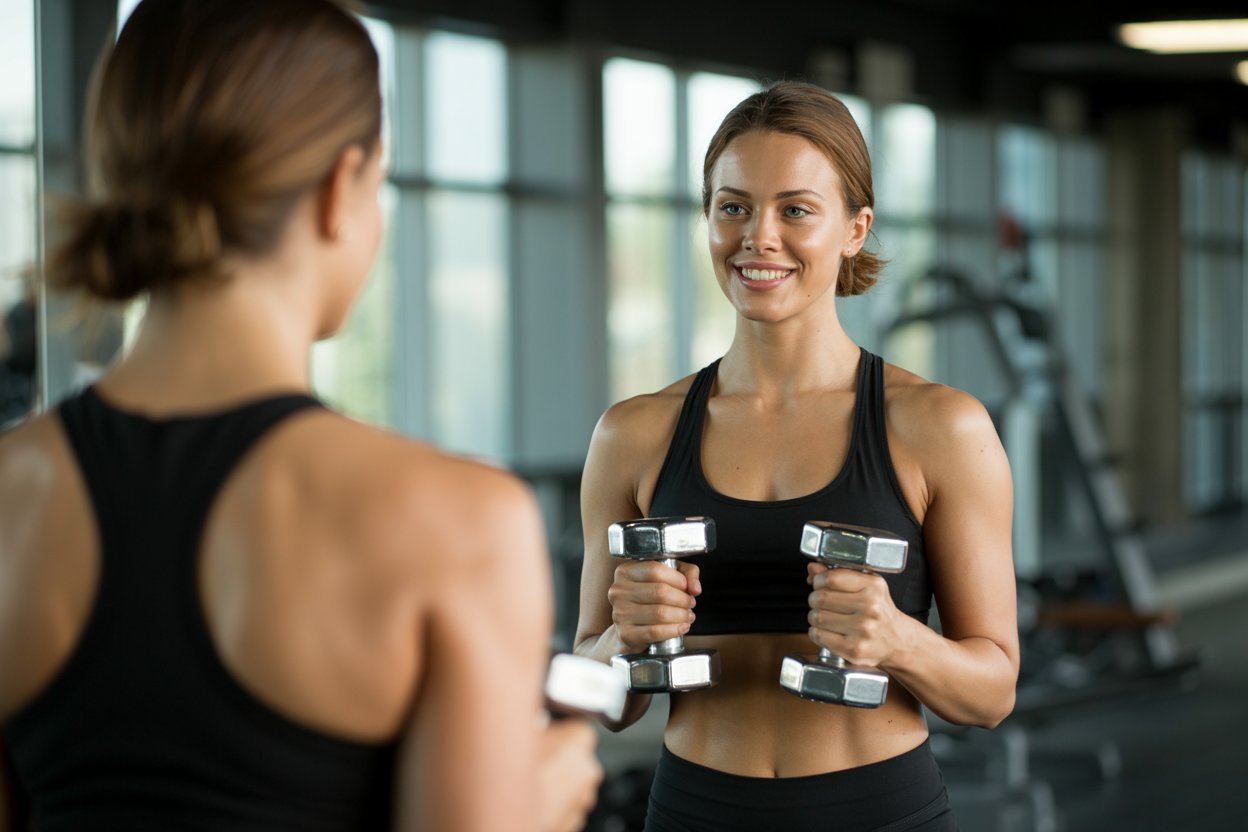
If you’ve just started going to the gym, I want you to know something first. You don’t need complicated machines, fancy routines, or hours of training to get results.
When I first started lifting, I honestly felt a bit overwhelmed walking into the weights area.
Dumbbells everywhere, people doing intense routines, and me just trying to figure out what to do without looking lost. If that’s you right now, this guide will make things simple.
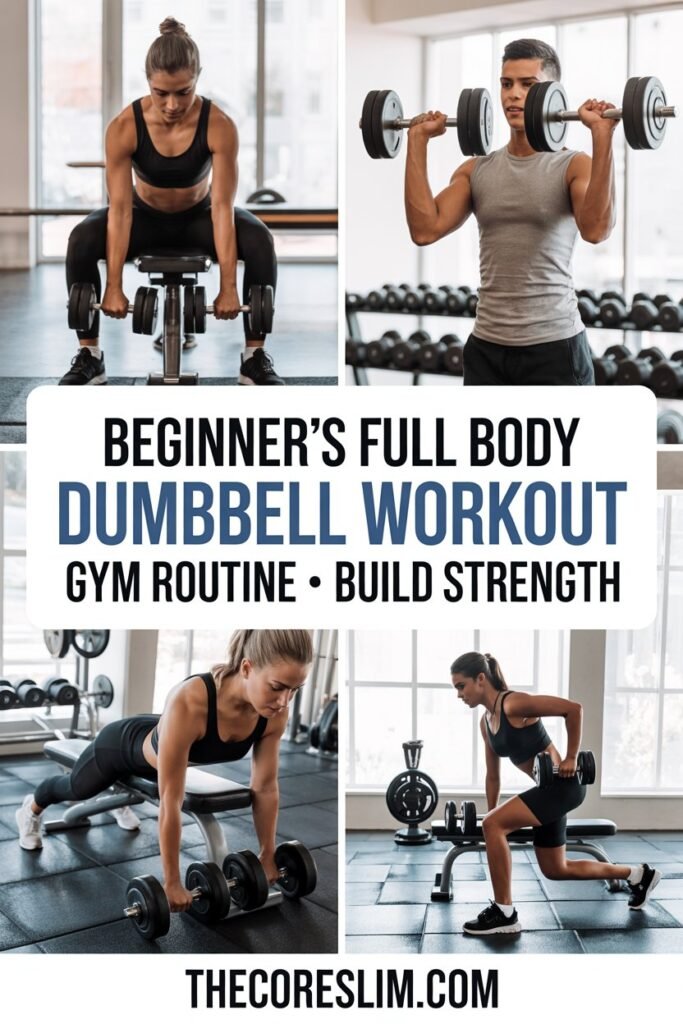
This beginner full body dumbbell workout is designed to help you build strength, improve confidence, and train your entire body in one session.
You will not be guessing what to do next. You will have a clear plan.
Let’s break it down step by step.
Why Dumbbells Are Perfect for Beginners
Dumbbells are one of the best tools you can use when you are just starting out in the gym. They are simple, versatile, and very effective for building strength evenly.
Here is why I always recommend starting with dumbbells:
- You learn proper movement patterns faster
- Each side of your body works independently
- You improve balance and coordination
- You reduce the risk of relying too much on one side
- They are beginner friendly and easy to control
When I started, machines felt safer at first, but dumbbells actually helped me improve faster because I had to focus on control, not just pushing weight.
How This Workout Is Structured
This is a full body workout, meaning you will train:
- Legs
- Glutes
- Chest
- Back
- Shoulders
- Arms
- Core
You will do this in one session, ideally 2 to 3 times per week with rest days in between.
Each exercise is simple and focused on learning good form first, not lifting heavy.
Warm Up (Do This Before Every Workout)
Never skip this. I learned the hard way that warming up properly makes your workout smoother and reduces soreness.
Spend 5 to 10 minutes on:
- Light treadmill walk or cycling
- Arm circles
- Hip circles
- Bodyweight squats
- Shoulder rolls
You should feel warm, not tired.
Full Body Dumbbell Workout for Beginners
Do each exercise slowly and with control. Rest 60 to 90 seconds between sets.
1. Dumbbell Goblet Squat (Legs + Glutes)
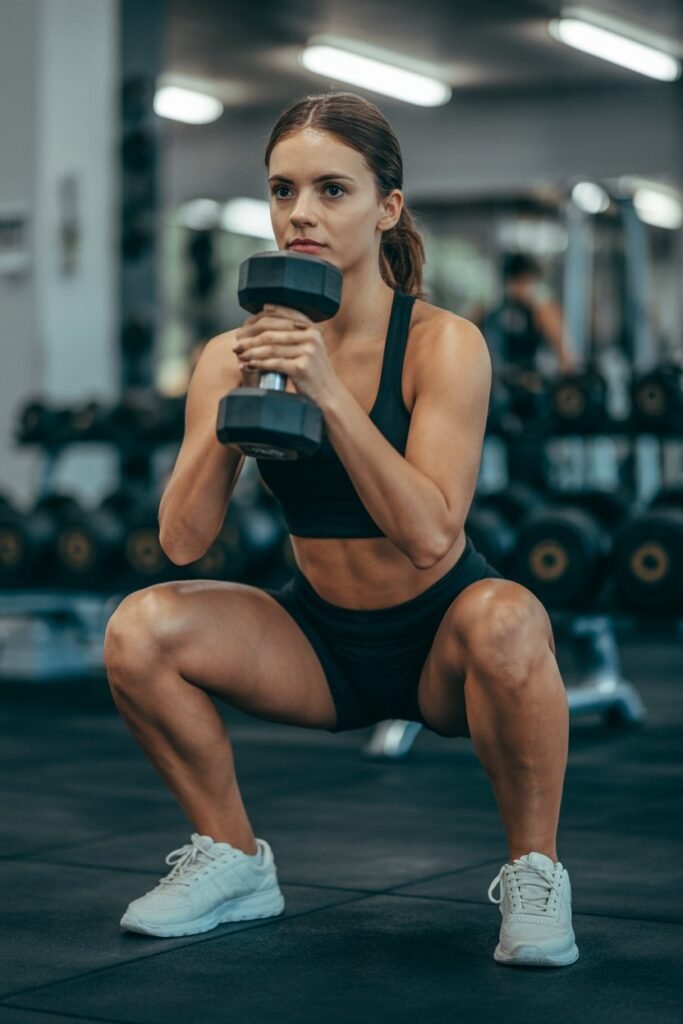
Goblet Squat focuses on quads, glutes, and core stability
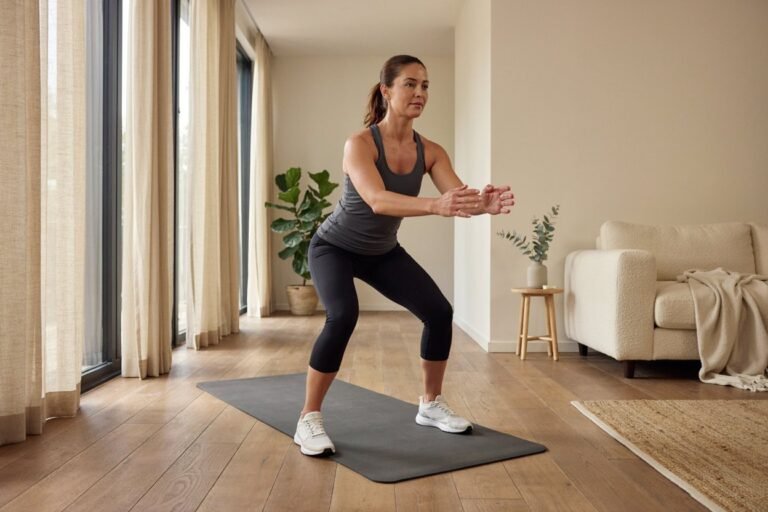
Hold one dumbbell close to your chest and squat down like you are sitting into a chair.
How to do it:
- Stand with feet shoulder-width apart
- Hold dumbbell at chest level
- Lower yourself slowly
- Keep chest up and back straight
- Push through heels to stand
Sets: 3
Reps: 10–12
When I first did this, my legs shook a little. That’s normal. It means it’s working.
2. Dumbbell Romanian Deadlift (Hamstrings + Glutes)
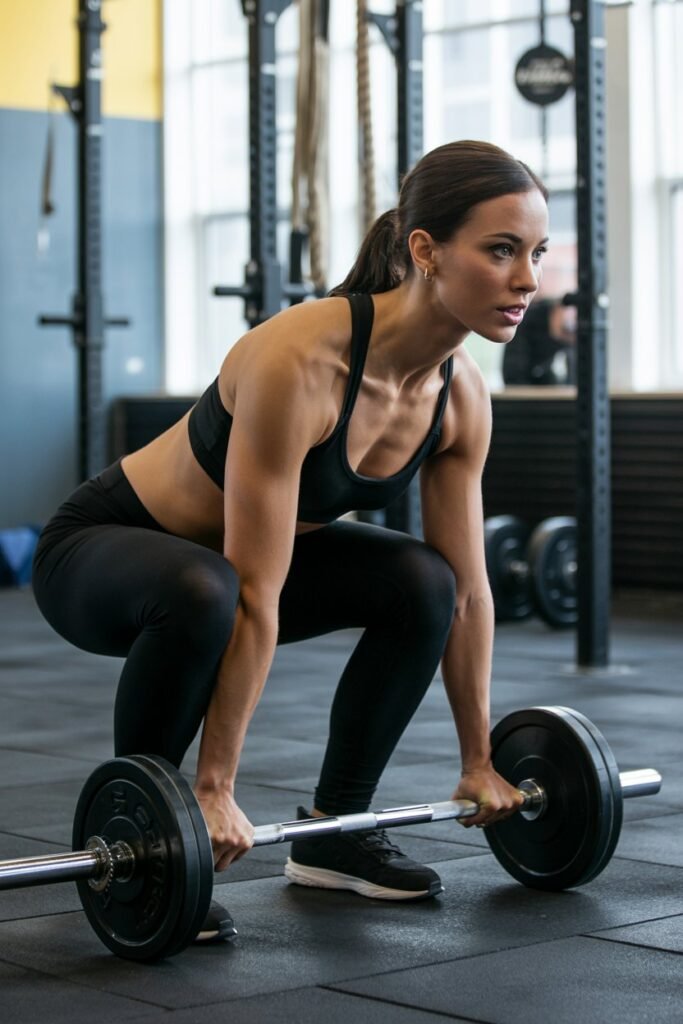
This move teaches you how to build strong, stable legs and a powerful back.
How to do it:
- Hold dumbbells in front of thighs
- Keep knees slightly bent
- Push hips back slowly
- Lower weights along your legs
- Return to standing by squeezing glutes
Sets: 3
Reps: 10–12
Tip: Think “hips back,” not “bend down.”
3. Dumbbell Bench Press (Chest + Triceps)
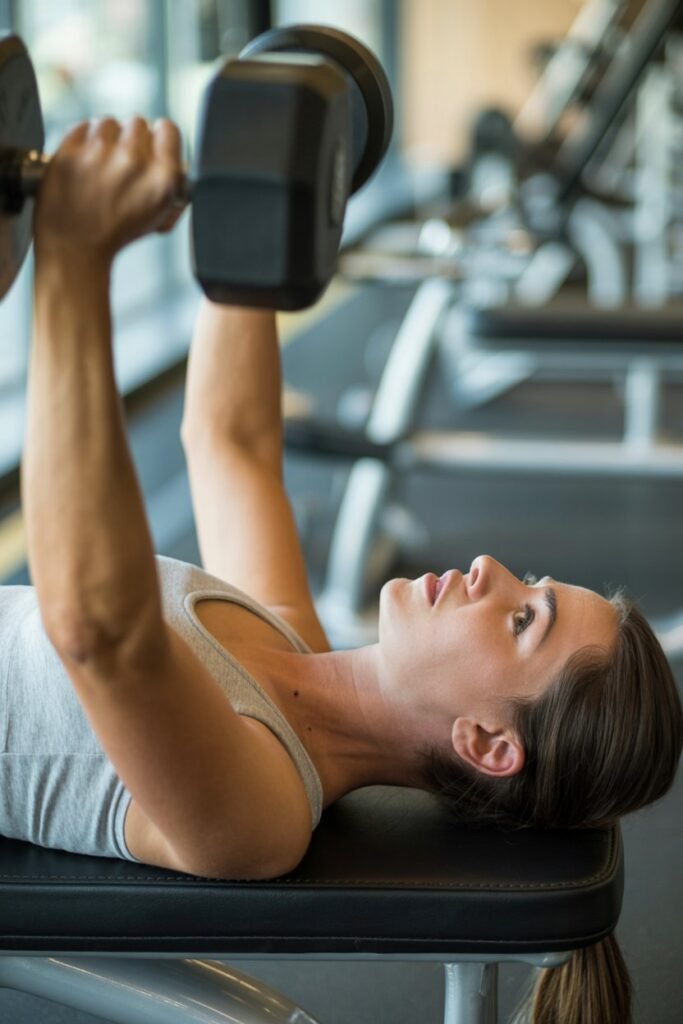
Dumbbell Bench Press builds chest strength and upper body pushing power
If there’s one exercise that made me feel stronger quickly, it was this.
How to do it:
- Lie on a bench holding dumbbells
- Press weights up above your chest
- Lower slowly until elbows are slightly below shoulders
- Push back up
Sets: 3
Reps: 8–12
Start light. Control matters more than weight.
4. One-Arm Dumbbell Row (Back + Biceps)
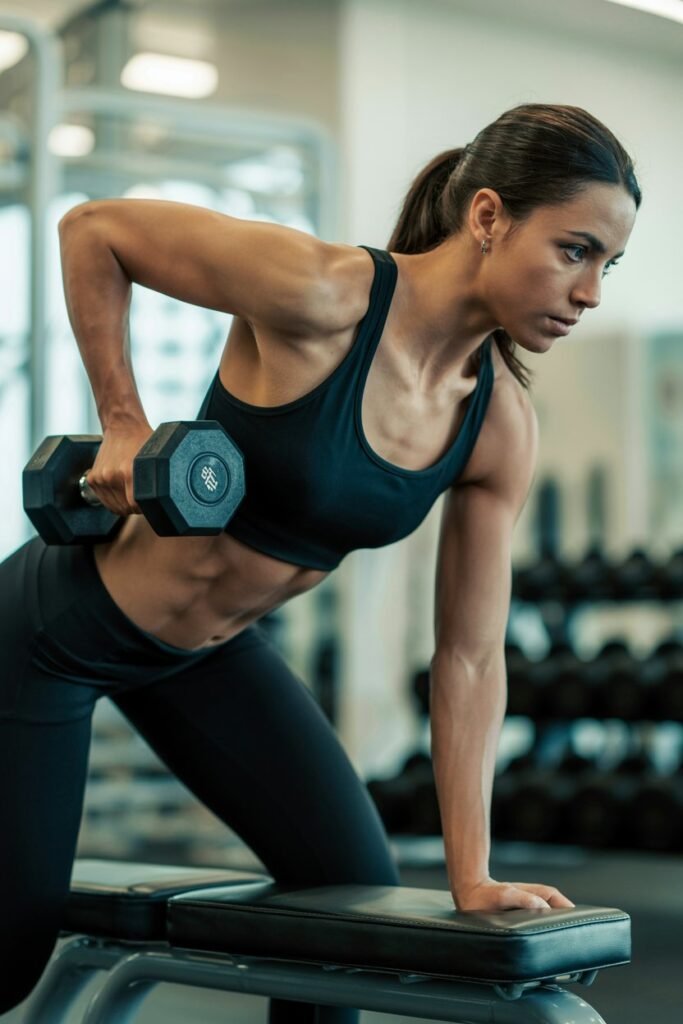
This helps build a strong back and improves posture, especially if you sit a lot.
How to do it:
- Place one knee and hand on a bench
- Hold dumbbell in the other hand
- Pull weight toward your waist
- Lower slowly
Sets: 3
Reps: 10 each side
I noticed my posture improved within a few weeks of doing this consistently.
5. Dumbbell Shoulder Press (Shoulders)
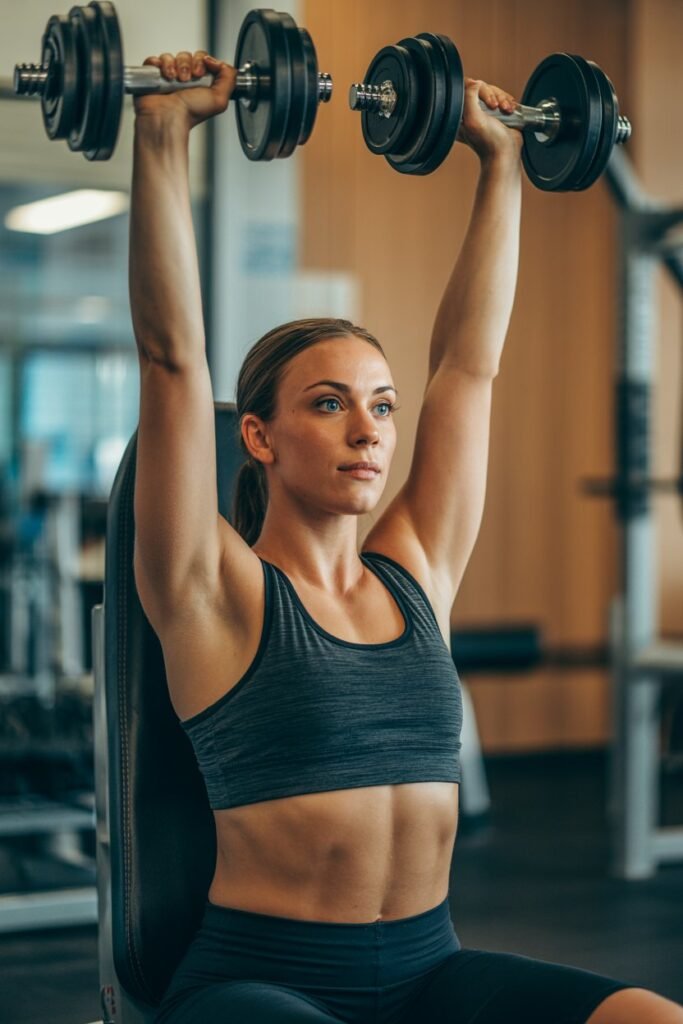
Shoulder Press strengthens deltoids and upper pushing strength
This move builds strong, defined shoulders.
How to do it:
- Sit or stand holding dumbbells at shoulder level
- Press weights upward
- Lower slowly back to starting position
Sets: 3
Reps: 8–12
Keep your core tight so you don’t lean back.
6. Dumbbell Bicep Curls (Arms)
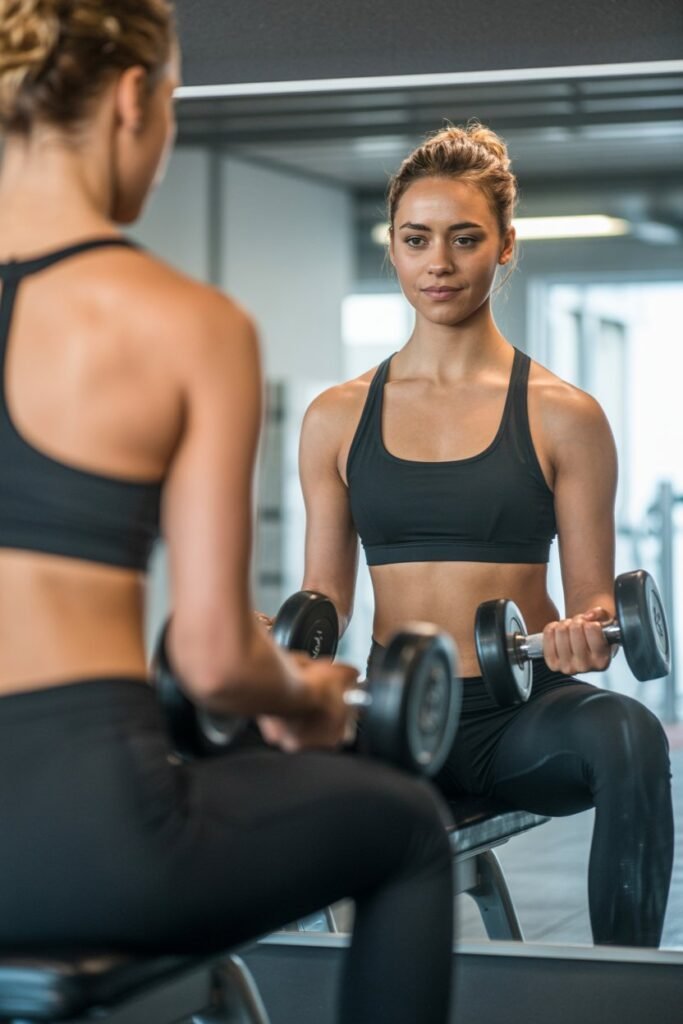
Simple but very effective for arm strength.
How to do it:
- Hold dumbbells by your sides
- Curl weights up toward shoulders
- Lower slowly
Sets: 3
Reps: 10–12
Don’t swing your body. Slow and controlled wins.
7. Dumbbell Tricep Extensions (Arms)
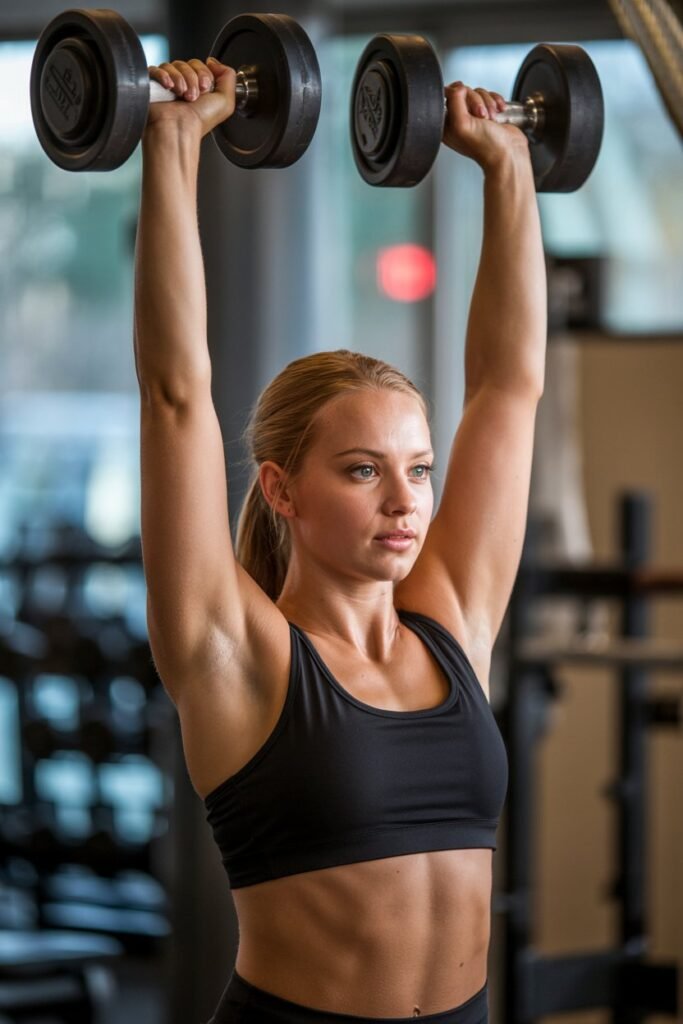
Tricep Extensions target the back of the arm for strength and definition
This helps balance your arm development.
How to do it:
- Hold one dumbbell overhead
- Lower it behind your head
- Extend arms back up
Sets: 3
Reps: 10–12
Core Finisher (Optional but Recommended)
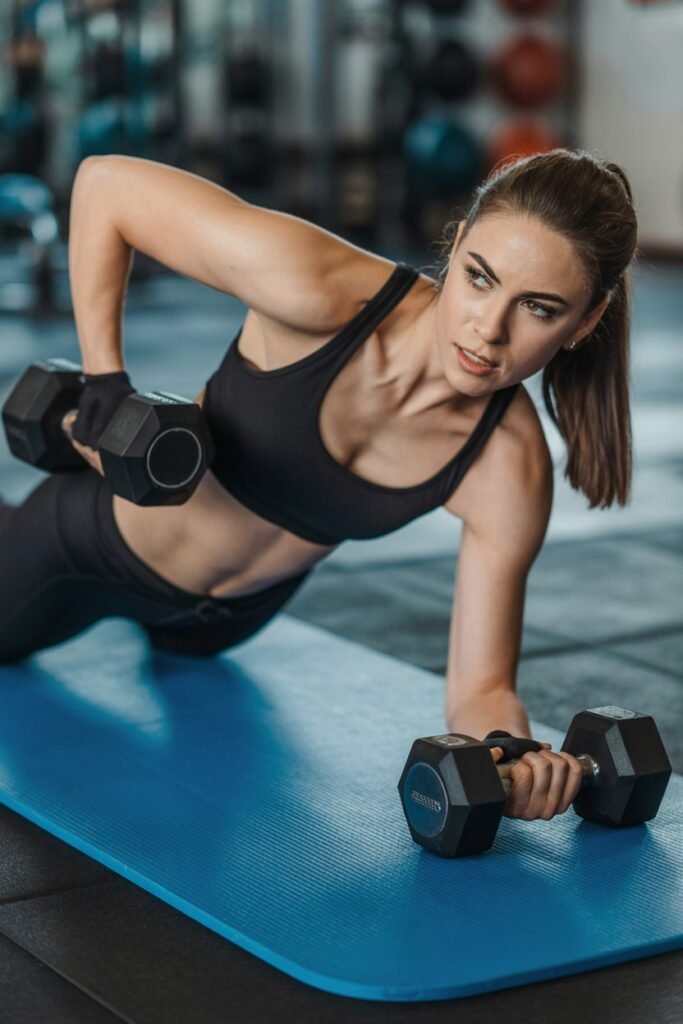
Dumbbell Russian Twists
- Sit on the floor
- Hold one dumbbell
- Twist side to side
Sets: 2
Reps: 20 total twists
This strengthens your core and improves stability.
How Heavy Should You Lift?
This is where most beginners get confused.
Use a weight that feels challenging but still allows you to complete all reps with good form.
A simple rule I used:
- Last 2 reps should feel difficult
- But you should not lose form
If your form breaks, the weight is too heavy.
How Often Should You Do This Workout?
For best results:
- 2 to 3 times per week
- At least 1 rest day between sessions
- Combine with light walking or cardio on off days
Your body grows when you rest, not just when you train.
What to Expect as a Beginner
In the first week, you might feel sore. That is completely normal. I remember struggling to sit down properly after leg day.
After 2 to 3 weeks, you will notice:
- Better strength
- Easier movement
- Improved confidence in the gym
- Less fatigue during workouts
The key is consistency, not perfection.
How to Progress This Beginner Dumbbell Workout (This Is Where Real Results Happen)
Most beginners start strong, then get stuck because they keep repeating the same weights and reps for weeks without a plan. I did the same thing when I started. I thought just showing up was enough, but my progress slowed down fast.
The truth is simple. Your body only changes when you gradually challenge it.
This is called progressive overload, and it is the key to getting stronger, leaner, and more toned over time.
Progressive Overload (Simple Explanation)
Progressive Overload = Gradually increasing weight, reps, or difficulty over time
You do not need to change everything at once. You only need small improvements.
Here are the easiest ways to apply it:
- Increase weight slightly when reps feel easy
- Add 1 to 2 extra reps per set
- Slow down your movements for more tension
- Add an extra set after a few weeks
- Improve your form and range of motion
Even small changes count. I remember going from 5kg dumbbells to 7.5kg and feeling like it was a huge achievement.
4-Week Beginner Progress Plan
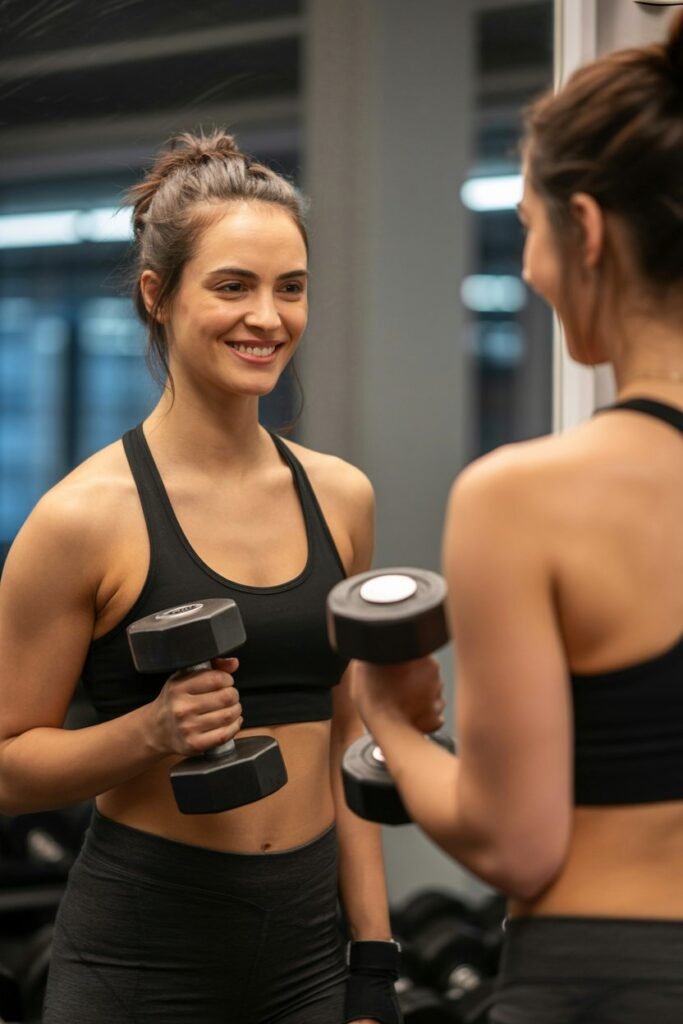
If you want structure, follow this simple plan:
Week 1
- Learn all exercises
- Focus on form only
- Use light weights
Week 2
- Keep same weights
- Try to improve control and stability
- Add 1 extra rep if possible
Week 3
- Increase weight slightly (if form is solid)
- Keep reps the same
Week 4
- Add an extra set to 1–2 exercises
- Or increase reps by 2
Do not rush this process. Most people quit right before they start seeing results.
Common Beginner Mistakes (Avoid These)
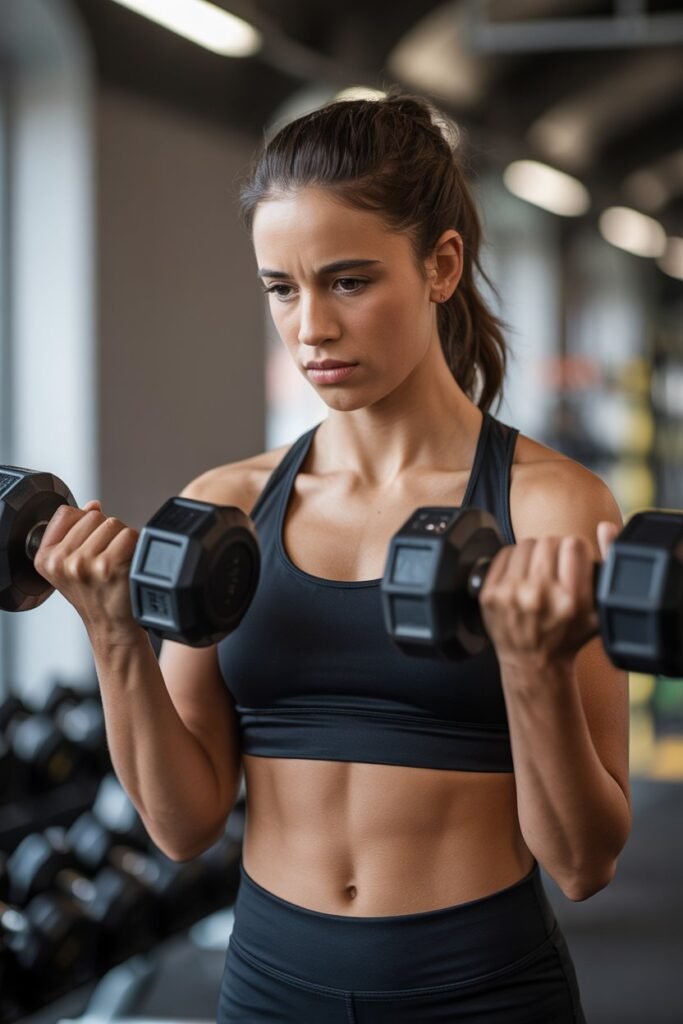
When I look back at my early gym days, I made almost all of these mistakes. Fixing them made my progress much faster.
1. Using Too Much Weight Too Early
Lifting heavy before you are ready leads to poor form and slow progress.
2. Skipping Warm-Ups
Cold muscles = higher risk of injury and weaker performance.
3. Rushing Reps
Fast reps reduce muscle engagement. Slow control builds strength.
4. Not Resting Enough
Rest is when your muscles actually grow.
5. Changing Workouts Too Often
Stick to this plan for at least 4 to 6 weeks.
How to Eat as a Beginner (Simple Guidance)
You do not need a complicated diet. You just need consistency and balance.
Here is what I personally focused on when I started:
Protein Sources
- Eggs
- Chicken
- Fish
- Beans
- Greek yogurt
Healthy Carbs (Energy for workouts)
- Rice
- Potatoes
- Oats
- Whole grain bread
Healthy Fats
- Avocado
- Nuts
- Olive oil
Simple Rule I Used:
Try to include protein in every meal.
If Your Goal Is Fat Loss
- Stay in a small calorie deficit
- Keep protein high
- Add 20 to 30 minutes of walking on rest days
- Do not skip strength training
If Your Goal Is Muscle Gain
- Eat slightly more calories than usual
- Increase protein intake
- Train consistently 2 to 3 times per week
- Prioritize sleep
How to Know You Are Making Progress
A lot of beginners expect instant changes in the mirror, but progress shows up in different ways first.
Look for these signs:
- Weights feel easier over time
- You recover faster after workouts
- You feel more stable during exercises
- Your posture improves
- You have more energy overall
When I started noticing these changes, I realized progress was already happening before my body even looked different.
Gym Confidence Tips (This Helped Me a Lot)
I used to feel nervous in the gym, especially around experienced lifters. Here is what helped me stay consistent:
- Stick to a simple plan (like this one)
- Go at off-peak hours if possible
- Focus on your workout, not others
- Bring headphones and stay in your zone
- Remember everyone started as a beginner
Nobody is judging you as much as you think.
When You Should Increase Weight
Use this simple guide:
- If you can complete all reps easily
- And still feel like you could do more
- Then it is time to increase weight
But increase slowly. Even a small jump matters.
Simple Weekly Schedule Example
- Monday: Full Body Dumbbell Workout
- Tuesday: Light walk or rest
- Wednesday: Full Body Dumbbell Workout
- Thursday: Rest or light cardio
- Friday: Full Body Dumbbell Workout
- Weekend: Rest or active recovery
FAQ (Quick Answers)
How many days a week should beginners do this workout?
2 to 3 times per week with rest days in between.
How long should each workout take?
About 45 to 70 minutes including warm-up.
What weight should I start with?
Light to moderate weight that lets you finish all reps with good form.
Can I lose weight with this workout?
Yes, especially when combined with a healthy calorie-controlled diet.
Can I build muscle as a beginner?
Yes, dumbbells are enough if you train consistently and increase weight over time.
Should I feel sore after every workout?
Not always. Progress matters more than soreness.
When will I see results?
Strength in 1 to 2 weeks, visible changes in 4 to 8 weeks.
Do I need supplements?
No, focus on food, training, and rest first.
Final Thoughts (From My Own Experience)
Starting the gym can feel confusing at first, but it does not have to stay that way.
When I finally committed to a simple routine like this, everything became easier. I stopped overthinking and started focusing on progress.
You do not need perfect workouts. You need consistent ones.
If you follow this beginner full body dumbbell workout for a few weeks, you will start to feel stronger, more confident, and more in control of your fitness journey.
And once that starts happening, everything else gets easier.